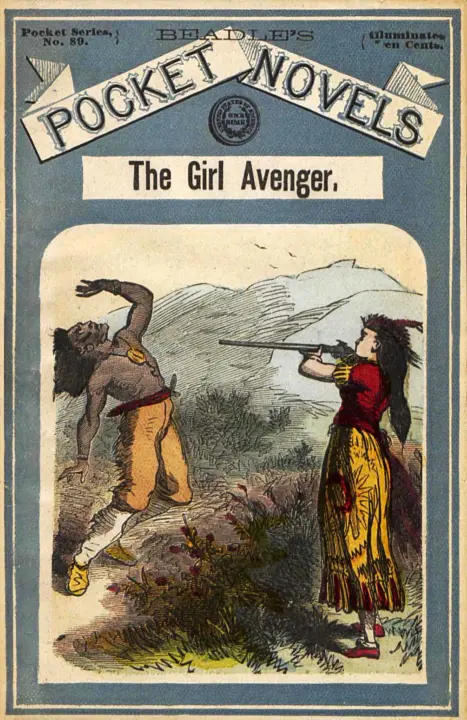
The Girl Avenger; or, The Beautiful Terror of the Maumee
T. C. (Thomas Chalmers) Harbaugh
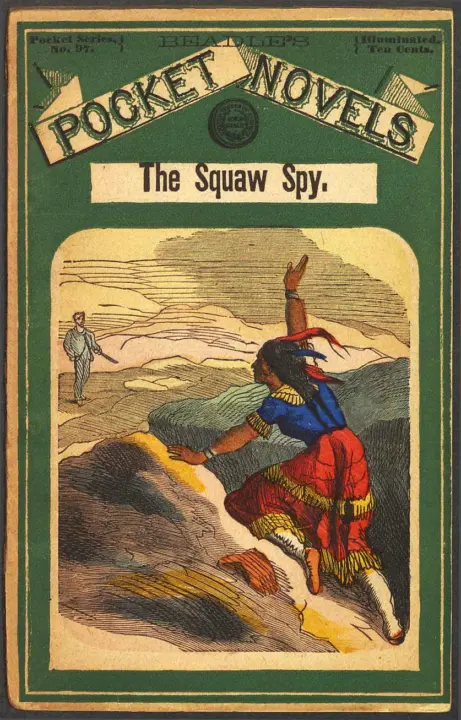
THE CLASSIC COLLECTION · 1884
"The Squaw Spy; or The Rangers of the Lava-Beds" by T. C. Harbaugh is a historical novel written in the late 19th century. The narrative is set against the backdrop of the Modoc War, focusing on themes of conflict, loyalty, and the dangers of treachery. Key characters include Kit South, a rugged scout; Artena, a spirited Modoc girl who plays a crucial role as a spy; and Captain Jack, the formidable Modoc chief at the center of the conflict. The book explores the intricate dynamics between Native Americans and U.S. soldiers, delivering an intense tale of warfare and personal struggles amidst chaos. The opening portion of the novel introduces readers to the aftermath of a brutal encounter between U.S. troops and the Modoc Indians. Kit South, a seasoned border man, and General Gillem await the return of Artena, who is both a spy and a vital link to intelligence about the Modoc troops. Their discussions reveal a recent loss of men in battle and the fleeting hope of capturing the elusive Captain Jack. As the night deepens, the urgency builds around a potential kidnapping plan aimed at turning the tide in their favor. Tension heightens when they detect the presence of an unknown spy, leading to actions that might endanger the lives of both soldiers and the Modoc girl, setting the stage for a gripping tale of betrayal and bravery in the wilderness.
Introduction adapted from the source catalogue; source summaries may be automatically generated.
Free to read · English · 32,607 words · No account needed
MAKE TIME FOR A GOOD BOOK
On by default. Untick to stop anonymous reading totals. Each page counts after 10 seconds in view. How this works.
Anonymous counting is on unless you have switched it off.
“Where’s McKay?”
“Still absent with his Warm Springers. I do not expect him before
midnight.”
“And Artena?”
“Dead or alive, she is somewhere among the Indians. She promised to be here against sunset, and see, that hour is with us now.”
The first speaker glanced toward the west, and remained silent for a
minute.
The handsome military man at his side quietly adjusted his field-glass, which he brought to bear upon a dark ridge against the horizon.
“General, this has been a bloody day,” said the rough borderman, venturing to disturb the officer in the midst of his observations. “We’ve lost as good boys as ever lived.”
Down came the field-glass, and General Gillem sighed as he turned to
his companion.
“A disastrous day for us truly, Kit,” he said. “No nobler fellows than Thomas, Howe and Wright. Now shall the war be pushed with vigor. This day’s massacre has heated my blood till it tingles through my veins. The fiends expect no quarter, as none they give. By Heavens, none they shall have! If we could but get the master-spirit of this war--the Napoleon of these red Arabs.”
“Captain Jack, General?”
“Captain Jack or Mouseh, as his people call him. I want to see the murderer of Canby swing. But, why does not Artena come?”
“Perhaps she has got in trouble,” said the Oregonian. “If so--there! somebody is coming now.”
General Gillem raised his field-glass, but could distinguish nothing, for the shadows of night were gathering and the smoke of savage fires hung heavily over the ground where so many brave soldiers had lately fallen before three score of Modoc rifles.
“I heard hoofs,” said the ranger. “Tis Artena at last, General.”
As he uttered the last words, the dark figure of a horse came in view and presently the animal halted before the twain.
Gillem started forward.
“Artena!” he cried, recognizing the womanish figure seated on the
Indian saddle.
“White war-man good; he wait for Artena,” said the woman. “But who with
him?”
“Kit, Artena,” said the ranger quickly, starting forward. “I’ve been here since the bloody fight of this morning.”
Artena bent forward eagerly.
“Kit in fight?” she asked anxiously.
“Yes; Kit South never throws away a chance to draw trigger on a Modoc.”
“Did Kit see Indian with cavalry hat on?” asked the squaw. “He have white feather in cap.”
“I think I did get a glimpse of such a devil,” answered the Oregonian. “In fact, I know I did, girl--but why do you ask?”
“That Indian Baltimore Bob.”
Kit South started.
Your reading position is saved on this browser. Take it to another device with a library code. Reading pages adapt to text, rather than matching a printed edition.
T. C. (Thomas Chalmers) Harbaugh
T. C. (Thomas Chalmers) Harbaugh
T. C. (Thomas Chalmers) Harbaugh
BEHIND THE BOOK
This eBook is for the use of anyone anywhere in the United States and most other parts of the world at no cost and with almost no restrictions whatsoever. You may copy it, give it away or re-use it under the terms of the Project Gutenberg License included with this eBook or online at www.gutenberg.org. If you are not located in the United States, you will have to check the laws of the country where you are located before using this eBook. Read the source licence.
The original source file, including credits and licence, is retained by this library. Request an original-format copy at no charge. Please include the book title and Project Gutenberg identifier #68102.
KEEP YOUR CURIOSITY GOING
Cécile Tormay

Moritz Busch
Coulson Kernahan
John L. Ransom

Maurice Baring
Frances Wright