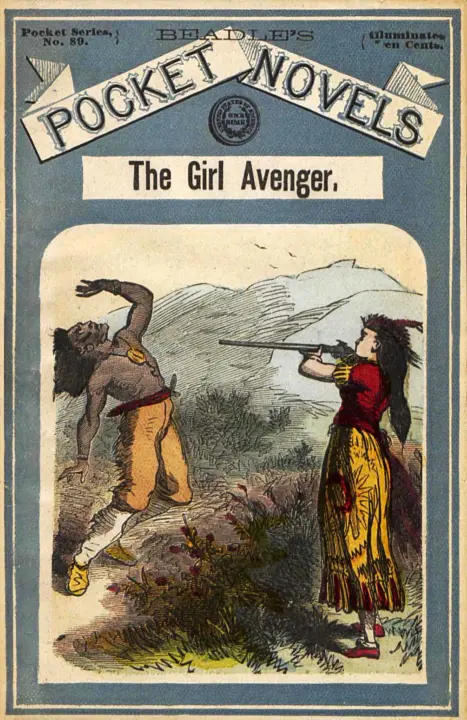
The Girl Avenger; or, The Beautiful Terror of the Maumee
T. C. (Thomas Chalmers) Harbaugh
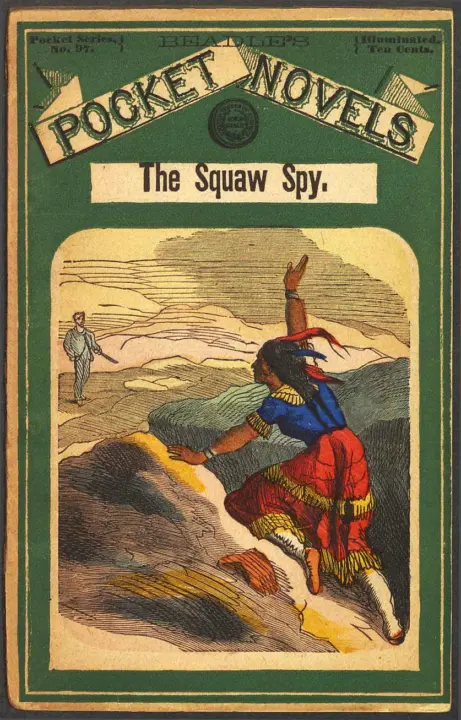
THE CLASSIC COLLECTION · 1884
"The Squaw Spy; or The Rangers of the Lava-Beds" by T. C. Harbaugh is a historical novel written in the late 19th century. The narrative is set against the backdrop of the Modoc War, focusing on themes of conflict, loyalty, and the dangers of treachery. Key characters include Kit South, a rugged scout; Artena, a spirited Modoc girl who plays a crucial role as a spy; and Captain Jack, the formidable Modoc chief at the center of the conflict. The book explores the intricate dynamics between Native Americans and U.S. soldiers, delivering an intense tale of warfare and personal struggles amidst chaos. The opening portion of the novel introduces readers to the aftermath of a brutal encounter between U.S. troops and the Modoc Indians. Kit South, a seasoned border man, and General Gillem await the return of Artena, who is both a spy and a vital link to intelligence about the Modoc troops. Their discussions reveal a recent loss of men in battle and the fleeting hope of capturing the elusive Captain Jack. As the night deepens, the urgency builds around a potential kidnapping plan aimed at turning the tide in their favor. Tension heightens when they detect the presence of an unknown spy, leading to actions that might endanger the lives of both soldiers and the Modoc girl, setting the stage for a gripping tale of betrayal and bravery in the wilderness.
Introduction adapted from the source catalogue; source summaries may be automatically generated.
Free to read · English · 32,607 words · No account needed
MAKE TIME FOR A GOOD BOOK
On by default. Untick to stop anonymous reading totals. Each page counts after 10 seconds in view. How this works.
Anonymous counting is on unless you have switched it off.
“And hevn’t I hunted and fished with the dirty greasers, too?” cried the scout. “You just ought to hear me bladge Klamath jargon once. Why, I kin out-talk old Arrow-Head himself. Yes, we’ll turn into Klamaths right off, and we’ll tell Jack the biggest pack of lies that ever fell upon his ears.”
In less than no time the mutilated Indians were stripped, and the twain bore the garments, with the warriors’ paint-pouches to the brink of a small stream that flowed through the lavaed fissures, perhaps forty feet below the fused surface.
A lone torch enabled them to accomplish the weird metamorphosis, and after the lapse of an hour they rose to their feet, veritable Klamath Indians.
“My name’s Coquil, or the Dog that Bites,” said the painted scout, with a broad grin of humor. “What’s your handle, Cohoon?”
The savage thought a moment, then answered:
“Wiaquil.”
“The Dog that Sleeps--that’s good,” answered Kit. “Now let’s be off like a pot-leg. I’m uncommon anxious to see what kind of a Klamath I make.”
The garments which the twain had cast aside were deposited on a shelf above the bank, perhaps for future use, while those which belonged to the Modocs, and not used in the transformation, were thrown into the stream.
As the Modocs dress similar to the Klamath Lake tribes, Cohoon experienced no difficulty in finding good disguises, and they deemed themselves well hidden when they stuck their revolvers in their belts, and left the spot.
For several moments Kit and his red ally paused in the cave on their way to the trail of Jack and his band, and regaled themselves on a bit of food which Cohoon supplied from his pouch.
They conversed but little, and that in the Klamath tongue, which both spoke quite readily, and presently resumed the march.
As they entered the mouth of the corridor, which led to the Modocs’ new stronghold, a veritable giant dropped into the cavern through the same opening which had previously admitted the two spies to scenes of danger and death.
I say the new arrival was a giant.
He was six feet tall, and massively built. His skin betokened him a half-breed, and he was clad in the garments of the Western scout and Indian-fighter.
In brief, this man was Donald McKay, the head chief of the Warm Spring Indians, and an oft-repeated description of him in the daily journals have acquainted the reader with his personale, long ere this.
He saw nothing but the retreating forms of the spies, and as he struck the ground, he drew a cocked revolver from his belt.
Your reading position is saved on this browser. Take it to another device with a library code. Reading pages adapt to text, rather than matching a printed edition.
T. C. (Thomas Chalmers) Harbaugh
T. C. (Thomas Chalmers) Harbaugh
T. C. (Thomas Chalmers) Harbaugh
BEHIND THE BOOK
This eBook is for the use of anyone anywhere in the United States and most other parts of the world at no cost and with almost no restrictions whatsoever. You may copy it, give it away or re-use it under the terms of the Project Gutenberg License included with this eBook or online at www.gutenberg.org. If you are not located in the United States, you will have to check the laws of the country where you are located before using this eBook. Read the source licence.
The original source file, including credits and licence, is retained by this library. Request an original-format copy at no charge. Please include the book title and Project Gutenberg identifier #68102.
KEEP YOUR CURIOSITY GOING
Cécile Tormay

Moritz Busch
Coulson Kernahan
John L. Ransom

Maurice Baring
Frances Wright