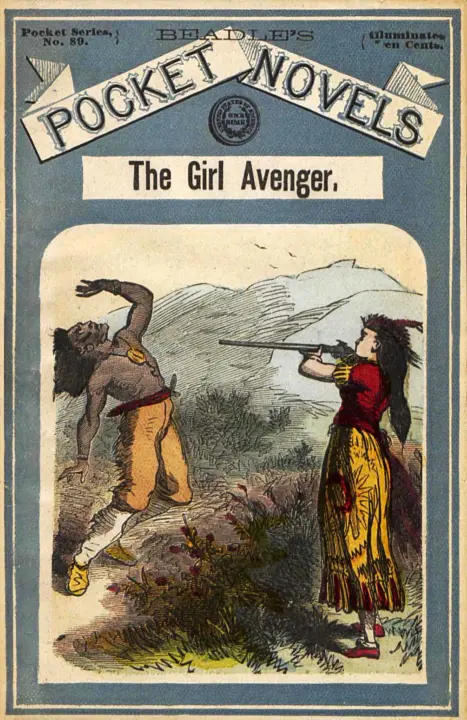
The Girl Avenger; or, The Beautiful Terror of the Maumee
T. C. (Thomas Chalmers) Harbaugh
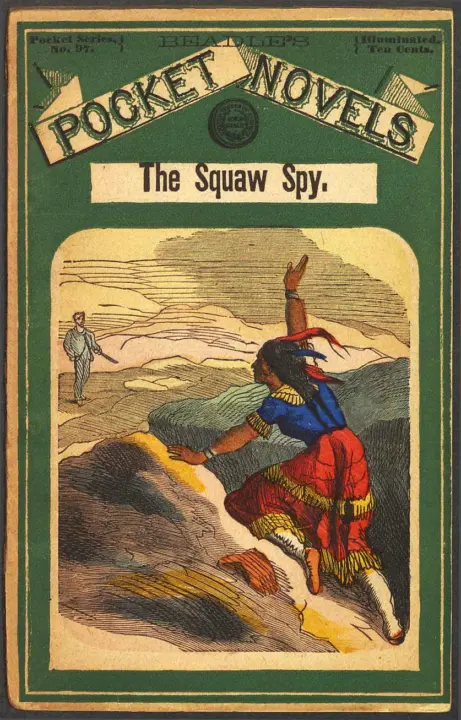
THE CLASSIC COLLECTION · 1884
"The Squaw Spy; or The Rangers of the Lava-Beds" by T. C. Harbaugh is a historical novel written in the late 19th century. The narrative is set against the backdrop of the Modoc War, focusing on themes of conflict, loyalty, and the dangers of treachery. Key characters include Kit South, a rugged scout; Artena, a spirited Modoc girl who plays a crucial role as a spy; and Captain Jack, the formidable Modoc chief at the center of the conflict. The book explores the intricate dynamics between Native Americans and U.S. soldiers, delivering an intense tale of warfare and personal struggles amidst chaos. The opening portion of the novel introduces readers to the aftermath of a brutal encounter between U.S. troops and the Modoc Indians. Kit South, a seasoned border man, and General Gillem await the return of Artena, who is both a spy and a vital link to intelligence about the Modoc troops. Their discussions reveal a recent loss of men in battle and the fleeting hope of capturing the elusive Captain Jack. As the night deepens, the urgency builds around a potential kidnapping plan aimed at turning the tide in their favor. Tension heightens when they detect the presence of an unknown spy, leading to actions that might endanger the lives of both soldiers and the Modoc girl, setting the stage for a gripping tale of betrayal and bravery in the wilderness.
Introduction adapted from the source catalogue; source summaries may be automatically generated.
Free to read · English · 32,607 words · No account needed
MAKE TIME FOR A GOOD BOOK
On by default. Untick to stop anonymous reading totals. Each page counts after 10 seconds in view. How this works.
Anonymous counting is on unless you have switched it off.
“We must leave this hole,” said Jack. “Blue-coats’ big balls got sharp eyes. They see Modoc here.”
The Indians were not averse to leaving.
Theresa, the scout’s daughter, lay across her father’s body, stunned by the explosion, and Bob snatched her away as he turned to his clansmen again.
“We must go, and that quickly,” he said, in hurried accents. “Charley, pick up yon white dog--quick!”
The Indian addressed--Boston Charley--sprung forward, and lifted the limp form of Evan Harris from the spot to which he had been hurled by the bursting of the shell.
“No use, he’s dead,” he said, glancing from the bloody face to Bob.
“Dead! No, he shan’t be dead!” cried the mad chief. “I’ve got an old score to wipe out with him yet. Dead? no! see, he gasps. Evan Harris, I’m going to have the satisfaction of killing you before I die.”
Sure enough, the young ranger gasped, and opened his eyes convulsively.
His face was covered with blood, and it was difficult to tell the position of his wound. That the exploding shell had injured him was patent to all, and the savages did not pause to see whether the wound was a mortal one.
“Iron balls hurt when they burst,” said Jack, turning from the spectacle of the bloody face, and several minutes later the cave was tenantless so far as animation was concerned.
Two of the wounded Indians had been put beyond misery by Mouseh’s tomahawk, which in this case did a humane service, while the third died without the aid of that weapon.
Near the mouth of the corridor lay the giant form of Lava-Bed Kit, the revolver still clenched in his right hand, and his face, pale as death, turned toward the fire, which burned fiercer than before.
Captain Jack led his band into the passage toward which he had lately sprung, with ’Reesa South in his arms, and the journey underground to the new stronghold began.
Below the surface of the Lava-Beds, as I have said, a perfect honeycomb of dark passages exists. Therefore the savage can retreat from one stronghold to another--miles distant--without once showing his face above the earth. Against such disadvantages our troops were compelled to fight the Indians, and the considering reader has long since ceased to wonder at the prolongation of the war.
Through some of these caves rapid streams make their way, and emerge
into daylight, eventually to greet the ocean that laves the Pacific
slope.
Your reading position is saved on this browser. Take it to another device with a library code. Reading pages adapt to text, rather than matching a printed edition.
T. C. (Thomas Chalmers) Harbaugh
T. C. (Thomas Chalmers) Harbaugh
T. C. (Thomas Chalmers) Harbaugh
BEHIND THE BOOK
This eBook is for the use of anyone anywhere in the United States and most other parts of the world at no cost and with almost no restrictions whatsoever. You may copy it, give it away or re-use it under the terms of the Project Gutenberg License included with this eBook or online at www.gutenberg.org. If you are not located in the United States, you will have to check the laws of the country where you are located before using this eBook. Read the source licence.
The original source file, including credits and licence, is retained by this library. Request an original-format copy at no charge. Please include the book title and Project Gutenberg identifier #68102.
KEEP YOUR CURIOSITY GOING
Cécile Tormay

Moritz Busch
Coulson Kernahan
John L. Ransom

Maurice Baring
Frances Wright