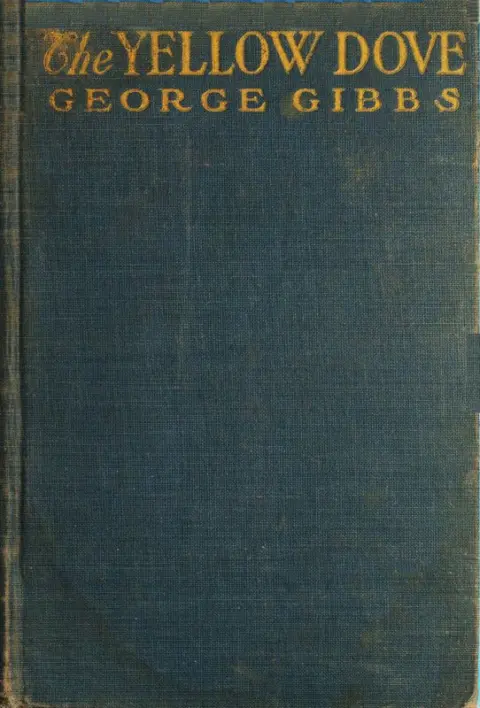
The Yellow Dove
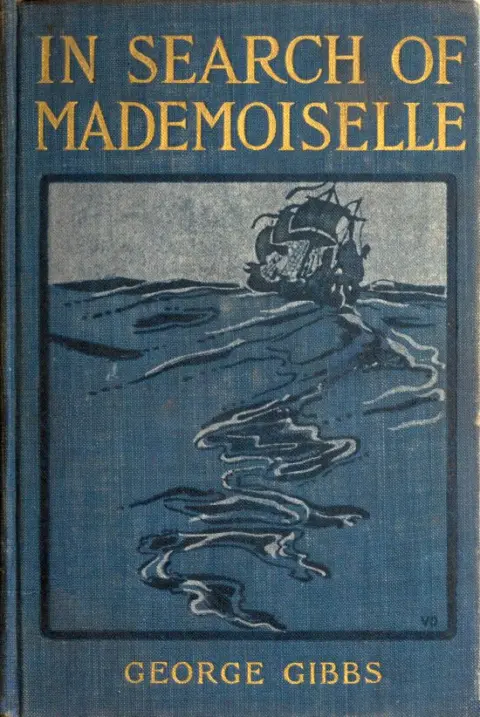
George Gibbs
THE CLASSIC COLLECTION · 1920
"The Splendid Outcast" by George Gibbs is a novel written in the early 20th century. The story follows Jim Horton, a war-injured soldier in a hospital recovering from a successful operation, who grapples with his identity after assuming his cowardly twin brother Harry's name and position. The narrative seems to delve into themes of honor, identity, and deception against the backdrop of World War I, suggesting an exploration of the complexities of brotherhood and moral choices. The opening of the novel presents Jim Horton awakening in a hospital bed, struggling with pain and confusion as he learns that he has taken on the identity of his brother, Harry, a lieutenant thought to be wounded in battle. Jim recalls the events leading to his injuries and taxingly considers his brother’s cowardice and the decisions he made during their time in the war. As Jim pieces together his memories, he contemplates the implications of his actions, including the attendance of both his twin brother's wife, Moira, and her father, Barry Quinlevin, who are oblivious to the ruse. This opening setup establishes a tension-filled scenario filled with potential conflicts regarding identity and honor, and hints at the evolving dynamics as Jim must choose whether to maintain the deception or reveal the truth to Moira and face the consequences.
Introduction adapted from the source catalogue; source summaries may be automatically generated.
Free to read · English · 99,128 words · No account needed
MAKE TIME FOR A GOOD BOOK
On by default. Untick to stop anonymous reading totals. Each page counts after 10 seconds in view. How this works.
Anonymous counting is on unless you have switched it off.
And she won her way. It was the least that he could do for her; so he sat again thinking of the look in Moira's eyes and frowning out of the window, wondering how best to meet this situation, while Piquette clung to his arm and patted his hand nervously.
"We should 'ave watch' for 'im, mon Jeem--at de Gare de Lyon. I don'
on'erstan'----"
"Nor I--how he got her to come with him," muttered Jim fiercely.
"'Ave I not tol' you 'e is a man extraordinaire--a man to be
watch'--to be fear'----?"
"How did he get her to come?" Jim repeated, as though to himself. "How
did he----?"
There seemed no necessity to find a reply to that, for there she was, in the next carriage, perhaps, with this shrewd rascal, whose power and resource seemed hourly to grow in importance.
It was difficult to believe that Moira had listened to Quinlevin, had believed the story he had chosen to tell her, directly after the convincing proof of his villainy, directly after Jim Horton's own plea to save her. What art--what witchcraft had he employed?
The answer came in a shrewd guess of Piquette's.
"Dis was de firs' fas' express to de Mediterranean," she said. "'E knew you would go to Monsieur de Vautrin. Las' night 'e foun' out I would go wit' you."
"But how----?"
"Who knows----?" she shrugged uneasily.
He turned with a frown and examined Piquette with quick suspicion, but her gaze met his frankly. The thought that had sped through his mind was discreditable to her and to him for thinking it. There was no possibility of her collusion with Quinlevin. Her fear of him was too genuine.
"H-m. He arranged things nicely. To show her me with you----"
"Parfaitement! It is dat only which made 'er come, mon petit."
"Smooth!" muttered Jim. "And she saw me, all right," he finished
bitterly.
Piquette was silent for awhile.
"She is ver' 'andsome," she said at last. And then, "An' she foun' me asleep wit' my 'ead on your shoulder."
"Yes," muttered Jim. "She did."
At the moment he could not think how much his words wounded her.
"I am sorry, mon petit," she said gently.
His conscience smote him at the tone of contrition.
"Oh, it doesn't matter, of course," he said. "There was no hope--for me--none. But it complicates things a little."
"Yes, I comprehend. Monsieur hopes to keep you from reaching the Duc."
"He won't succeed--but I'd rather he hadn't seen me in the train."
"Or Madame."
Your reading position is saved on this browser. Take it to another device with a library code. Reading pages adapt to text, rather than matching a printed edition.
George Gibbs
George Gibbs
George Gibbs
George Gibbs
BEHIND THE BOOK
This eBook is for the use of anyone anywhere in the United States and most other parts of the world at no cost and with almost no restrictions whatsoever. You may copy it, give it away or re-use it under the terms of the Project Gutenberg License included with this eBook or online at www.gutenberg.org. If you are not located in the United States, you will have to check the laws of the country where you are located before using this eBook. Read the source licence.
The original source file, including credits and licence, is retained by this library. Request an original-format copy at no charge. Please include the book title and Project Gutenberg identifier #47900.
KEEP YOUR CURIOSITY GOING
Coulson Kernahan

Maurice Baring
Frances Wright
Cécile Tormay

Frederic Jesup Stimson

W. H. P. (William Henry Pope) Jarvis