The Happy-go-lucky Morgans
Edward Thomas
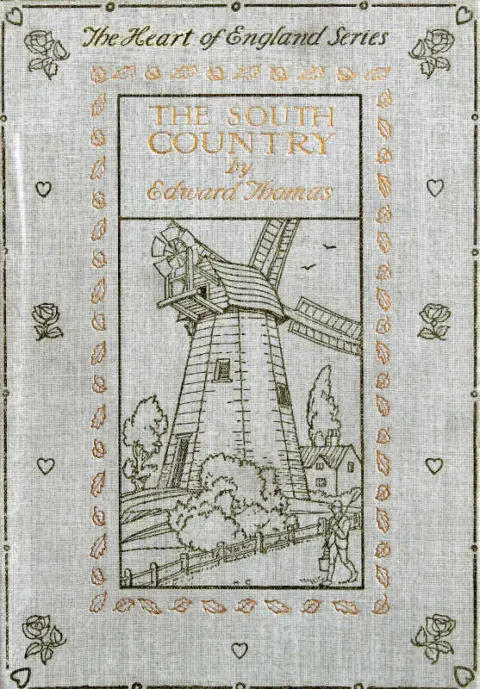
THE CLASSIC COLLECTION · 1909
"The South Country" by Edward Thomas is a reflective travelogue written in the early 20th century. In this book, the author shares his impressions from a year of wandering through the picturesque southern counties of England, particularly focusing on the beauty of Kent, Sussex, Hampshire, Wiltshire, and Cornwall. With a lyrical and poetic prose style, Thomas captures the essence of the landscapes, the changing seasons, and his deep connection to nature. The opening of the work presents a vivid and detailed description of the "South Country." It begins by establishing the geographic context, explaining the significance of this area in relation to other parts of England. Thomas expresses his preference for uninhabited paths and the tranquility found away from towns, where he can immerse himself in the natural beauty surrounding him. Through rich imagery, he reflects on the diverse landscapes, the rivers, and the flora that characterize the countryside while expressing a longing for solitude and an intimate relationship with the land. This opening sets the tone for a meditative exploration of both the physical and emotional landscapes as he embarks on his journey through the South Country.
Introduction adapted from the source catalogue; source summaries may be automatically generated.
Free to read · English · 83,338 words · No account needed
MAKE TIME FOR A GOOD BOOK
On by default. Untick to stop anonymous reading totals. Each page counts after 10 seconds in view. How this works.
Anonymous counting is on unless you have switched it off.
All night--for a week--it rains, and at last there is a still morning of mist. A fire of weeds and hedge-clippings in a little flat field is smouldering. The ashes are crimson, and the bluish-white smoke flows in a divine cloudy garment round the boy who rakes over the ashes. The heat is great, and the boy, straight and well made, wearing close gaiters of leather that reach above the knees, is languid at his task, and often leans upon his rake to watch the smoke coiling away from him like a monster reluctantly fettered and sometimes bursting into an anger of sprinkled sparks. He adds some wet hay, and the smoke pours out of it like milky fleeces when the shearer reveals the inmost wool with his shears. Above and beyond him the pale blue sky is dimly white-clouded over beech woods, whose many greens and yellows and yellow-greens are softly touched by the early light which cannot penetrate to the blue caverns of shade underneath. Athwart the woods rises a fount of cottage-smoke from among mellow and dim roofs. Under the smoke and partly scarfed at times by a drift from it is the yellow of sunflower and dahlia, the white of anemone, the tenderest green and palest purple of a thick cluster of autumn crocuses that have broken out of the dark earth and stand surprised, amidst their own weak light as of the underworld from which they have come. Robins sing among the fallen apples, and the cooing of wood-pigeons is attuned to the soft light and the colours of the bowers. The yellow apples gleam. It is the gleam of melting frost. Under all the dulcet warmth of the face of things lurks the bitter spirit of the cold. Stand still for more than a few moments and the cold creeps with a warning and then a menace into the breast. That is the bitterness that makes this morning of all others in the year so mournful in its beauty. The colour and the grace invite to still contemplation and long draughts of dream; the frost compels to motion. The scent is that of wood-smoke, of fruit and of some fallen leaves. This is the beginning of the pageant of autumn, of that gradual pompous dying which has no parallel in human life yet draws us to it, with sure bonds. It is a dying of the flesh, and we see it pass through a kind of beauty which we can only call spiritual, of so high and inaccessible a strangeness is it. The sight of such perfection as is many times achieved before the end awakens the never more than lightly sleeping human desire of permanence. Now, now is the hour; let things be thus; thus for ever; there is nothing further to be thought of; let these remain. And yet we have a premonition that remain they must not for more than a little while. The motion of the autumn is a fall, a surrender, requiring no effort, and therefore the mind cannot long be blind to the cycle of things as in the spring it can when the effort and delight of ascension veils the goal and the decline beyond. A few frosts now, a storm of wind and rain, a few brooding mists, and the woods that lately hung dark and massive and strong upon the steep hills are transfigured and have become cloudily light and full of change and ghostly fair; the crowing of a cock in the still misty morning echoes up in the many-coloured trees like a challenge to the spirits of them to come out and be seen, but in vain. For months the woods have been homely and kind, companions and backgrounds to our actions and thoughts, the wide walls of a mansion utterly our own. We could have gone on living with them for ever. We had given up the ardours, the extreme ecstasy of our first bridal affection, but we had not forgotten them. We could not become indifferent to the Spanish chestnut-trees that grow at the top of the steep rocky banks on either side of the road and mingle their foliage overhead. Of all trees well-grown chestnuts are among the most pleasant to look up at. For the foliage is not dense and it is for the most part close to the large boughs, so that the light comes easily down through all the horizontal leaves, and the shape of each separate one is not lost in the multitude, while at the same time the bold twists of the branches are undraped or easily seen through such translucent green. The trunks are crooked, and the handsome deep furrowing of the bark is often spirally cut. The limbs are few and wide apart so as to frame huge delicately lighted and shadowed chambers of silence or of birds’ song. The leaves turn all together to a leathern hue, and when they fall stiffen and display their shape on the ground and long refuse to be merged in the dismal trodden hosts. But when the first one floats past the eye and is blown like a canoe over the pond we recover once more our knowledge and fear of Time. All those ladders of goose-grass that scaled the hedges of spring are dead grey; they are still in their places, but they clamber no longer. The chief flower is the yellow bloom set in the dark ivy round the trunks of the ash-trees; and where it climbs over the holly and makes a solid sunny wall, and in the hedges, a whole people of wasps and wasp-like flies are always at the bloom with crystal wings, except when a passing shadow disperses them for a moment with one buzz. But these cannot long detain the eye from the crumbling woods in the haze or under the large white clouds--from the amber and orange bracken about our knees and the blue recesses among the distant golden beeches when the sky is blue but beginning to be laden with loose rain-clouds, from the line of leaf-tipped poplars that bend against the twilight sky; and there is no scent of flowers to hide that of dead leaves and rotting fruit. We must watch it until the end, and gain slowly the philosophy or the memory or the forgetfulness that fits us for accepting winter’s boon. Pauses there are, of course, or what seem pauses in the declining of this pomp; afternoons when the rooks waver and caw over their beechen town and the pigeons coo content; dawns when the white mist is packed like snow over the vale and the high woods take the level beams and a hundred globes of dew glitter on every thread of the spiders’ hammocks or loose perpendicular nets among the thorns, and through the mist rings the anvil a mile away with a music as merry as that of the daws that soar and dive between the beeches and the spun white cloud; mornings full of the sweetness of mushrooms and blackberries from the short turf among the blue scabious bloom and the gorgeous brier; empurpled evenings before frost when the robin sings passionate and shrill and from the garden earth float the smells of a hundred roots with messages of the dark world; and hours full of the thrush’s soft November music. The end should come in heavy and lasting rain. At all times I love rain, the early momentous thunderdrops, the perpendicular cataract shining, or at night the little showers, the spongy mists, the tempestuous mountain rain. I like to see it possessing the whole earth at evening, smothering civilization, taking away from me myself everything except the power to walk under the dark trees and to enjoy as humbly as the hissing grass, while some twinkling house-light or song sung by a lonely man gives a foil to the immense dark force. I like to see the rain making the streets, the railway station, a pure desert, whether bright with lamps or not. It foams all the roofs and trees and bubbles into the water-butts. It gives the grey rivers a demonic majesty. It scours the roads, sets the flints moving, and exposes the glossy chalk in the tracks through the woods. It does work that will last as long as the earth. It is about eternal business. In its noise and myriad aspect I feel the mortal beauty of immortal things. And then after many days the rain ceases at midnight with the wind, and in the silence of dawn and frost the last rose of the world is dropping her petals down to the glistering whiteness, and there they rest blood-red on the winter’s desolate coast.
Your reading position is saved on this browser. Take it to another device with a library code. Reading pages adapt to text, rather than matching a printed edition.
Edward Thomas
Edward Thomas

Edward Thomas
Edward Thomas
BEHIND THE BOOK
This eBook is for the use of anyone anywhere in the United States and most other parts of the world at no cost and with almost no restrictions whatsoever. You may copy it, give it away or re-use it under the terms of the Project Gutenberg License included with this eBook or online at www.gutenberg.org. If you are not located in the United States, you will have to check the laws of the country where you are located before using this eBook. Read the source licence.
The original source file, including credits and licence, is retained by this library. Request an original-format copy at no charge. Please include the book title and Project Gutenberg identifier #60760.
KEEP YOUR CURIOSITY GOING
Wilfrid Scawen Blunt
Wilfrid Scawen Blunt

E. W. (Edgar Watson) Howe
Cécile Tormay

Moritz Busch
John L. Ransom