The Happy-go-lucky Morgans
Edward Thomas
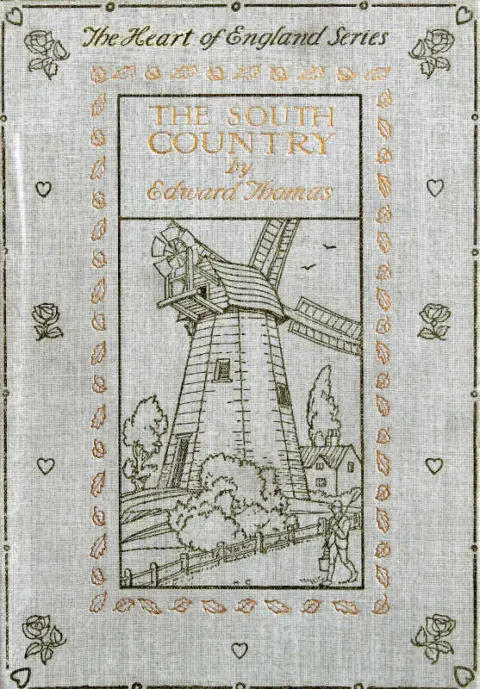
THE CLASSIC COLLECTION · 1909
"The South Country" by Edward Thomas is a reflective travelogue written in the early 20th century. In this book, the author shares his impressions from a year of wandering through the picturesque southern counties of England, particularly focusing on the beauty of Kent, Sussex, Hampshire, Wiltshire, and Cornwall. With a lyrical and poetic prose style, Thomas captures the essence of the landscapes, the changing seasons, and his deep connection to nature. The opening of the work presents a vivid and detailed description of the "South Country." It begins by establishing the geographic context, explaining the significance of this area in relation to other parts of England. Thomas expresses his preference for uninhabited paths and the tranquility found away from towns, where he can immerse himself in the natural beauty surrounding him. Through rich imagery, he reflects on the diverse landscapes, the rivers, and the flora that characterize the countryside while expressing a longing for solitude and an intimate relationship with the land. This opening sets the tone for a meditative exploration of both the physical and emotional landscapes as he embarks on his journey through the South Country.
Introduction adapted from the source catalogue; source summaries may be automatically generated.
Free to read · English · 83,338 words · No account needed
MAKE TIME FOR A GOOD BOOK
On by default. Untick to stop anonymous reading totals. Each page counts after 10 seconds in view. How this works.
Anonymous counting is on unless you have switched it off.
There is a quarter of a sloping wheat-field reaped; the shocks stand out above the silvery stubble in the evening like rocks out of a moonlight sea. The unreaped corn is like a tawny coast; and all is calm, with the quiet of evening heavens fallen over the earth. This beauty of the ripe Demeter standing in the August land is incomparable. It reminds one of the poet who said that he had seen a maid who looked like a fountain on a green lawn when the south wind blows in June; and one whose smile was as memorable as the new moon in the first still mild evening of the year, when it is seen for a moment only over the dark hills; and one whose walking was more kindling to the blood than good ale by a winter fire on an endless evening among friends; but that now he has met another, and when he is with her or thinks of her he becomes as one that is blind and deaf to all other things.
But a few days and the bryony leaves are palest yellow in the hedge. Rooks are innumerable about the land, but their cawing, like all other sounds, like all the early bronze and rose and gold of the leaves, is muffled by the mist which endures right through the afternoon; and all day falls the gentle rain. In the hillside hop garden two long lines of women and children, red and white and black, are destroying the golden green of the hops, and they are like two caterpillars destroying a leaf. Pleasant it is now to see the white smoke from the oast house pouring solidly like curving plumes into the still rain, and to smell the smell, bitter and never to be too much sniffed and enjoyed, that travels wide over the fields. For the hop drier has lit his two fires of Welsh coal and brimstone and charcoal under the two cones of the oast house, and has spread his couch of straw on the floor where he can sleep his many little sleeps in the busy day and night. The oast house consists of the pair of cones, white-vaned and tiled, upon their two circular chambers in which the fires are lit. Attached to these on one side is a brick building of two large rooms, one upon the ground, where the hop drier sleeps and tends his fires, lighted only by doors at either side and divided by the wooden pillars which support the floor of the upper room. This, the oast chamber, reached by a ladder, is a beautiful room, its oak boards polished by careful use and now stained faintly by the green-gold of hops, its roof raftered and high and dim. Light falls upon it on one side from two low windows, on the opposite side from a door through which the hops arrive from the garden. The waggon waits below the door, full of the loose, stained hop-sacks which the carter and his boy lift up to the drier. From the floor two short ladders lead to the doors in the cones where the hops are suspended on canvas floors above the kilns. The inside of the cone is full of coiling fumes which have killed the young swallows in the nests under the cowl--the parents return again and again, but dare no longer alight on their old perches on the vanes. When dried the hops are poured out on the floor of the vast chamber in a lisping scaly pile, and the drier is continually sweeping back those which are scattered. Through a hole in the floor he forces them down into a sack reaching to the floor of the room below. He is hard at work making these sacks or “pokes,” which, when full and their necks stitched up, are as hard as wood. Before the drying is over the full sacks will take up half the room. The children tired of picking come to admire and to visit all the corners of the room; of the granary alongside and its old sheepbells, its traps, a crossbow and the like; of the farmyard and barns, sacred except at this time. For a few minutes the sun is visible as a shapeless crimson thing above the mist and behind the elms. It is twilight; the wheels and hoofs of the last waggon approach and arrive and die away. And so day after day the fires glow with ruby and sapphire and emerald; the cone wears its plume of smoke; and everything is yellow-green--the very scent of the drying hops can hardly be otherwise described, in its mixture of sharpness and mellowness. Then when the last sack is pressed benches are placed round the chamber and a table at one end. The master, who is giving up the farm, leans on the table and pays each picker and pole-puller and measurer, with a special word for each and a jest for the women. Ale and gin and cakes are brought in, and the farmer leaves the women and one or two older men to eat and drink. The women in their shabby black skirts and whitish blouses shuffle through a dance or two, all modern and some American. One old man tipsily tottering recalls the olden time with a step-dance down the room; some laugh at him, others turn up their new roseate noses. Next year the hops are to be grubbed up; the old man to be turned out of his cottage--for he has paid no rent these seven years; but now it is cakes and ale, and the farmer has hiccupped a lying promise that his successor will go on growing hops.
Your reading position is saved on this browser. Take it to another device with a library code. Reading pages adapt to text, rather than matching a printed edition.
Edward Thomas
Edward Thomas

Edward Thomas
Edward Thomas
BEHIND THE BOOK
This eBook is for the use of anyone anywhere in the United States and most other parts of the world at no cost and with almost no restrictions whatsoever. You may copy it, give it away or re-use it under the terms of the Project Gutenberg License included with this eBook or online at www.gutenberg.org. If you are not located in the United States, you will have to check the laws of the country where you are located before using this eBook. Read the source licence.
The original source file, including credits and licence, is retained by this library. Request an original-format copy at no charge. Please include the book title and Project Gutenberg identifier #60760.
KEEP YOUR CURIOSITY GOING
Wilfrid Scawen Blunt
Wilfrid Scawen Blunt

E. W. (Edgar Watson) Howe
Cécile Tormay

Moritz Busch
John L. Ransom