THE CLASSIC COLLECTION✦The Life of Clara Barton, Founder of the American Red Cross (Vol. 2 of 2)CLASSIC FREE BOOKS
The Life of Clara Barton, Founder of the American Red Cross (Vol. 2 of 2)
William E. (William Eleazar) Barton
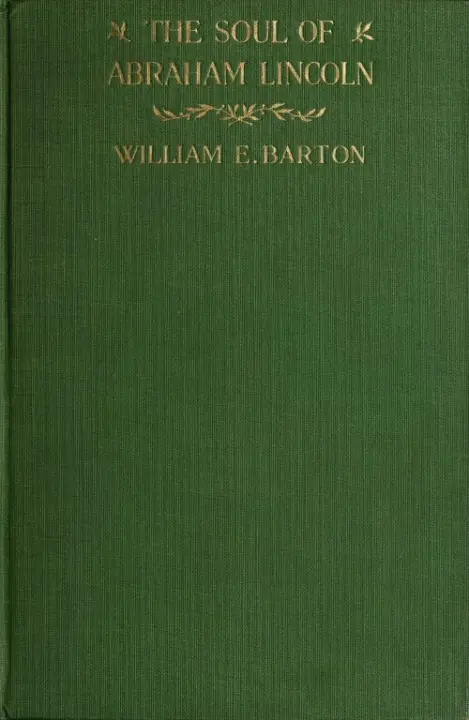
THE CLASSIC COLLECTION · 1920
"The Soul of Abraham Lincoln" by William E. Barton is a historical account written in the early 20th century. This work explores the evolution of Abraham Lincoln's religious beliefs, delving into the conflicting testimonies and diverse interpretations of his faith throughout various biographical works. The author aims to offer a comprehensive analysis, drawing on a wealth of evidence and contextualizing Lincoln's spirituality within the historical framework of his life. The opening of this volume sets the stage for a deep examination of the contradictory evidence surrounding Lincoln's religious views. Barton discusses how many biographies of Lincoln have presented radically different portrayals of his spiritual faith, some claiming he was an infidel while others argue for his strong Christian beliefs. The author outlines the intent of the book: to analyze this conflicting testimony critically and present a more nuanced understanding of Lincoln's spiritual life while illustrating how it evolved over time. The preface emphasizes the necessity of a dispassionate study amid a politically charged and often sensationalized landscape of Lincoln's religious beliefs.
Introduction adapted from the source catalogue; source summaries may be automatically generated.
Free to read · English · 138,937 words · No account needed
MAKE TIME FOR A GOOD BOOK
On by default. Untick to stop anonymous reading totals. Each page counts after 10 seconds in view. How this works.
Anonymous counting is on unless you have switched it off.
Rickard, Sarah, alleged to have been courted by Lincoln, 52.
Riney, Zachariah, teacher of Lincoln, 30.
Roberts, William Henry, 90.
Roby, Katy (Mrs. Allen Gentry), 33.
Roper, R. C., on Lincoln's religion, 227.
Rusling, General James F., on Sickles interview, 201-202.
Rutledge, Ann, courted by Lincoln, 52 seq.; 62, 69, 143, 352.
Rutledge, James, father of Ann, 54.
Science, little known by Lincoln, 171.
Scott, Milton R., 253.
Scott, Walter, Lincoln's use of, 263.
Scoville, Samuel, 199.
Scripps, John Locke, "Life of Lincoln," 24.
Shakspeare, Lincoln's use, 263.
Shields, James T., 72.
Shipman, Elder, alleged Unitarian minister, 181.
Shirley, Ralph, 268.
Shrigley, Rev. James, 356-357.
Sickles, General D. E., interview with Lincoln, 201-202.
Slavery, beginnings of Lincoln's interest in, 72;
growth of moral aspect, 83;
"If not wrong, nothing is wrong," 296.
Smith, Jeannette E., 158.
Smith, Rev. James, Lincoln's pastor at Springfield, 75-76; relations with Lincoln, 132, 136; his life and ministry, 156; his sermon on temperance, 157; Lincoln becomes a member of his congregation, 159; Lincoln reads "The Christian's Defence," 162; change in Lincoln's views, 164; convinced Lincoln but did not wholly satisfy, 270, 323-324, 353-354; complete chapter analysis of the book, 358 seq.
Smith, Winfield, 289.
Speed, Joshua Fry, 92-93, 236, 336-337.
Spiritualist, Lincoln not a, 232.
Stanton, Theodore, article by, 226.
State Fair Speech of Lincoln, 257.
Stories, Lincoln's, 80, 263.
Stuart, John T., Lincoln's partner, 71;
on Lincoln's religion, 132, 249, 256, 319-320.
Sunderland, Rev. Byron, 332-333.
Superstition, Lincoln believed in, 233, 236.
Swett, Leonard, 249.
Tarbell, Ida, M., author of "Life of Lincoln," 27.
Teillard, Dorothy Lamon, 129-130, 134.
Thomas, Lewis, 244.
Toleman, letter of, 238.
Unitarian, Lincoln was not, 180, 238.
Universalist, Lincoln was not, 238.
Vandalia, state capital of Illinois, 52.
"Vestiges of Creation," by Robert Chambers, 166-171, 255, 265.
Vinton, Rev. Francis, alleged interview with Lincoln, 206.
Volney, Constantin François, author of "Ruins," read by Lincoln, 19, 61, 63, 146, 152.
Voodoo Fortune-teller, Lincoln visits, 236.
"Ward, Artemus," read by Lincoln, 113, 307.
Watson, Rev. Edward L., story of Lincoln's conversion, 24, 309.
Weik, Jesse W., associate of Herndon in authorship of "Life of Lincoln," 26; opinion of Thomas Lincoln's religion, 39; searches for lost Herndon papers, 125.
Welles, Gideon, 268, 281.
Westminster Review, 167, 226.
Whitcomb, Rev. W. W., sermon on Lincoln, 208.
White, Charles T., 80.
White, Horace, 26, 27, 129.
White, William Allen, 110.
Whitney, Henry C., on Lincoln's religion, 94-95; on Lincoln's lack of method, 103, 246, 247, 254, 263.
Wigwam edition of "Life of Lincoln," 24.
Wilberforce, Bishop Samuel, 170.
Yates, Governor Richard, 310.
[1] All the quotations in this book from Herndon's Lincoln are from the first edition in three volumes.
[2] The habit of studying aloud, learned in the "blab-school," remained with him. Lamon says he read aloud and "couldn't read otherwise." Whitney tells of his writing a ruling one time when he was sitting (illegally) for Judge Davis, and he pronounced each word aloud as he wrote it. This was not his invariable custom, but it was a common one with him.
Your reading position is saved on this browser. Take it to another device with a library code. Reading pages adapt to text, rather than matching a printed edition.
William E. (William Eleazar) Barton
William E. (William Eleazar) Barton
William E. (William Eleazar) Barton
BEHIND THE BOOK
This eBook is for the use of anyone anywhere in the United States and most other parts of the world at no cost and with almost no restrictions whatsoever. You may copy it, give it away or re-use it under the terms of the Project Gutenberg License included with this eBook or online at www.gutenberg.org. If you are not located in the United States, you will have to check the laws of the country where you are located before using this eBook. Read the source licence.
The original source file, including credits and licence, is retained by this library. Request an original-format copy at no charge. Please include the book title and Project Gutenberg identifier #60996.
KEEP YOUR CURIOSITY GOING

David Patterson (Spirit) Hatch

David Patterson (Spirit) Hatch

David Patterson (Spirit) Hatch
Cécile Tormay

Moritz Busch
John L. Ransom