The Wasted Generation
Owen Johnson
THE CLASSIC COLLECTION · 1912
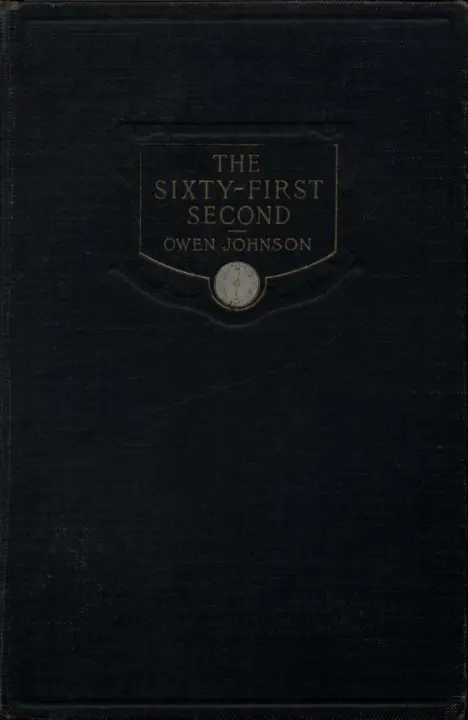
"The Sixty-First Second" by Owen Johnson is a novel written in the early 20th century. Set against the backdrop of a looming financial panic, the story revolves around the lives of two opposing trust company presidents, John G. Slade and Bernard L. Majendie, each embroiled in a high-stakes drama of ambition, power, and intrigue. The initial chapters introduce a tense atmosphere where the characters navigate through personal struggles and financial peril, hinting at deeper dynamics between them and linking their fates in unexpected ways. At the start of the novel, the scene is set in a New York apartment where Mrs. Rita Kildair hosts a gathering that transforms into a mysterious drama when her valuable ruby ring goes missing. A tense atmosphere unfolds as the guests are drawn into the intrigue surrounding the theft, leading to a gripping ultimatum: the lights are extinguished, and the culprit is urged to return the ring within a count of one hundred seconds. The tensions rise dramatically when the ring is not returned by the end of the count, resulting in an unsettling revelation that there may be more than one thief among them. This opening sets the groundwork for a complex exploration of trust, betrayal, and the complexities of human behavior amidst crisis, keeping readers intrigued by the unfolding drama and the secrets of each character.
Introduction adapted from the source catalogue; source summaries may be automatically generated.
Free to read · English · 88,259 words · No account needed
MAKE TIME FOR A GOOD BOOK
On by default. Untick to stop anonymous reading totals. Each page counts after 10 seconds in view. How this works.
Anonymous counting is on unless you have switched it off.
Beecher, amid laughter, was presented. Mme. Fornez, who, from pride perhaps, chose to retain the freedom of the peasant, tapped him familiarly on the arm and said: "I like you. You don't look so clean and stupid as most of your dollar men. You will sit by my side. I select you. Monsieur Gunthere, Bobbie--enough of your old panics and your stocks; you have two charming ladies present, that's all you need to know. Bobbie, obey me at once!"
Beecher was giving his hand to Mrs. Craig Fontaine, a young widow, slight, with quick eyes, and almost masculine vitality, and an extraordinary elegance of dress and carriage, whom Gunther called Louise. She was scarcely twenty-six, possessed of a large fortune from her husband, who had been killed in a steeplechase three years before. Her position in society was unquestioned, and, being of a singular temperament, she did as she pleased. She was seen everywhere with young Gunther, and gossip had already arranged their marriage--an eventuality which she alone, who ambitiously desired it, knew to be impossible.
Beecher, who was particularly sensitive to the air of distinction that always surrounded her, even when most unbending, took her hand with a little extra gallantry, saying:
"I changed my mind on your account only, Louise, and I expect you to
reward me."
Between the two, from his college days, had been a sort of confidential intimacy which Beecher had the knack of cultivating.
Holliday having ordered the dinner, Mme. Fornez took special delight in countermanding everything that could be countermanded, substituting other wines and abolishing the soup, scolding her escort all the while with a calculated tyranny which Mrs. Fontaine admired with a slight smiling tribute of her lips, as the clever advertisement of a professional woman that Mr. Holliday's fetch and carry attentions were entirely on her own sufferance.
"How have you escaped being married?" said Mrs. Fontaine in a bantering tone to Beecher, after Mme. Fornez had relinquished him for a moment.
"Because I fly like a coward," he said, pleased at the compliment
implied.
"Seriously, Teddy, you've been back in civilization two months and you
are not yet caught?"
"I am not the marrying kind," he said, with conviction.
"What's he say--your Teddy?" said Mme. Fornez, turning, with a laugh.
Beecher repeated his statement.
"Allons donc, you!" She broke into a ripple of laughter. "What do
you say, Madame Fontaine?"
Mrs. Fontaine's reply was a tolerant, amused smile, and, leaning over,
she pinched his ear.
Beecher furiously defended himself.
"Yes, that's what all you women say. You think you can catch any man. It irritates you to think any man can resist you."
Your reading position is saved on this browser. Take it to another device with a library code. Reading pages adapt to text, rather than matching a printed edition.
BEHIND THE BOOK
This eBook is for the use of anyone anywhere in the United States and most other parts of the world at no cost and with almost no restrictions whatsoever. You may copy it, give it away or re-use it under the terms of the Project Gutenberg License included with this eBook or online at www.gutenberg.org. If you are not located in the United States, you will have to check the laws of the country where you are located before using this eBook. Read the source licence.
The original source file, including credits and licence, is retained by this library. Request an original-format copy at no charge. Please include the book title and Project Gutenberg identifier #37113.
KEEP YOUR CURIOSITY GOING
Coulson Kernahan

Maurice Baring
Frances Wright
Cécile Tormay

Frederic Jesup Stimson

W. H. P. (William Henry Pope) Jarvis