The Wasted Generation
Owen Johnson
THE CLASSIC COLLECTION · 1912
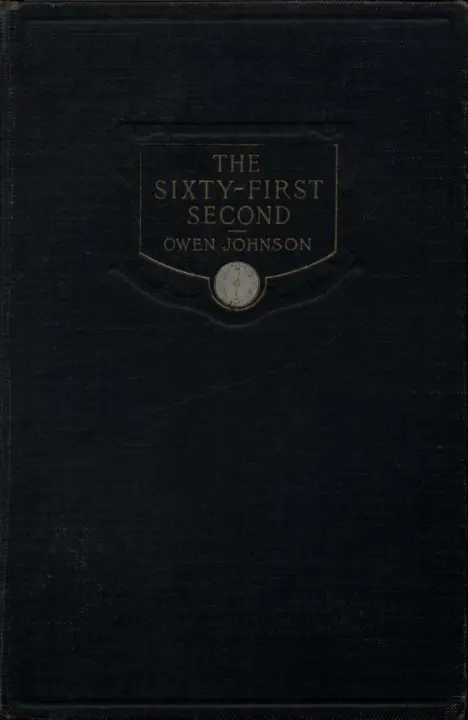
"The Sixty-First Second" by Owen Johnson is a novel written in the early 20th century. Set against the backdrop of a looming financial panic, the story revolves around the lives of two opposing trust company presidents, John G. Slade and Bernard L. Majendie, each embroiled in a high-stakes drama of ambition, power, and intrigue. The initial chapters introduce a tense atmosphere where the characters navigate through personal struggles and financial peril, hinting at deeper dynamics between them and linking their fates in unexpected ways. At the start of the novel, the scene is set in a New York apartment where Mrs. Rita Kildair hosts a gathering that transforms into a mysterious drama when her valuable ruby ring goes missing. A tense atmosphere unfolds as the guests are drawn into the intrigue surrounding the theft, leading to a gripping ultimatum: the lights are extinguished, and the culprit is urged to return the ring within a count of one hundred seconds. The tensions rise dramatically when the ring is not returned by the end of the count, resulting in an unsettling revelation that there may be more than one thief among them. This opening sets the groundwork for a complex exploration of trust, betrayal, and the complexities of human behavior amidst crisis, keeping readers intrigued by the unfolding drama and the secrets of each character.
Introduction adapted from the source catalogue; source summaries may be automatically generated.
Free to read · English · 88,259 words · No account needed
MAKE TIME FOR A GOOD BOOK
On by default. Untick to stop anonymous reading totals. Each page counts after 10 seconds in view. How this works.
Anonymous counting is on unless you have switched it off.
At half-past five, Beecher, his brain in a whirl, arrived breathlessly at the office of McKenna. As luck would have it, only Gunther and the detective were there.
"My friend is a little late," said McKenna, with a quick, jerky glance
at the clock.
"Where's Garraboy?"
"Twirling his thumbs in another room," said Gunther, laughing. "In a
cussing bad humor, too."
For the second time, McKenna glanced nervously at the clock. Beecher was struck with the mood of restlessness that obsessed him. He passed aimlessly from desk to window and back again, apparently oblivious to their presence, immersed in some calculation that left its outward mark in a deep furrow between the eyebrows, while the cigar between his lips had gone out unperceived.
"Mr. Beecher," he said suddenly, stopping short, "I'm not sure but what I've gone off on a ridiculous tangent--it may be--it may be. Have you still got that envelope I gave you?"
"Yes, in my pocket--here," said Beecher, surprised, laying his hand on
his coat.
"It was a ridiculous thing for me to do," said McKenna quickly. He made a movement of his hand as though to take it, but repressed it, saying: "All I ask is, don't open it until I ask you." Then, still ruffled, he turned away, saying to himself: "Guessing--humph! I'd fire a man for doing that."
The telephone rang with a message from the outer office and a moment later, to the amazement of both young men, Mapleson, of the firm of Sontag & Company, came in smiling and businesslike.
"How are you, McKenna?" he said affably, shaking hands. "Sorry to keep you waiting. What can I do for you?"
He was a slender, dark young man of forty-two or three, very graceful, pleasant in voice and fluent in manner, with a sure instinct for ingratiating himself where it best could serve.
"How do you do, Mr. Beecher," he said on being introduced. "I am very glad to know you, Mr. Gunther. I have the pleasure of knowing your father slightly. The country owes him a great debt for what he's done in this panic. Well, is there any mystery I can clear up for you?"
He accepted a chair, crossed his legs easily, brought out a gold cigarette-case, offered it with a wave and smiled at their declinations.
"Why, yes, Mr. Mapleson, you can give us a little information," said
McKenna.
"Anything I can do for you, McKenna, glad to do it," said Mapleson.
"You may remember a ring that was sold by your firm a few months ago to Mr. John G. Slade," said McKenna directly; "a single ruby, valued, I believe, around thirty thousand dollars."
Your reading position is saved on this browser. Take it to another device with a library code. Reading pages adapt to text, rather than matching a printed edition.
BEHIND THE BOOK
This eBook is for the use of anyone anywhere in the United States and most other parts of the world at no cost and with almost no restrictions whatsoever. You may copy it, give it away or re-use it under the terms of the Project Gutenberg License included with this eBook or online at www.gutenberg.org. If you are not located in the United States, you will have to check the laws of the country where you are located before using this eBook. Read the source licence.
The original source file, including credits and licence, is retained by this library. Request an original-format copy at no charge. Please include the book title and Project Gutenberg identifier #37113.
KEEP YOUR CURIOSITY GOING
Coulson Kernahan

Maurice Baring
Frances Wright
Cécile Tormay

Frederic Jesup Stimson

W. H. P. (William Henry Pope) Jarvis