The Wasted Generation
Owen Johnson
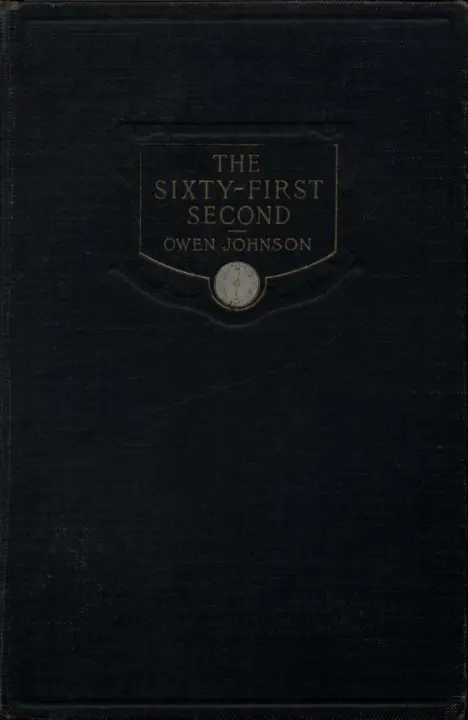
THE CLASSIC COLLECTION · 1912
"The Sixty-First Second" by Owen Johnson is a novel written in the early 20th century. Set against the backdrop of a looming financial panic, the story revolves around the lives of two opposing trust company presidents, John G. Slade and Bernard L. Majendie, each embroiled in a high-stakes drama of ambition, power, and intrigue. The initial chapters introduce a tense atmosphere where the characters navigate through personal struggles and financial peril, hinting at deeper dynamics between them and linking their fates in unexpected ways. At the start of the novel, the scene is set in a New York apartment where Mrs. Rita Kildair hosts a gathering that transforms into a mysterious drama when her valuable ruby ring goes missing. A tense atmosphere unfolds as the guests are drawn into the intrigue surrounding the theft, leading to a gripping ultimatum: the lights are extinguished, and the culprit is urged to return the ring within a count of one hundred seconds. The tensions rise dramatically when the ring is not returned by the end of the count, resulting in an unsettling revelation that there may be more than one thief among them. This opening sets the groundwork for a complex exploration of trust, betrayal, and the complexities of human behavior amidst crisis, keeping readers intrigued by the unfolding drama and the secrets of each character.
Introduction adapted from the source catalogue; source summaries may be automatically generated.
Free to read · English · 88,259 words · No account needed
MAKE TIME FOR A GOOD BOOK
On by default. Untick to stop anonymous reading totals. Each page counts after 10 seconds in view. How this works.
Anonymous counting is on unless you have switched it off.
"Wait," said Mrs. Kildair. She started toward the door, and then, changing her mind, as if unwilling to relax her surveillance of events in the studio, stopped. "Mr. Beecher, please," she said thoughtfully. "See who it is." And she moved slightly toward the half-drawn portieres, to hear and at the same time to be concealed.
Garraboy was outside, a coat on his arm.
"Excuse me," he said, without emotion. "I took the wrong coat. Stupid of me. Just found it out."
"It looks like mine," said Beecher, examining it.
"Probably is," said Garraboy, who extracted another coat of similar appearance from the rack, plunged into his pockets and nodded. "Sure enough. Sorry. Good night."
So thoroughly disagreeable an impression had the broker produced upon Beecher that, in a moment of suspicion, moved by an incredible thought, he ran his hands hastily through the pockets.
"I shouldn't have been surprised," he grumbled to himself, and returned to the studio, where the conversation had been overheard.
The search continued, ended, and, as all expected, no trace of the ring
was found.
Mrs. Kildair excused herself, evidently maintaining her calm with difficulty. The guests, murmuring inarticulate phrases, took their wraps, and young Beecher found himself shortly in a coupe beside Nan Charters.
For several moments neither spoke, each absorbed in his own speculations. Beecher studied the figure at his side with covert glances, amazed at the transformation from the childlike charm which had first fascinated him. An hour before he had begun to wonder how far that feeling might develop in him; now, as he watched her, he was conscious of a dispassionate, almost resentful analysis. The fragrance of her perfume, a little too overpowering, filled the interior of the coupe. She herself, bending slightly forward, one elbow against the window-pane, pressed her ungloved knuckles against her chin, while her glance, set and controlled, was lost in the cloudy shadows and striped reflections of the street without.
"What is terrible in such a situation," she said musingly, but without turning, "is that any one may be suspected."
The words were spoken with almost an absolute change of personality. The very tone brought to him an increased antagonism.
"Quite true," he said. "You may have taken it the first time, and I the
second."
She turned and tried to distinguish his expression; but, if he had hoped to startle, he was disappointed. She said, quite possessed:
"Why do you put it that way?"
"Because I am convinced that the second time was the deliberate action of a man, and that the first was the impulse of a woman."
"Why a woman the first time?"
Your reading position is saved on this browser. Take it to another device with a library code. Reading pages adapt to text, rather than matching a printed edition.
BEHIND THE BOOK
This eBook is for the use of anyone anywhere in the United States and most other parts of the world at no cost and with almost no restrictions whatsoever. You may copy it, give it away or re-use it under the terms of the Project Gutenberg License included with this eBook or online at www.gutenberg.org. If you are not located in the United States, you will have to check the laws of the country where you are located before using this eBook. Read the source licence.
The original source file, including credits and licence, is retained by this library. Request an original-format copy at no charge. Please include the book title and Project Gutenberg identifier #37113.
KEEP YOUR CURIOSITY GOING
Coulson Kernahan

Maurice Baring
Frances Wright
Cécile Tormay

Frederic Jesup Stimson

W. H. P. (William Henry Pope) Jarvis