The Wasted Generation
Owen Johnson
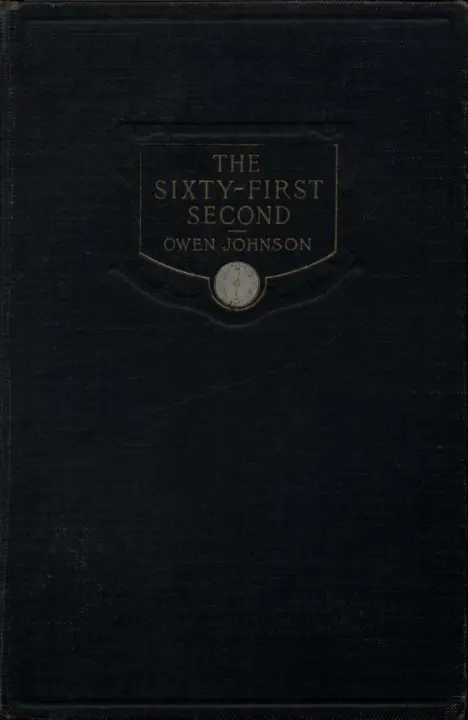
THE CLASSIC COLLECTION · 1912
"The Sixty-First Second" by Owen Johnson is a novel written in the early 20th century. Set against the backdrop of a looming financial panic, the story revolves around the lives of two opposing trust company presidents, John G. Slade and Bernard L. Majendie, each embroiled in a high-stakes drama of ambition, power, and intrigue. The initial chapters introduce a tense atmosphere where the characters navigate through personal struggles and financial peril, hinting at deeper dynamics between them and linking their fates in unexpected ways. At the start of the novel, the scene is set in a New York apartment where Mrs. Rita Kildair hosts a gathering that transforms into a mysterious drama when her valuable ruby ring goes missing. A tense atmosphere unfolds as the guests are drawn into the intrigue surrounding the theft, leading to a gripping ultimatum: the lights are extinguished, and the culprit is urged to return the ring within a count of one hundred seconds. The tensions rise dramatically when the ring is not returned by the end of the count, resulting in an unsettling revelation that there may be more than one thief among them. This opening sets the groundwork for a complex exploration of trust, betrayal, and the complexities of human behavior amidst crisis, keeping readers intrigued by the unfolding drama and the secrets of each character.
Introduction adapted from the source catalogue; source summaries may be automatically generated.
Free to read · English · 88,259 words · No account needed
MAKE TIME FOR A GOOD BOOK
On by default. Untick to stop anonymous reading totals. Each page counts after 10 seconds in view. How this works.
Anonymous counting is on unless you have switched it off.
She went to a table and presently came back with the tumbler, offering it to him with a well simulated attitude of submission. When he took it, she dropped a curtsey and going to the library table, returned with a box of cigars and the matches. Continuing always the same game, determined to force a laugh, she lit the match, holding it to him between her rosy palms.
"Is your lordship satisfied?"
"I am."
She lit a cigarette in turn and camping down on the bear rug, Eastern fashion, puffed a ring of smoke in the direction of the fire. For a moment neither spoke, she studying the embers, he enjoying this new side to her and awaiting the next development.
"I'm very unhappy," she said at last, without looking at him.
"I'm sorry," he answered sympathetically.
"I have had a great disappointment. I read that play of Hargrave's again--there's nothing to it."
"You surprise me."
The fact was that Brockway, Stigler's stage director had torn it to pieces. She continued, repeating what Brockway had said:
"The trouble is, it's not actable. It's like all plays that read well--I should have known it. There's no dramatic action. Then, it has one great fault--all young writers have it--you see, every scene should be a unit in itself, express one dramatic emotion, develop it, and increase it; and Hargrave puts three or four emotions in the same page--five or six," she continued indignantly. "It's all mixed up--topsy-turvy--no actress could make an effect." (This had been its chief merit two days before.) "It's very sad; I shall never find a play."
"You were very enthusiastic a few days ago," he said.
"Was I?" she said resentfully. "You see, the trouble is, in reading you imagine things that aren't there."
"So Hargrave isn't a genius after all?" he asked.
"He is very conceited--insufferably so," she said abruptly. "But you don't understand--it's the disappointment to me--I shall never find a play. Sometimes I feel like giving it all up. It's terrible--breaking your heart day after day. Yes, sometimes I feel like never acting again."
"You are in a blue mood," he said cheerfully.
"Everything has gone wrong," she said, pouting. "Even you have changed!"
She looked at him with a look of a tired child, longing to climb into
his lap to be consoled.
"How so?" he said, opening his eyes.
"Teddy, have I offended you?" she asked gently, seeing that she could not unbend him by playing upon his sympathy.
"Not the least."
She would have preferred any answer but this.
"Why wouldn't you go with me tonight?" she said quickly.
"Because I have another engagement," he said, instinctively glancing at
the clock.
Your reading position is saved on this browser. Take it to another device with a library code. Reading pages adapt to text, rather than matching a printed edition.
BEHIND THE BOOK
This eBook is for the use of anyone anywhere in the United States and most other parts of the world at no cost and with almost no restrictions whatsoever. You may copy it, give it away or re-use it under the terms of the Project Gutenberg License included with this eBook or online at www.gutenberg.org. If you are not located in the United States, you will have to check the laws of the country where you are located before using this eBook. Read the source licence.
The original source file, including credits and licence, is retained by this library. Request an original-format copy at no charge. Please include the book title and Project Gutenberg identifier #37113.
KEEP YOUR CURIOSITY GOING
Coulson Kernahan

Maurice Baring
Frances Wright
Cécile Tormay

Frederic Jesup Stimson

W. H. P. (William Henry Pope) Jarvis