The Wasted Generation
Owen Johnson
THE CLASSIC COLLECTION · 1912
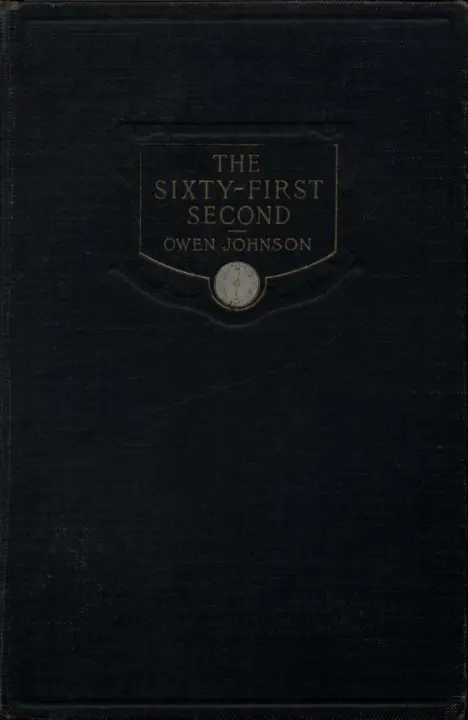
"The Sixty-First Second" by Owen Johnson is a novel written in the early 20th century. Set against the backdrop of a looming financial panic, the story revolves around the lives of two opposing trust company presidents, John G. Slade and Bernard L. Majendie, each embroiled in a high-stakes drama of ambition, power, and intrigue. The initial chapters introduce a tense atmosphere where the characters navigate through personal struggles and financial peril, hinting at deeper dynamics between them and linking their fates in unexpected ways. At the start of the novel, the scene is set in a New York apartment where Mrs. Rita Kildair hosts a gathering that transforms into a mysterious drama when her valuable ruby ring goes missing. A tense atmosphere unfolds as the guests are drawn into the intrigue surrounding the theft, leading to a gripping ultimatum: the lights are extinguished, and the culprit is urged to return the ring within a count of one hundred seconds. The tensions rise dramatically when the ring is not returned by the end of the count, resulting in an unsettling revelation that there may be more than one thief among them. This opening sets the groundwork for a complex exploration of trust, betrayal, and the complexities of human behavior amidst crisis, keeping readers intrigued by the unfolding drama and the secrets of each character.
Introduction adapted from the source catalogue; source summaries may be automatically generated.
Free to read · English · 88,259 words · No account needed
MAKE TIME FOR A GOOD BOOK
On by default. Untick to stop anonymous reading totals. Each page counts after 10 seconds in view. How this works.
Anonymous counting is on unless you have switched it off.
He stood stock-still in frank amazement. He had known her but a short while, and yet he called her by her first name--a liberty seldom accorded; but the charm he unconsciously exerted over women, and which impatiently mystified other men, was in the very audacity of his enjoyment of life, which imparted to women the precious sense of their own youth.
"Really?" she said, raising her hand to her hair, that he might notice
the glorious ruby.
"Look here--I've only got a miserable thirty thousand a year, but I've got a couple of uncles with liver trouble and a bum heart. Say the word--I'm yours."
While he said it with a mock-heroic air, there was in his eyes a flash of excited admiration that she understood and was well pleased with.
"Come, Teddy," she said, a little disappointed that he did not perceive the ring. "To work. Take this taper."
He took the wax, contriving to touch her fingers with feigned
artlessness.
"I say, Rita, who's the mob here tonight? Do I know any one? I get the place next to you, of course?"
"Begin over there," she directed. "The Enos Bloodgoods are coming;
you've met her here."
"I thought they were separated, or something."
"Not yet."
"By George, Rita, there's no one like you--serving us up a couple on the
verge."
"That is not all--I like situations," she said, with her slow smile.
"I like Elise; but as for the old boy, he can slip on a banana peel and break his neck, for all I care.
"Then there's a broker, Garraboy, Elise's brother."
"Don't know him."
"Maud Lille, who's written clever books--a journalist."
"Don't know her--hate clever women."
"Nan Charters--"
"Who?" said Beecher, with upraised wick.
"Nan Charters, who played in 'Monsieur Beaucaire.'"
"Bully!"
She smiled at his impetuousness, and continued:
"Mr. Majendie and the Stanley Cheevers."
"Oh, I say--not those--"
"Well?" she said as he stopped.
"You know the gambling story," he said reluctantly.
"Club gossip."
"Of course," he said, correcting himself. "One of my friends was present. The Cheevers play a good game, a well-united game, and have an unusual system of makes. They are very successful--let it go at that. You don't mean to say that Majendie'll be here?"
"I expect him."
"He was a friend of the dad's--a corker, too. I don't know much about those things, but isn't he supposed to be up against it?"
Three knocks in close succession sounded on the outer door, and Garraboy entered with an air of familiarity that was displeasing to the younger man. The two saluted impertinently, with polite antagonism, detesting each other from the first look.
Your reading position is saved on this browser. Take it to another device with a library code. Reading pages adapt to text, rather than matching a printed edition.
BEHIND THE BOOK
This eBook is for the use of anyone anywhere in the United States and most other parts of the world at no cost and with almost no restrictions whatsoever. You may copy it, give it away or re-use it under the terms of the Project Gutenberg License included with this eBook or online at www.gutenberg.org. If you are not located in the United States, you will have to check the laws of the country where you are located before using this eBook. Read the source licence.
The original source file, including credits and licence, is retained by this library. Request an original-format copy at no charge. Please include the book title and Project Gutenberg identifier #37113.
KEEP YOUR CURIOSITY GOING
Coulson Kernahan

Maurice Baring
Frances Wright
Cécile Tormay

Frederic Jesup Stimson

W. H. P. (William Henry Pope) Jarvis