THE CLASSIC COLLECTION✦An outlaw’s diary: the CommuneCLASSIC FREE BOOKS
An outlaw’s diary: the Commune
Cécile Tormay
THE CLASSIC COLLECTION · 1895
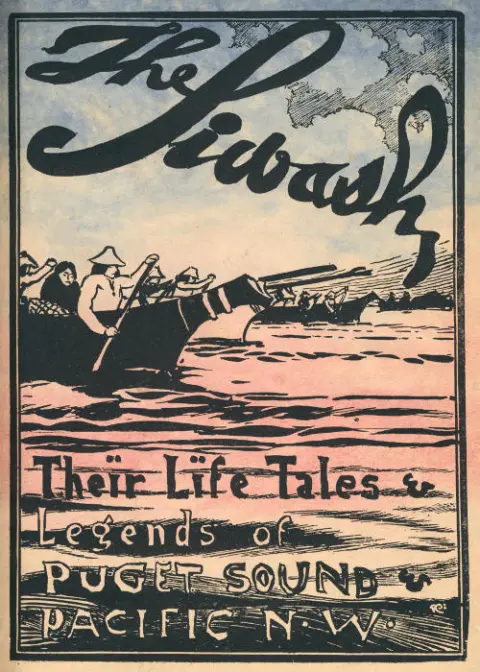
"The Siwash, Their Life, Legends, and Tales: Puget Sound and Pacific Northwest" by J.A. Costello is a historical account written in the late 19th century. The work aims to document the life, culture, and legends of the native Siwash people of Puget Sound, providing an in-depth ethnological study that reflects the traditions and experiences of various tribes before they were significantly altered by contact with European settlers. The opening portion of the book provides a preface and an introduction to the history and exploration of the Pacific Northwest, specifically detailing the arrival of European navigators and the subsequent impact on local Indigenous tribes. It highlights key figures in the exploration efforts, such as Captain Vancouver and Juan de Fuca, and outlines the territorial claims by various nations. The text emphasizes the Siwash people’s connection to their land, their traditions, and the early interactions with white settlers, setting the stage for a broader exploration of their legends, culture, and daily life in the chapters to come.
Introduction adapted from the source catalogue; source summaries may be automatically generated.
Free to read · English · 71,548 words · No account needed
MAKE TIME FOR A GOOD BOOK
On by default. Untick to stop anonymous reading totals. Each page counts after 10 seconds in view. How this works.
Anonymous counting is on unless you have switched it off.
“Inter-tribal wars among the natives of southeastern Alaska have become things of the past. A century’s contact with the whites has made the T’Klinkits a changed people, differing in exact ratio as that association has been the more or less intimate. Gone forever are their most striking characteristics, their native customs and institutions, until today their warlike achievements live only in song and story. Shamenism, witchcraft and slavery have disappeared before the growing power of the white man as the dreams of night are chased away by the morning sun; but as in bosky dell or depth of woodland shade the dewy shadows linger longest, so traces of former customs still remain among those natives farthest removed from the white man’s influence. Fierce and bloody were the frequent wars waged among the different tribes before they felt the rule of the Russians, who did all in their power to divert the attention of the Indians from warfare to the less dangerous pursuit of hunting. Gradually they caught the spirit of trade which actuated their new and powerful neighbors, and adapted new methods for the settlement of their feuds and differences. In time blankets and other articles of value came to be received in payment for insulted dignity or outraged honor, for which formerly no atonement was known save that of blood. Captives of war became slaves to their captors and passed their lives in bondage, unless fortune chanced to smile upon the standards of their people and they were retaken by them. The T’Klinkits waged war upon the British Columbia Indians and took from them many prisoners. At times the most warlike tribes held a considerable number of slaves, but as marriages among them were of rare occurrence, and their number depleted by sacrifice, when the wars ceased, thus cutting off the source of supply, slavery soon died out, until at the present time there are no slaves left. An old doctor at the village on the Takou river has a man with him who is said to be a slave, but he has so many opportunities to escape and implore the protection of the law that either he must be free or does not find his bondage irksome. Kuh-hahla-tloo-ut was formerly a slave. Her face is an exceedingly good type of the old T’Klinkit women, who have learned patience and submission through long years of toil and hardship. Report has it that there is one slave at the Chilkat village of Klak-wan, but practically he is free, although at one time he was owned by a former chief. Under the Russian rule wars among the T’Klinkit tribes became of rare occurrence, but the number of slaves was kept up by purchase from the Indians of British Columbia, chiefly the Flatheads. Throughout the history of the world in all climes and under all conditions slavery has presented the same general characteristics, and among the T’Klinkits there was no exception to the rule. Slaves had no civil rights whatever. They could own no property; whatever came to them through labor or gift belonged to the master. They could not marry without his consent, which was rarely ever given. When liberated, as they sometimes were, they ranked the lowest among the people and were counted with their mother’s clan. On festive occasions they were often killed or set free. At the death of a chief or head man it was customary to kill one or more slaves, sometimes ten or fifteen, that they might accompany their master and serve him in the life beyond this earthly existence. The killing of these slaves was attended with but little pomp or ceremony, their death was the one thing to be accomplished. Among the Chilkats, it would be decided in a secret council which of the slaves should be put to death. Unconscious of their impending doom they would be struck down from behind with a huge stone hammer. Able-bodied slaves were seldom sacrificed, as they were considered of too much value, but the old and diseased were usually selected as victims. If a slave should learn of his doom and succeed in escaping or concealing himself he was allowed to live, and after the festivities were over might return to the house of his master with no fear of punishment. Chiefs often used to help favorite slaves make their escape. After death the body of a slave received no more honor than that of a dog. It was denied the right of cremation and thrown upon the beach, food for the wolves, the fish and the birds. On the last evening of great feasts the host would retire to a corner of the house accompanied by all his slaves and don his finest costume—one kept especially for such occasions. His favorite slave would be called upon to dress him, and would receive for his services his freedom. One or more of the others would be put to death, and after the sacrifice the valor of the chief and his ancestors would be sung, and a distribution of gifts take place. Sometimes a host would present guests whom he wished to honor greatly with one or more slaves. At the potlatch at Klakwan last fall the wolf robe of the chief was taken from its hiding place and shown the people, and no blood sacrifice demanded, though the last time their eyes rested upon this much-prized relic it is said that six slaves were killed to do honor to the host.”
Your reading position is saved on this browser. Take it to another device with a library code. Reading pages adapt to text, rather than matching a printed edition.
BEHIND THE BOOK
This eBook is for the use of anyone anywhere in the United States and most other parts of the world at no cost and with almost no restrictions whatsoever. You may copy it, give it away or re-use it under the terms of the Project Gutenberg License included with this eBook or online at www.gutenberg.org. If you are not located in the United States, you will have to check the laws of the country where you are located before using this eBook. Read the source licence.
The original source file, including credits and licence, is retained by this library. Request an original-format copy at no charge. Please include the book title and Project Gutenberg identifier #59592.
KEEP YOUR CURIOSITY GOING
Cécile Tormay

Moritz Busch
John L. Ransom

Maurice Baring
Frances Wright
Cécile Tormay