THE CLASSIC COLLECTION✦An outlaw’s diary: the CommuneCLASSIC FREE BOOKS
An outlaw’s diary: the Commune
Cécile Tormay
THE CLASSIC COLLECTION · 1895
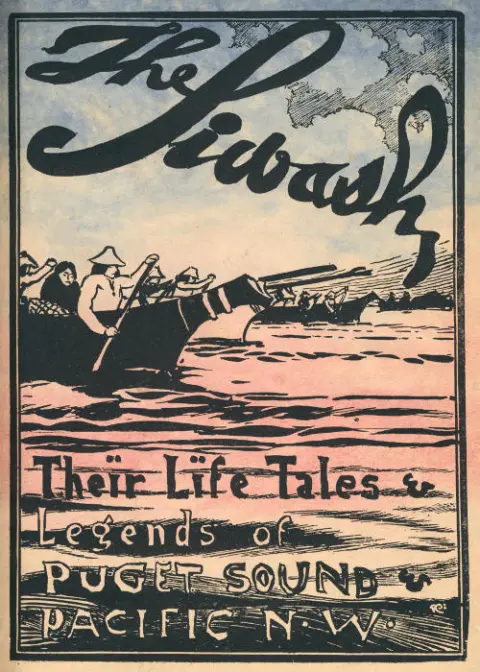
"The Siwash, Their Life, Legends, and Tales: Puget Sound and Pacific Northwest" by J.A. Costello is a historical account written in the late 19th century. The work aims to document the life, culture, and legends of the native Siwash people of Puget Sound, providing an in-depth ethnological study that reflects the traditions and experiences of various tribes before they were significantly altered by contact with European settlers. The opening portion of the book provides a preface and an introduction to the history and exploration of the Pacific Northwest, specifically detailing the arrival of European navigators and the subsequent impact on local Indigenous tribes. It highlights key figures in the exploration efforts, such as Captain Vancouver and Juan de Fuca, and outlines the territorial claims by various nations. The text emphasizes the Siwash people’s connection to their land, their traditions, and the early interactions with white settlers, setting the stage for a broader exploration of their legends, culture, and daily life in the chapters to come.
Introduction adapted from the source catalogue; source summaries may be automatically generated.
Free to read · English · 71,548 words · No account needed
MAKE TIME FOR A GOOD BOOK
On by default. Untick to stop anonymous reading totals. Each page counts after 10 seconds in view. How this works.
Anonymous counting is on unless you have switched it off.
Antedating the first arrivals of white people to the Sound in the 40’s, were found in various parts of the country numbers of things showing that white men or civilized or half-civilized people of some color had visited the country. One instance particularly was the remains or indications of a settlement or camp at the mouth of the Duwamish river. As nearly as good judgment could fix it, this camp must have been located at the beginning of the present century. It is not improbable that at some very early day, some navigator bold built a new one or repaired very materially a sailing vessel at that place. Stumps of trees that showed they had been cut for scores of years were found, and the trees themselves gone; strong proof that whoever stopped there did so for a purpose, executed it and went on their way, leaving nothing behind by which their identity could be made known to those who came after them. The Indians had no recollection or tradition of those who cut the trees, though it is not improbable that some one of the early navigators shortly subsequent to Vancouver tarried there for a time.
Another find of later years was the uncovering of a strange and very old cave, an old tomb in one of the public streets of Seattle.
There was not line or marble, nor carving, trinket, old coin nor scroll to tell its history, to name its day. It was way back in the palmy days of 1872 when the old tomb was unearthed and once more saw the light. The toilers of that day were grading down to the virgin soil and carrying Front street to the north. In their path at a spot opposite where the Frye block now stands and just north of Marion street stood a small mound. It must be cut down, and cut down it was; and the dirt carried to a distance south of the present crossing at Marion street and dumped into a small ravine or depression through which an old log-run threaded its course to the higher ground. In the digging of the mound the workmen laid bare the old tomb; and such a tomb! In the center of the mound it was about five feet from the surface. Built up for two or three feet with four walls of stone, boulders from here and there, but in a way showing rudimentary knowledge of architecture and design. Inside was the half-mummy, half-skeleton of some one unknown. Filling all of the space of the sarcophagus was beach sand, apparently having been procured with great care and toil. Such was the story of the unknown dead. It astonished the local historian of that day as it is still the wonder of those same historians who are yet living here today. The old tomb was at least 100 yards from the then high tide line, and the carefully gathered white beach sand had most certainly been carried over the intervening distance from sea to grave. Some joints of the skeleton were decayed, others not. The skull was perfect and what caused the local historian to wonder, and wonder, and wonder again, was that the poll of the skeleton was not flattened. For 20 years after the whites settled here, and for times out of mind before that the Indians of the Sound had universally flattened the skull. But then it was not Indian, why? Because the Indians said it was not. Old Kitsap’s people said it was not, and the traditions and customs of all the local Indians disproved such a proposition. It was on the edges of the high bluffs around the bay, just underneath the grass roots and tufts that clung to the very edges of the bluffs, where the Indian dead were buried, had always been buried, and even up to the present winter days of 1895, when an unusually heavy rainfall may occur, the bones of the dead Indians may be found at odd spots along the bluffs. They never put their dead under ground. The local historian has two probable theories for the cave. In Vancouver’s first explorations of the Sound his ships anchored off Blakeley rocks; after coursing Admiralty inlet Lieu. Puget took a boat’s crew and paddled away even to a greater distance up the Sound. Naturally they would explore such a pretty bay as that around the rim of which the Queen City so proudly sits, and it might have been that one of his men died and was buried here. Lewis and Clark’s men or some early explorers may have ventured down the valley of the Duwamish river in the dawn of the present century. Trees had been cut and the stumps were still standing that marked the sites of the early camping grounds, and axes had been used in the cutting. It might have been one of those explorers bold, died and was buried in the stone grave so carefully arranged to preserve the bones placed within. But these are only theories and the wonder of the little mound will perhaps forever remain a riddle unsolved.
Your reading position is saved on this browser. Take it to another device with a library code. Reading pages adapt to text, rather than matching a printed edition.
BEHIND THE BOOK
This eBook is for the use of anyone anywhere in the United States and most other parts of the world at no cost and with almost no restrictions whatsoever. You may copy it, give it away or re-use it under the terms of the Project Gutenberg License included with this eBook or online at www.gutenberg.org. If you are not located in the United States, you will have to check the laws of the country where you are located before using this eBook. Read the source licence.
The original source file, including credits and licence, is retained by this library. Request an original-format copy at no charge. Please include the book title and Project Gutenberg identifier #59592.
KEEP YOUR CURIOSITY GOING
Cécile Tormay

Moritz Busch
John L. Ransom

Maurice Baring
Frances Wright
Cécile Tormay