THE CLASSIC COLLECTION✦Cato: A Tragedy, in Five ActsCLASSIC FREE BOOKS
Cato: A Tragedy, in Five Acts
Joseph Addison
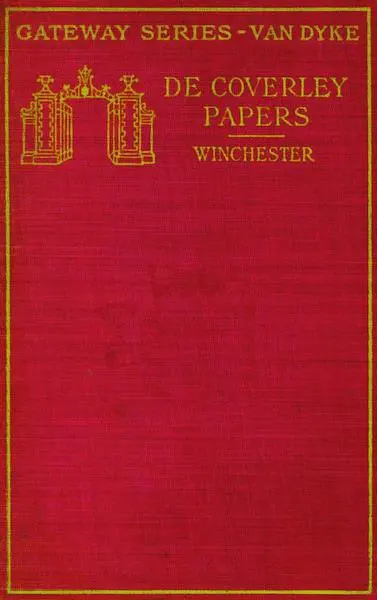
THE CLASSIC COLLECTION · 1904
"The Sir Roger de Coverley Papers" by Addison, Budgell, and Steele is a collection of essays originally published in "The Spectator," dating back to the early 18th century. The work introduces Sir Roger de Coverley, a whimsical and endearing character who represents the conservative English country gentleman of that time, as he navigates the social landscape of London and engages with various characters from his club. The opening of the collection presents foundational information about the characters and the context in which the papers were written. It begins with an introduction by the author, who explains the nature of their commentary on society and the perspective they adopt. The readers are introduced to Sir Roger de Coverley, a baronet with a humorous and benevolent disposition, who is depicted as affectionate towards both his peers and his tenants. Set within a gathering of diverse characters, including gentlemen of various backgrounds and professions, the narratives aim to entertain while providing insightful critiques of contemporary society, manners, and morals. Overall, the beginning of the text establishes a conversational tone, inviting readers to engage with the social dynamics of the period through the eyes of its charming and candid narrator.
Introduction adapted from the source catalogue; source summaries may be automatically generated.
Free to read · English · 70,621 words · No account needed
MAKE TIME FOR A GOOD BOOK
On by default. Untick to stop anonymous reading totals. Each page counts after 10 seconds in view. How this works.
Anonymous counting is on unless you have switched it off.
=Motto.= "She had not accustomed her woman's hands to the distaff or the skeins of Minerva."--Virgil, Æneid, vii. 305.
=69=: 13. =Leonora.= A letter from a Leonora, perhaps the lady of this paper, is to be found in Spectator, No. 91.
=70=: 4. =Great jars of china.= The craze for collecting china was then at its height. It is satirized by Steele in Tatler, No. 23, and by Addison in No. 10 of The Lover.
=70=: 17. =Scaramouches.= The Scaramouch is a typical buffoon in Italian farces; the name is derived from Scaramuccia, a famous Italian clown of the last half of the seventeenth century.
=70=: 20. =Snuff box.= This indicates that the habit of snuff taking had been adopted by fine ladies. It would seem, however, to have been a new fashion, at all events with ladies. See Steele's criticism upon the habit in Spectator, No. 344. For curious facts with reference to the use of tobacco in the Queen Anne time, see Ashton, Social Life in the Reign of Queen Anne, Chap. xvii.
=71=: 3. =Looking into the books=, etc. The humour consists largely, of course, in the odd miscellany of books suited "to the lady and the scholar."
=71=: 9. =Ogilby's Virgil=, the first complete translation of Virgil,
1649.
=71=: 10. =Dryden's Juvenal=, 1693.
=71=: 11, 12, 13. =Cassandra=, =Cleopatra=, and =Astraea= were translations of long-winded, sentimental French romances, the first two by La Calprenède, the third by Honoré D'Urfé.
=71=: 15. =The Grand Cyrus= and =Clelia= were even more famous romances, by Mademoiselle de Scudéry, each in ten volumes. For delightful satire upon the taste for this sort of reading, see Steele's comedy, The Tender Husband; the heroine, Miss Biddy Tipkin, has been nourished upon this delicate literature.
=71=: 17. =Pembroke's Arcadia.= Written in 1580-1581, by Sir Philip Sidney, but published, after his death, by his sister, the Countess of Pembroke. It is the best of the Elizabethan prose romances.
=71=: 18. =Locke.= John Locke's Essay on the Human Understanding, an epoch-making work in philosophy, published in 1690. Locke was one of the authors Leonora had "heard praised," and may have "seen"; but she evidently found better use for his book than to read it. The "patches" were bits of black silk or paper, cut in a variety of forms, which ladies stuck upon their faces, presumably to set off their complexions. See Spectator, No. 81. Notice the pun in this use of Locke.
=71=: 22. =Sherlock.= William Sherlock (1641-1707), dean of St. Paul's.
=71=: 23. =The Fifteen Comforts of Matrimony=, a translation of a French book of the fifteenth century, Quinze Joies de Mariage.
=71=: 24. =Sir William Temple's Essays=, published 1692.
=71=: 25. =Malebranche's Search after Truth= had been translated from the French not long before.
Your reading position is saved on this browser. Take it to another device with a library code. Reading pages adapt to text, rather than matching a printed edition.
BEHIND THE BOOK
This eBook is for the use of anyone anywhere in the United States and most other parts of the world at no cost and with almost no restrictions whatsoever. You may copy it, give it away or re-use it under the terms of the Project Gutenberg License included with this eBook or online at www.gutenberg.org. If you are not located in the United States, you will have to check the laws of the country where you are located before using this eBook. Read the source licence.
The original source file, including credits and licence, is retained by this library. Request an original-format copy at no charge. Please include the book title and Project Gutenberg identifier #48026.
KEEP YOUR CURIOSITY GOING

David Patterson (Spirit) Hatch

David Patterson (Spirit) Hatch

David Patterson (Spirit) Hatch

Ralph Waldo Emerson

Maurice Baring

Oscar Wilde & James McNeill Whistler