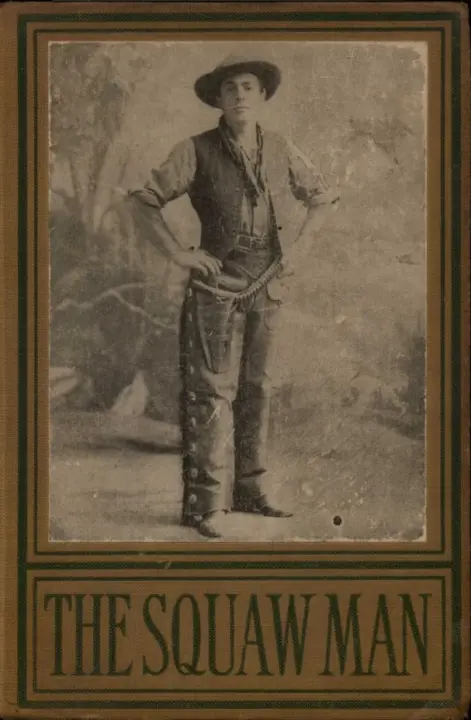
The Squaw Man: A Novel
Julie Opp & Edwin Milton Royle
THE CLASSIC COLLECTION · 1910
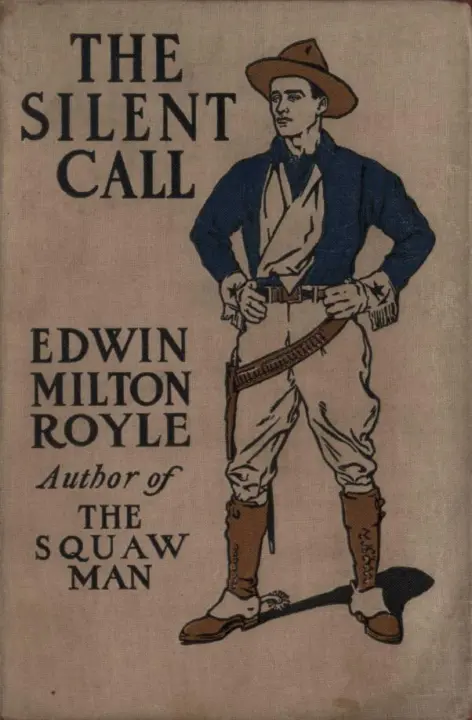
"The Silent Call" by Edwin Milton Royle is a novel written in the early 20th century. The story unfolds in a Western setting, focusing on the lives of Native Americans and their relationship with white settlers, captured through the experiences of the main character, Hal Calthorpe, who serves as the chief of Indian police. The narrative likely explores themes of identity, cultural conflict, and compassion, particularly through the lens of Calthorpe and an Indian girl named Wah-na-gi. At the start of the novel, readers are introduced to Calthorpe as he traverses through a desolate landscape with a band of Indian police under his command. The wildlife and harsh conditions evoke a sense of weariness among the men, yet Calthorpe finds humor and beauty in his surroundings. Interactions between Calthorpe, the Reverend Dr. John McCloud, and various characters hint at tensions between the Indian community and external forces, particularly the agent David Ladd, who appears to have ulterior motives concerning the lands. The opening chapters lay groundwork for complex relationships, notably highlighting Wah-na-gi, a young woman caught between her Native identity and her experiences after attending a white school, thereby setting the stage for ensuing conflicts and explorations of selfhood.
Introduction adapted from the source catalogue; source summaries may be automatically generated.
Free to read · English · 97,629 words · No account needed
MAKE TIME FOR A GOOD BOOK
On by default. Untick to stop anonymous reading totals. Each page counts after 10 seconds in view. How this works.
Anonymous counting is on unless you have switched it off.
As Mr. McShay did not refuse, being by this time somewhat bewildered, Hal passed the paper up to the cattle-boss, who looked it over and over, and then, thinking Of other things, looked at the back of the paper.
"He didn't sign it on both sides of the paper, Bill," growled McShay impatiently, "and it ain't leaked through."
"'Tain't Jim's--the Earl's, I mean," said Bill decisively.
"This is a put-up job, that's what it is, a put-up job," and the representative of the cowboys, now thoroughly enraged, made a movement in the direction of the pile of guns nestling in front of Wah-na-gi.
"McShay!" cried Ladd imperatively; "I wouldn't advise you to try to get your gun. My Indian police are within call and they have orders to put down violence."
The baffled fury of the cowman was a pleasant sight to the agent and he smiled broadly as he explained:
"You know this is as much of a surprise to me as it is to you," and this was strictly true; "but I am endeavoring to take it calmly," he added with an irritating grin. "You don't see me getting excited."
"Well, boys," said McShay to his followers, "the wheel is crooked and the cards are marked, but we'll sit through the game out of respect for the chairman."
McCloud bowed, pleased and flattered by the deference of the rough man whose sincerity was unmistakable.
"Thank you. I'm sure the agent will have no excuse for using the police even to keep the peace." And he felt grateful to McShay that the latter did not for a moment suspect him of being connected in any way with what he was pleased to regard as a crooked game.
"I thought it best to be on the safe side," explained the agent. "And now I think it only fair, also in the interests of peace, to make my position plain. The rest of the lands you cowboys are illegally holding are on the Reservation and you've got to get off."
"Don't think so," said McShay, having now in a measure regained his poise. "No, don't think so. They were thrown open by Act of Congress and we hold 'em as original discoverers and locators. We hold 'em under the mineral laws."
"This isn't your day at home, McShay. You're wrong all the way round. Calthorpe here is a surveyor----"
"Say, he's all sorts of cute and convenient things, ain't he?"
McShay was getting himself in hand once more.
"All right, Parson," he said in response to a gesture of protest by the chairman; "all right, I ain't a-sayin' what they are. I'm a-sayin' it."
Your reading position is saved on this browser. Take it to another device with a library code. Reading pages adapt to text, rather than matching a printed edition.
Julie Opp & Edwin Milton Royle
BEHIND THE BOOK
This eBook is for the use of anyone anywhere in the United States and most other parts of the world at no cost and with almost no restrictions whatsoever. You may copy it, give it away or re-use it under the terms of the Project Gutenberg License included with this eBook or online at www.gutenberg.org. If you are not located in the United States, you will have to check the laws of the country where you are located before using this eBook. Read the source licence.
The original source file, including credits and licence, is retained by this library. Request an original-format copy at no charge. Please include the book title and Project Gutenberg identifier #51611.
KEEP YOUR CURIOSITY GOING
Coulson Kernahan

Maurice Baring
Frances Wright
Cécile Tormay

Frederic Jesup Stimson

W. H. P. (William Henry Pope) Jarvis