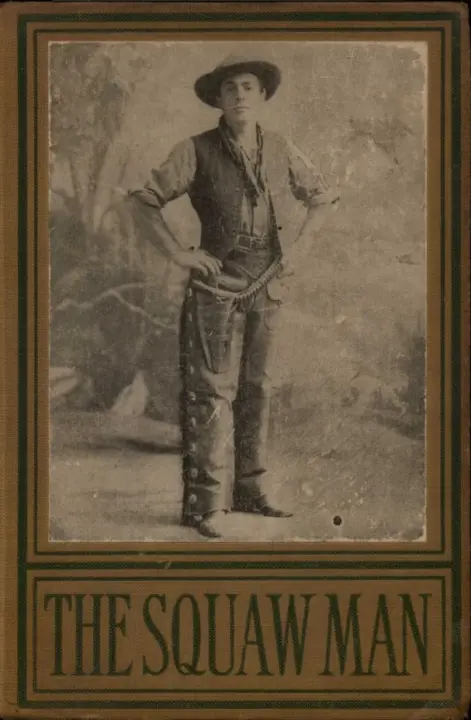
The Squaw Man: A Novel
Julie Opp & Edwin Milton Royle
THE CLASSIC COLLECTION · 1910
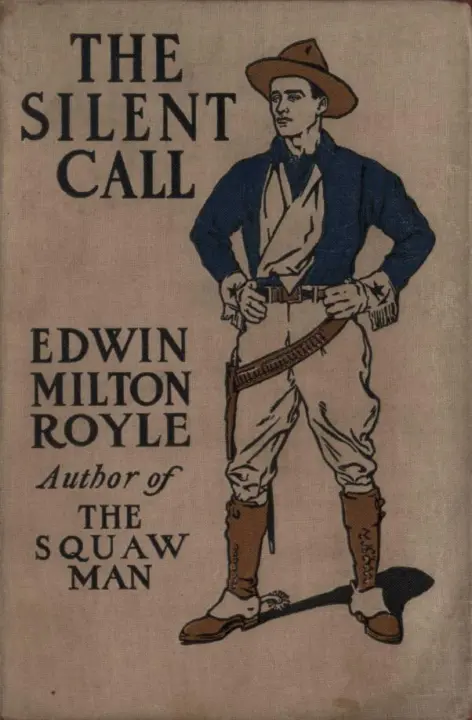
"The Silent Call" by Edwin Milton Royle is a novel written in the early 20th century. The story unfolds in a Western setting, focusing on the lives of Native Americans and their relationship with white settlers, captured through the experiences of the main character, Hal Calthorpe, who serves as the chief of Indian police. The narrative likely explores themes of identity, cultural conflict, and compassion, particularly through the lens of Calthorpe and an Indian girl named Wah-na-gi. At the start of the novel, readers are introduced to Calthorpe as he traverses through a desolate landscape with a band of Indian police under his command. The wildlife and harsh conditions evoke a sense of weariness among the men, yet Calthorpe finds humor and beauty in his surroundings. Interactions between Calthorpe, the Reverend Dr. John McCloud, and various characters hint at tensions between the Indian community and external forces, particularly the agent David Ladd, who appears to have ulterior motives concerning the lands. The opening chapters lay groundwork for complex relationships, notably highlighting Wah-na-gi, a young woman caught between her Native identity and her experiences after attending a white school, thereby setting the stage for ensuing conflicts and explorations of selfhood.
Introduction adapted from the source catalogue; source summaries may be automatically generated.
Free to read · English · 97,629 words · No account needed
MAKE TIME FOR A GOOD BOOK
On by default. Untick to stop anonymous reading totals. Each page counts after 10 seconds in view. How this works.
Anonymous counting is on unless you have switched it off.
"Parson, I don't care much for the word rapacity."
"It isn't parliamentary," said the chairman, amused in spite of himself. "I declare it out of order. I hope Mr. Calthorpe will----"
"I withdraw it," said Hal good-humoredly. "Sorry! What I meant was they sold you something they didn't have, Mr. McShay."
"It's giving our hand away," said the cowman with an assumed serenity he did not feel, for there was something about the manner and speech of the other which made him uneasy in spite of himself.
"It's a-giving our hand away, but I don't mind puttin' you wise. There's a deed!"--and he took a paper from his wallet--"and it's signed, 'James Wynnegate, Earl of KERhill.'"
"Karhill," corrected the boy.
"Kerrhill," insisted Mike, and then spelled it--"Kay-arr-hell."
"May I see that?"
"Sure! Strictly speakin', I don't know as it's any of your business, but maybe it'll be good for what ails you."
Hal looked at it, read it, examined it swiftly but carefully, amid a silence which was intense! The interest had shifted from the agent to the chief of police, and every one present was wondering how it happened and what it could mean. While the document was under examination, Big Bill sauntered in, trying to look absent and desultory, and failing completely. He tried to appear on his way to the store, but his open face showed plainly his anxiety to know what was going on.
"The signature is a forgery," said Calthorpe simply.
"What?" bellowed McShay, jumping into the air and feeling for his gun. His dismay on realizing that he didn't have this final argument was pathetic.
"I told you, Parson," he said to the chairman bitterly; "I told you it
was a mistake."
"No unsupported statement need bother you, Mr. McShay," suggested the preacher, his eyes, twinkling, for now that he felt that he had the situation well in hand he was amused at the play of human emotions going on before him.
"That's right, Parson," said McShay. "That's right, 'unsupported' is a glad word and it epitomizes the situation. But the young feller'll have to make this good some other time and place."
"I'll make it good now, Mr. McShay. Bill, come here, will you?"
As the big foreman sauntered over to him, the young man went on:
"As you all know, Bill was the Earl's foreman for years, and knows his signature as well as he knows his own. Will you let me submit this signature to Bill?"
Your reading position is saved on this browser. Take it to another device with a library code. Reading pages adapt to text, rather than matching a printed edition.
Julie Opp & Edwin Milton Royle
BEHIND THE BOOK
This eBook is for the use of anyone anywhere in the United States and most other parts of the world at no cost and with almost no restrictions whatsoever. You may copy it, give it away or re-use it under the terms of the Project Gutenberg License included with this eBook or online at www.gutenberg.org. If you are not located in the United States, you will have to check the laws of the country where you are located before using this eBook. Read the source licence.
The original source file, including credits and licence, is retained by this library. Request an original-format copy at no charge. Please include the book title and Project Gutenberg identifier #51611.
KEEP YOUR CURIOSITY GOING
Coulson Kernahan

Maurice Baring
Frances Wright
Cécile Tormay

Frederic Jesup Stimson

W. H. P. (William Henry Pope) Jarvis