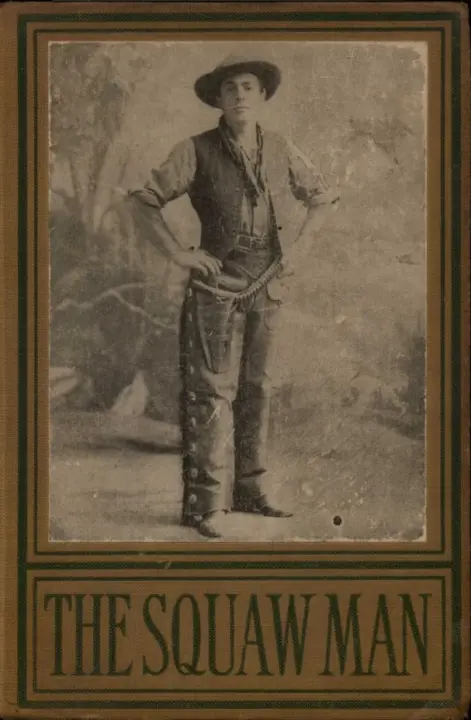
The Squaw Man: A Novel
Julie Opp & Edwin Milton Royle
THE CLASSIC COLLECTION · 1910
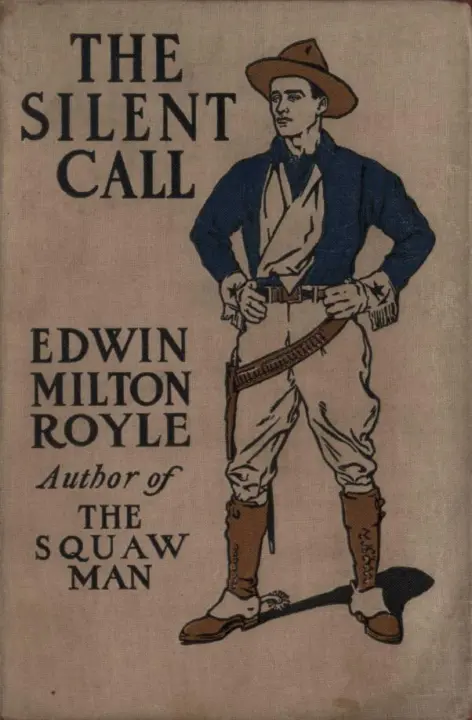
"The Silent Call" by Edwin Milton Royle is a novel written in the early 20th century. The story unfolds in a Western setting, focusing on the lives of Native Americans and their relationship with white settlers, captured through the experiences of the main character, Hal Calthorpe, who serves as the chief of Indian police. The narrative likely explores themes of identity, cultural conflict, and compassion, particularly through the lens of Calthorpe and an Indian girl named Wah-na-gi. At the start of the novel, readers are introduced to Calthorpe as he traverses through a desolate landscape with a band of Indian police under his command. The wildlife and harsh conditions evoke a sense of weariness among the men, yet Calthorpe finds humor and beauty in his surroundings. Interactions between Calthorpe, the Reverend Dr. John McCloud, and various characters hint at tensions between the Indian community and external forces, particularly the agent David Ladd, who appears to have ulterior motives concerning the lands. The opening chapters lay groundwork for complex relationships, notably highlighting Wah-na-gi, a young woman caught between her Native identity and her experiences after attending a white school, thereby setting the stage for ensuing conflicts and explorations of selfhood.
Introduction adapted from the source catalogue; source summaries may be automatically generated.
Free to read · English · 97,629 words · No account needed
MAKE TIME FOR A GOOD BOOK
On by default. Untick to stop anonymous reading totals. Each page counts after 10 seconds in view. How this works.
Anonymous counting is on unless you have switched it off.
"Maybeso you heap like 'em white man. I savey you! Chief Injin police, eh? Katch wayno! (No good). Maybeso kill 'im some day!"
Then he noticed that she was dressed very neatly, better than the Indian women dress, that in fact she had on her best clothes, and he knew it was because the chief of police had just got back, and it enraged him to violence. He snatched the string of beads from her neck and threw them to the ground.
"Kill 'im, me, some day."
"Who's that you're going to kill?" said Calthorpe in his soft musical voice as he advanced from the porch of the agent's house. Appah turned on him in a fury.
"What's matter you?"
He pointed to the two policemen.
"Your dog, savey? I look down--saw-reach! (dog). Look back--saw-reach! This side, that side--saw-reach, Injin police! Maybeso you can't do it. Maybeso make heap trouble!"
"You savey this woman?" said Hal quietly. "Her people, dead! No father, no mother! heap bad men all around, plenty bad men, some whites, some Injin. You leave her alone. Savey?"
Unconsciously the white people speak English to the Indians as the Indians speak it, as we talk baby-talk to a baby.
"Maybeso you too all time pretty quick leave Injin woman alone."
Appah's hand was feeling under his blanket for his knife.
"When I speak with this woman," replied Hal simply, "some of these Indian men are always near. She is not to be troubled--not by you, not by me! Chavanaugh, come here."
One of the policemen came forward.
"If anything bad, any harm, comes to this woman through me, these men will kill me. These are my orders; is it so?"
"Toyoch, wayno," replied Chavanaugh slowly. "It is so and it is well."
"Now for you," said Hal to the medicine-man.
"You quit running off the settlers' cattle or I'll arrest you."
"Maybeso you can't, medicine-man, me! Chief, heap big chief!" Hal
ignored this boast.
"This woman heap scared, all time scared! Let her alone!"
Appah made a long pause before he replied, then he said with some thing
that approached a smile:
"Maybeso yes--maybeso no," and he walked to his pony hitched before the blacksmith shop and rode away.
Up to this time Wah-na-gi had remained alert, proud, outwardly calm; now she seemed to dwindle and shrink as she weakly drifted to some empty boxes which huddled under a cottonwood tree by the side of the little irrigating ditch which brawled along in a joyous hurry to get to the big streams below.
Calthorpe followed her and as she sat down said gently: "You are very
tired."
"No," she said; "I am not tired."
Your reading position is saved on this browser. Take it to another device with a library code. Reading pages adapt to text, rather than matching a printed edition.
Julie Opp & Edwin Milton Royle
BEHIND THE BOOK
This eBook is for the use of anyone anywhere in the United States and most other parts of the world at no cost and with almost no restrictions whatsoever. You may copy it, give it away or re-use it under the terms of the Project Gutenberg License included with this eBook or online at www.gutenberg.org. If you are not located in the United States, you will have to check the laws of the country where you are located before using this eBook. Read the source licence.
The original source file, including credits and licence, is retained by this library. Request an original-format copy at no charge. Please include the book title and Project Gutenberg identifier #51611.
KEEP YOUR CURIOSITY GOING
Coulson Kernahan

Maurice Baring
Frances Wright
Cécile Tormay

Frederic Jesup Stimson

W. H. P. (William Henry Pope) Jarvis