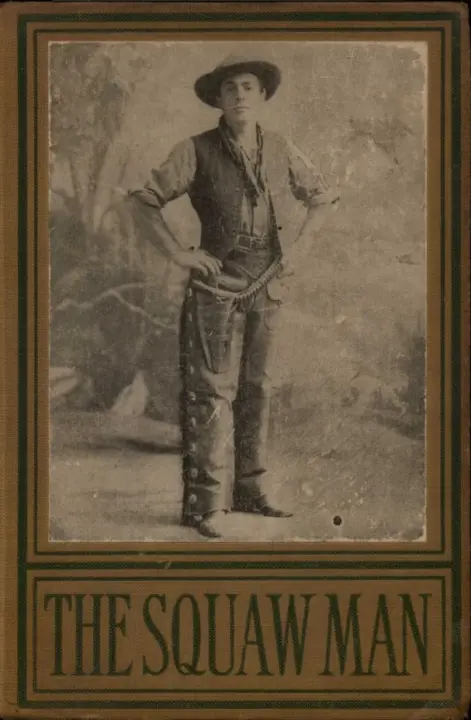
The Squaw Man: A Novel
Julie Opp & Edwin Milton Royle
THE CLASSIC COLLECTION · 1910
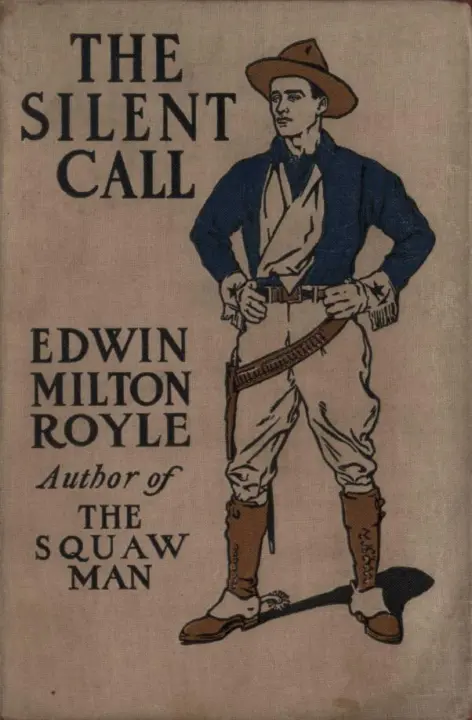
"The Silent Call" by Edwin Milton Royle is a novel written in the early 20th century. The story unfolds in a Western setting, focusing on the lives of Native Americans and their relationship with white settlers, captured through the experiences of the main character, Hal Calthorpe, who serves as the chief of Indian police. The narrative likely explores themes of identity, cultural conflict, and compassion, particularly through the lens of Calthorpe and an Indian girl named Wah-na-gi. At the start of the novel, readers are introduced to Calthorpe as he traverses through a desolate landscape with a band of Indian police under his command. The wildlife and harsh conditions evoke a sense of weariness among the men, yet Calthorpe finds humor and beauty in his surroundings. Interactions between Calthorpe, the Reverend Dr. John McCloud, and various characters hint at tensions between the Indian community and external forces, particularly the agent David Ladd, who appears to have ulterior motives concerning the lands. The opening chapters lay groundwork for complex relationships, notably highlighting Wah-na-gi, a young woman caught between her Native identity and her experiences after attending a white school, thereby setting the stage for ensuing conflicts and explorations of selfhood.
Introduction adapted from the source catalogue; source summaries may be automatically generated.
Free to read · English · 97,629 words · No account needed
MAKE TIME FOR A GOOD BOOK
On by default. Untick to stop anonymous reading totals. Each page counts after 10 seconds in view. How this works.
Anonymous counting is on unless you have switched it off.
It was a curious contrast, these two. They were very far apart, at the two extremes, each going to exaggerated and unreasonable lengths, the one to go back, the other to go on. It was very childish. Appah felt this and, feeling the stronger, made the concession. "Fish--water! Bird--air! Half bird, half fish--no good! Injin face, Injin name, white heart!--no good! White man no savey you; Injin no savey you. Maybe so you come back--be Injin! Wayno!" He looked very well as he said this, for he was very much in earnest and he threw into it all his natural eloquence of voice and gesture.
"It's too late," she said sadly. "I couldn't go back."
There was a pause as she looked over to the agent's house and added:
"Not now."
Appah saw and understood.
"Alone, you! Heap alone! All time alone!"
"Yes," she said with the suspicion of a sob in her voice. "I am alone."
Appah was on his way to the dances in the meadows, not the sun-dance, but the social functions, the turkey, wolf, buffalo dances, and he was dressed in all the glory of feather bonnet, buckskin shirt, and was conscious of looking extremely well. He was a vain man and it was difficult for him to realize that he had not produced a favorable impression, so he made the mistake of calling attention to his advantages.
"My father--big chief--Big Thunder. Big chief--me! Big medicine-man! Heap savey, me! Heap savey Shinob, heap savey--mystery! The bear, my friend, give me his strength! the wolf, he heap savey me! The wind talk to me! the sun, my friend! Plenty cattle, plenty horses! Maybeso you be Appah's squaw."
As Appah finished his eloquent appeal, two of Calthorpe's police lounged into sight from nowhere in particular. The sight of them made the medicine-man angry.
"Pikeway," he said to them. Which means "go away," "get along," and "get out," or just "go," according to the way you say it. It meant several things the way Appah said it. The two men only came nearer and were provokingly oblivious of the big chief. It was plain that they did not intend to hear him. Appah turned to her and, doubly irritated at being disregarded before her, said:
"Injin police--bad medicine! Trail, trail! me! all time, follow me! Tishum, tishum (all time)! Maybeso make heap trouble! You tell 'em pikeway."
"No, I will not," said Wah-na-gi boldly, plucking up courage in their
presence.
"I'm afraid of you."
Then Appah forgot that he was trying to win her love. He advanced close to her, as if he would lay violent hands on her.
Your reading position is saved on this browser. Take it to another device with a library code. Reading pages adapt to text, rather than matching a printed edition.
Julie Opp & Edwin Milton Royle
BEHIND THE BOOK
This eBook is for the use of anyone anywhere in the United States and most other parts of the world at no cost and with almost no restrictions whatsoever. You may copy it, give it away or re-use it under the terms of the Project Gutenberg License included with this eBook or online at www.gutenberg.org. If you are not located in the United States, you will have to check the laws of the country where you are located before using this eBook. Read the source licence.
The original source file, including credits and licence, is retained by this library. Request an original-format copy at no charge. Please include the book title and Project Gutenberg identifier #51611.
KEEP YOUR CURIOSITY GOING
Coulson Kernahan

Maurice Baring
Frances Wright
Cécile Tormay

Frederic Jesup Stimson

W. H. P. (William Henry Pope) Jarvis