THE CLASSIC COLLECTION✦My diaries, being a personal narrative of events 1888-1914, Part 2 (1900-1914)CLASSIC FREE BOOKS
My diaries, being a personal narrative of events 1888-1914, Part 2 (1900-1914)
Wilfrid Scawen Blunt
THE CLASSIC COLLECTION · 1864
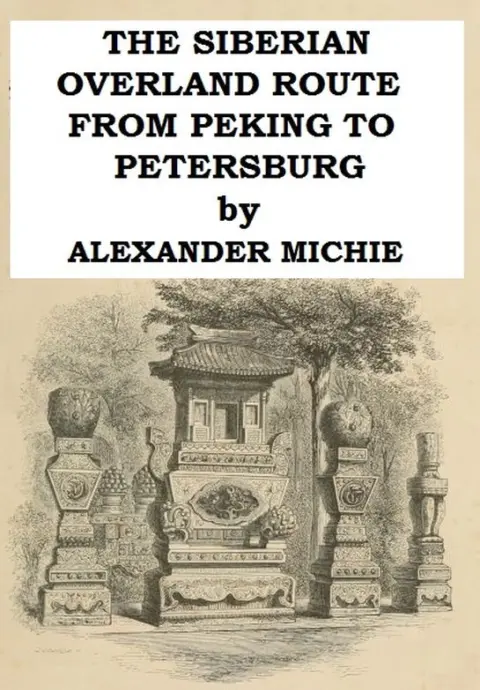
"The Siberian Overland Route from Peking to Petersburg" by Alexander Michie is a historical account written in the mid-19th century. This work presents a firsthand narrative of the author's journey from China to Russia through Mongolia and Siberia, detailing the landscapes, cultures, and experiences encountered along the way. The book aims to shed light on a route that had been largely unexplored and, as suggested in the preface, aims to provide new insights into the regions traversed. The opening of the book introduces Michie's motivation for embarking on this journey, inspired by previous travelers and the desire to experience the mysteries of less-known regions. He contrasts the difficulties and discomforts of the journey by sea with the allure of the northern route through challenging climates and unfamiliar landscapes. Michie describes the societal changes occurring in China at the time, particularly concerning foreign access and the restrictions imposed by the local government, while setting the stage for his travel experiences that follow. The narrative is filled with observations on the geography, local customs, and the dynamics of foreign and native interactions, effectively drawing the reader into the journey's historical context.
Introduction adapted from the source catalogue; source summaries may be automatically generated.
Free to read · English · 132,367 words · No account needed
MAKE TIME FOR A GOOD BOOK
On by default. Untick to stop anonymous reading totals. Each page counts after 10 seconds in view. How this works.
Anonymous counting is on unless you have switched it off.
The old Observatory on the Wall is interesting as a monument of the early astronomical tastes of the Chinese emperors, and of the ingenuity of the Jesuits. It was first erected by the Ming before the Jesuits came to China, or, at all events, before they began to be influential, and afterwards greatly enlarged and improved under the auspices of the Jesuits. There is even an old instrument cast out and lying dishonoured in the grass--an orrery, if I rightly remember, dating from the Mongol dynasty, 600 years old. It is probable that the Chinese or Mongols were then in advance of European nations in their knowledge of celestial phenomena. The great celestial globe made under the direction of Verbiest, is a superb casting in bronze, and although the instrument sent from Paris is the finest in the Observatory, Father Verbiest's celestial globe was the most interesting to me as a specimen of what a clever man can do under almost insuperable difficulties. Since the fall of the Jesuits little attention seems to have been paid to, or use made of, the Observatory, and the teaching of those talented men is well nigh lost.
The Temple of Heaven, or, as some people call it, the Altar of Heaven, is situated near the south wall of the city. We had several miles to go to it from our residence, in a direct line south, along the main street from the centre gate between the Tartar and Chinese cities. The street is wide and straight, but very dirty, and blocked up with trumpery stalls of all sorts, and kept alive by the incessant shouts of boys and old women. "Apples! fine apples, to be sold cheap,--those who have no money can't have any," reminded us of the pathetic story of "Simple Simon." Jugglers also disported themselves in the street and attracted good audiences to witness the swallowing and disgorging of huge stones, feats of strength, and other miracles. The poor juggler does not seem to take much by his motions, however, for, after swallowing an intolerable quantity of stone, and throwing up large bricks, and allowing them to break themselves on his head, thereby creating baldness on the crown, and otherwise amusing a distinguished circle of spectators for twenty minutes, he mildly solicits "cash," and has a wretched pittance thrown into the ring, much as one would throw a bone to a dog. I could not help wishing him some more useful outlet for his talents. Another man would stand with a white painted board in his hand, slightly covered with ink in a half-liquid state, and, while conversing with the crowd, he would, by means of his thumb and fingers, throw off such excellent representations of fishes, birds, &c., with every fin, scale, and feather done to the life, as one never sees in the most highly finished Chinese paintings. The talent displayed by these peripatetic artists proves conclusively that the Chinese do possess the skill to draw after nature. Then why don't they do it? A question more easily asked than answered. But we are supposed to be on the road to the Temple of Heaven. After walking two miles or so down this great street, we suddenly come to a break in the houses. There is no more street, but a large open space before us, lying very low, the road being continued on a raised causeway, on the same level as the street we have left. This space was originally a parade-ground. It is now a mud-puddle, cut up in all directions by innumerable cart-ruts, and most unsightly to behold. But the Temple of Heaven itself is now in sight, the outer wall stretching from a point abreast of us on the left to the south gate of the city, which is dimly visible in the distance over the miscalled parade-ground. The great centre pavilion, with its blue roof and large gilt top, resplendent in the afternoon sun, shoots up into the air, the most conspicuous object to be seen in all Peking. The outer wall alluded to encloses a square mile of ground. Opposite to the Temple of Heaven, and on our right, is the Temple or Altar of the Earth, where the emperors of China repair according to traditional custom on the first day of spring to inaugurate the happy season by ploughing the first furrow. The little boy who now wields the sceptres of the khans must be too young to hold a plough, and I suppose he does it by commission, if indeed he is not too degenerate to do it at all.
Your reading position is saved on this browser. Take it to another device with a library code. Reading pages adapt to text, rather than matching a printed edition.
BEHIND THE BOOK
This eBook is for the use of anyone anywhere in the United States and most other parts of the world at no cost and with almost no restrictions whatsoever. You may copy it, give it away or re-use it under the terms of the Project Gutenberg License included with this eBook or online at www.gutenberg.org. If you are not located in the United States, you will have to check the laws of the country where you are located before using this eBook. Read the source licence.
The original source file, including credits and licence, is retained by this library. Request an original-format copy at no charge. Please include the book title and Project Gutenberg identifier #45167.
KEEP YOUR CURIOSITY GOING
Wilfrid Scawen Blunt
Wilfrid Scawen Blunt

E. W. (Edgar Watson) Howe
Cécile Tormay

Moritz Busch
John L. Ransom