THE CLASSIC COLLECTION✦My diaries, being a personal narrative of events 1888-1914, Part 2 (1900-1914)CLASSIC FREE BOOKS
My diaries, being a personal narrative of events 1888-1914, Part 2 (1900-1914)
Wilfrid Scawen Blunt
THE CLASSIC COLLECTION · 1864
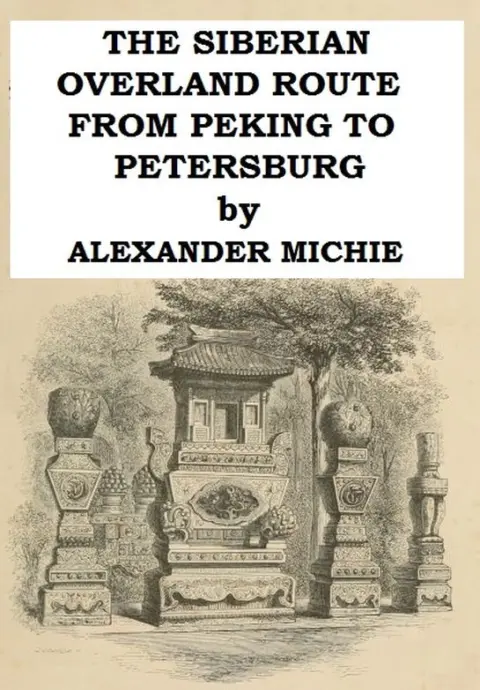
"The Siberian Overland Route from Peking to Petersburg" by Alexander Michie is a historical account written in the mid-19th century. This work presents a firsthand narrative of the author's journey from China to Russia through Mongolia and Siberia, detailing the landscapes, cultures, and experiences encountered along the way. The book aims to shed light on a route that had been largely unexplored and, as suggested in the preface, aims to provide new insights into the regions traversed. The opening of the book introduces Michie's motivation for embarking on this journey, inspired by previous travelers and the desire to experience the mysteries of less-known regions. He contrasts the difficulties and discomforts of the journey by sea with the allure of the northern route through challenging climates and unfamiliar landscapes. Michie describes the societal changes occurring in China at the time, particularly concerning foreign access and the restrictions imposed by the local government, while setting the stage for his travel experiences that follow. The narrative is filled with observations on the geography, local customs, and the dynamics of foreign and native interactions, effectively drawing the reader into the journey's historical context.
Introduction adapted from the source catalogue; source summaries may be automatically generated.
Free to read · English · 132,367 words · No account needed
MAKE TIME FOR A GOOD BOOK
On by default. Untick to stop anonymous reading totals. Each page counts after 10 seconds in view. How this works.
Anonymous counting is on unless you have switched it off.
But we have not yet seen the great gilt image of Bhudda, which stands in a separate building erected for the purpose. We failed in getting in on the first visit, but afterwards succeeded. The image is seventy-two feet high, well formed, and symmetrically proportioned. By a series of narrow and steep staircases we ascend several stories, at each getting a view of a part of the image. At the top of all we get out on a balcony, from which a good view of the city and environs is obtained.
The Grand Lama of this monastery is a Chaberon or living Bhudda, of whom there are several in Mongolia; and as such he is a sacred person, and a man of great authority among Mongols, whether lamas or laymen. We had business to transact with this incarnation of Bhudda, but, on inquiring for him, we learned that he had left on some holy mission to the great lamasery at Dolonor, a Mongol town a few days' journey north-west of Peking. We had a letter from the head priest of the Fang-wang temple at Tungchow, who, though not belonging to the Lama sect, which so far as I am aware consists exclusively of Tartars, was nevertheless on easy terms with the Grand Lama. The purport of the letter was to recommend us to the attentions of the Grand Lama, and to request him to give us another letter to the lamas of a monastery in Mongolia, a short distance beyond the Great Wall at Chan-kia-kow, to enlist their services in procuring camels for our journey across the desert of Gobi. We anticipated some difficulty about this, and wished to have as many strings to our bow as possible. The letter was written in Mongol, and put in an envelope addressed in Manchu, for the priest at Tung-chow was a learned man. No one in the monastic brotherhood could be found who could read the Manchu address, and they had great difficulty in finding one who could master the Mongol characters in which the letter itself was written. We were surprised that they should not be able to read their own language, and on inquiry found that lamas are not taught to read Mongol as a necessary branch of study. They all learn the Lama writing, which they call "Tangut," but which must be Thibetian, as all their books and prayers are written in that character, and those lamas who live in Peking generally learn to read a little Chinese for their own convenience. While the letter was being deciphered we were introduced to the lay brother of the monastery, the confidant of the Grand Lama, and factotum in all secular affairs. A fine, hard-headed, swarthy complexioned, rough-and-ready burly fellow he was, and he received us with his rude native hospitality, showing us into the room, and making us sit on the very kang used by the absent Bhudda. Being naturally slow of comprehension, and his secretary being equally slow and uncertain in deciphering the missive, the old fellow had many questions and cross-questions to ask, with many repetitions, which all being carried on in a very loud tone of voice, as if he had been bawling to a man on the main-top, began to get rather tiresome. Having satisfied himself about the contents of the letter, he entered into conversation with Noetzli, who, having been in Mongolia before, and in the very monastery of Bain-tolochoi to which we sought to be accredited, very adroitly led the conversation to that subject, and soon showed our Mongol friend that he knew all about the locality and the personal appearance of the head Lama there, whose chief characteristic seemed to be that he was inordinately fat. No sooner had our friend convinced himself that Noetzli had actually been the guest of the fat Lama, than he took us yet closer into his confidence, ordered the letter to be written, and at the same time despatched a boy into the street with some money in his hand. When the letter was finished, and we rose to leave, the old fellow, on hospitable thoughts intent, protested, seized our hats, and by main force pushed us back to the seat of the Grand Lama. To keep us in play he put fruit before us, but we did not know what it was all about until our breakfast was brought in in a large basin. It consisted of about twenty pounds of plain boiled mutton, without bread, rice, potatoes, or vegetables of any kind. All we had to eat with it was a solution of salt, soy, vinegar, and sugar. Eat we must, there was no help for it, and we honestly set ourselves to do as full justice to the unsavoury meal as we were capable of, although we had a good breakfast waiting us at home, that is, at our restaurant, our host all the while standing over us like a taskmaster to keep us up to our work. When no entreaties would make us eat more, with looks and expressions of pitying regret, our uncouth friend showed us how Mongols eat mutton by taking out a good-sized piece with his fingers, and dropping it down his throat. Then turning to the youngsters who crowded the room he pitched lumps of mutton to each of them, who, in like manner, gobbled it like hungry eagles. Our reception at the Lama temple gave us a fair idea of Mongol hospitality and habits, and impressed us favourably with the former. A long ride through the dirty streets of Peking, in a hot sun, was the least agreeable part of our morning's work.
Your reading position is saved on this browser. Take it to another device with a library code. Reading pages adapt to text, rather than matching a printed edition.
BEHIND THE BOOK
This eBook is for the use of anyone anywhere in the United States and most other parts of the world at no cost and with almost no restrictions whatsoever. You may copy it, give it away or re-use it under the terms of the Project Gutenberg License included with this eBook or online at www.gutenberg.org. If you are not located in the United States, you will have to check the laws of the country where you are located before using this eBook. Read the source licence.
The original source file, including credits and licence, is retained by this library. Request an original-format copy at no charge. Please include the book title and Project Gutenberg identifier #45167.
KEEP YOUR CURIOSITY GOING
Wilfrid Scawen Blunt
Wilfrid Scawen Blunt

E. W. (Edgar Watson) Howe
Cécile Tormay

Moritz Busch
John L. Ransom