THE CLASSIC COLLECTION✦An outlaw’s diary: the CommuneCLASSIC FREE BOOKS
An outlaw’s diary: the Commune
Cécile Tormay
THE CLASSIC COLLECTION · 1907
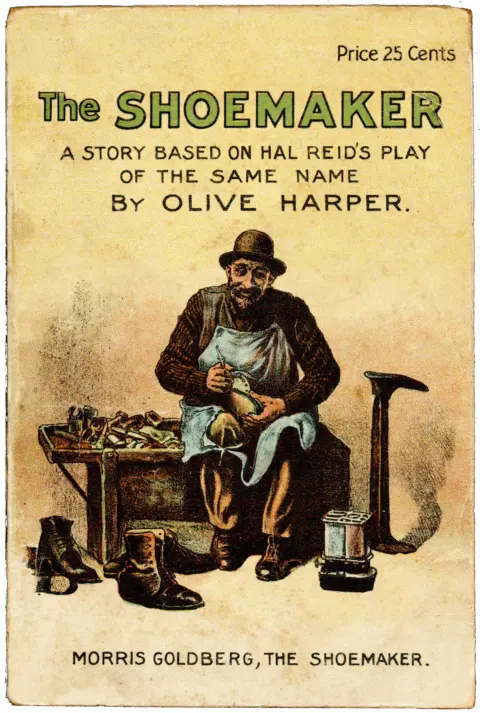
"The Shoemaker" by Olive Harper is a historical novel, likely written in the early 20th century. The story centers around Morris Goldberg, a Jewish shoemaker who has immigrated to America from Russia with his family, seeking a better life. The narrative explores themes of struggle, resilience, and the immigrant experience, including the challenges faced by Goldberg and his daughter Dora as they navigate their newfound freedom in a difficult environment. The opening of the book establishes the backdrop of Morris's humble shop located in a rundown area of New York City. We are introduced to his relentless work ethic and deep love for his daughter Dora, who is growing into a beautiful young woman but is haunted by the memory of her deceased mother. As Morris juggles the demands of his small business, we see his hope for a promising future for his daughter amidst their daily struggles. The presence of other characters, including a simple boy named Loney and the grim realities surrounding them, lays the foundation for a rich tapestry of human emotion and the darker aspects of urban life, hinting at the conflicts and choices that will follow in their journey.
Introduction adapted from the source catalogue; source summaries may be automatically generated.
Free to read · English · 40,130 words · No account needed
MAKE TIME FOR A GOOD BOOK
On by default. Untick to stop anonymous reading totals. Each page counts after 10 seconds in view. How this works.
Anonymous counting is on unless you have switched it off.
“Boys,” said Shoshone, gathering the three all in one group, and whispering something to them, whereat Dan shook his head, while Snakes and Mike turned their backs, and Mike said:
“It’s up to you, Shoshone.”
This gentleman then put his sombrero on his head, simply to call attention by a wide flourish of his arm to the fact that he took it off to the Angel, and then opened his mouth, to find that words would not come. Helen smiled at his embarrassment and asked, innocently:
“Well, what is it, Shoshone?”
With a hoarse croak, meant to be a persuasive accent, Shoshone asked,
stammering sheepishly:
“Boy or gal, ma’am?”
“Both!” replied Helen, gravely, while Shoshone slapped his leg with the
hat, shouting:
“By the howlin’ coyote, boys, it’s twins! Now ain’t that Silver Bill the luckiest cuss! A wife like a mountain-pink, and now twins! Just think!”
Helen turned to Snakes, saying:
“Snakes, may I have a bite to eat before I go to my shack? I’m too tired to do anything but go to sleep.”
“May she have a bite to eat, boys? May she? Listen to that!”
“She may. She may have all that’s in the house if she likes, eh, boys?” said Shoshone, fervently.
“That’s what!” said Dan, emphatically.
“Sure thing!” said Mike, with a clear determination written on every line of his rugged face, to frighten anyone or anything that might hinder Helen from having any and everything she wanted.
“I’m going to be waiter,” said Shoshone, starting toward the
dining-room.
“You are going to play hob, you are,” said Mike, laughingly pushing Shoshone back, while Mike and Snakes engaged in mimic battle for the privilege of waiting upon “the Angel,” and finally dodged out the bar-room door to reach the dining-room first. Helen stood for a moment looking up to the great mountains beyond, with misty eyes, as she thought, as she did every hour of her life:
“How I thank God that He let me live to find out it is never too late
to mend.”
Then she turned and went into the dining-room, where the four men pressed her to eat until she declared she should never be hungry again as long as she lived.
While they were in the dining-room, and Pierson and his party were upstairs, there came toiling up the street a curious procession, consisting of a bony horse covered with impedimenta, among which was seated a slender, pale-faced boy. The horse was partly led, partly dragged, by Morris Goldberg, himself dusty and unkempt.
Your reading position is saved on this browser. Take it to another device with a library code. Reading pages adapt to text, rather than matching a printed edition.
BEHIND THE BOOK
This eBook is for the use of anyone anywhere in the United States and most other parts of the world at no cost and with almost no restrictions whatsoever. You may copy it, give it away or re-use it under the terms of the Project Gutenberg License included with this eBook or online at www.gutenberg.org. If you are not located in the United States, you will have to check the laws of the country where you are located before using this eBook. Read the source licence.
The original source file, including credits and licence, is retained by this library. Request an original-format copy at no charge. Please include the book title and Project Gutenberg identifier #69408.
KEEP YOUR CURIOSITY GOING
Cécile Tormay

Moritz Busch
Coulson Kernahan
John L. Ransom

Maurice Baring
Frances Wright