THE CLASSIC COLLECTION✦An outlaw’s diary: the CommuneCLASSIC FREE BOOKS
An outlaw’s diary: the Commune
Cécile Tormay
THE CLASSIC COLLECTION · 1907
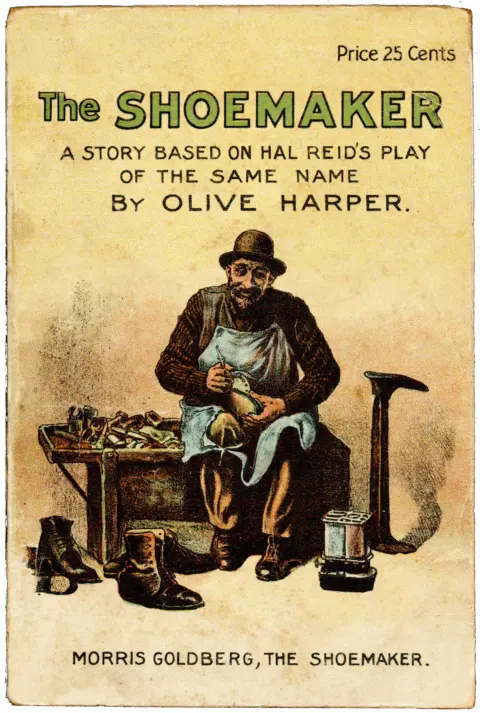
"The Shoemaker" by Olive Harper is a historical novel, likely written in the early 20th century. The story centers around Morris Goldberg, a Jewish shoemaker who has immigrated to America from Russia with his family, seeking a better life. The narrative explores themes of struggle, resilience, and the immigrant experience, including the challenges faced by Goldberg and his daughter Dora as they navigate their newfound freedom in a difficult environment. The opening of the book establishes the backdrop of Morris's humble shop located in a rundown area of New York City. We are introduced to his relentless work ethic and deep love for his daughter Dora, who is growing into a beautiful young woman but is haunted by the memory of her deceased mother. As Morris juggles the demands of his small business, we see his hope for a promising future for his daughter amidst their daily struggles. The presence of other characters, including a simple boy named Loney and the grim realities surrounding them, lays the foundation for a rich tapestry of human emotion and the darker aspects of urban life, hinting at the conflicts and choices that will follow in their journey.
Introduction adapted from the source catalogue; source summaries may be automatically generated.
Free to read · English · 40,130 words · No account needed
MAKE TIME FOR A GOOD BOOK
On by default. Untick to stop anonymous reading totals. Each page counts after 10 seconds in view. How this works.
Anonymous counting is on unless you have switched it off.
Morris Goldberg, by this time, was ready to wait upon Muriel, who seemed to be slowly overcoming the effects of the drink she had taken. And, in a few moments, the shoemaker had fixed the price at twenty cents for the work he was to do.
Morris took the dainty shoe and went to work at it, blind to the blandishments that come so natural to a woman of her class--so natural that they are tried upon every man whosoever he may be.
Dora took Loney upstairs, to give him something to eat, and incidentally to add a few touches to her toilet, for was not Bennie coming? Bennie, whom Dora loved next to her father, and somewhat more than Loney; Bennie, the bright, clever and industrious young man whose heart was fixed upon the pretty Dora.
Muriel suddenly turned in her chair so as to face the shoemaker, who was busily at work, and said, in a strident voice:
“Say, do you know, I like you?”
The man before her was so surprised by this remark that he let his work fall and looked at her, but she had turned her head, and asked:
“Say, do you know why I like you?”
The man hastily reflected that it could not be for his money, and a dim idea dawned upon him that he must be a rather nice-looking man, and--he simpered a little as he sheepishly replied:
“Sure, I know. I am not so bad-looking yet.”
“No, not that; but it is because you are living here in this God-forsaken cellar that isn’t fit for rats, living from hand to mouth, and yet you take in and feed that half-witted boy that you told your daughter to give some gonsalabus, whatever that is. It must be good, though, for I saw the little chap’s look of pleasure. That’s why.”
“Vot de poy get? Yust a place to sleep, someding to eat unt run errants. He don’t cost much, led him stay. I am from a family who will always help dose who neet it. Our mutter raised us dat vay.”
Muriel looked at the shoemaker with sincere and open admiration while
she said:
“I guess it’s you all right. Those things must be in the heart, or they wouldn’t come out.”
The shoemaker, with a smothered sigh, picked up the dainty shoe and started again to fit the high heel into its place, when he thought of a brilliant remark; and he made it:
“Yes, lady; der same as der measles.”
“I guess that’s right,” replied Muriel.
Your reading position is saved on this browser. Take it to another device with a library code. Reading pages adapt to text, rather than matching a printed edition.
BEHIND THE BOOK
This eBook is for the use of anyone anywhere in the United States and most other parts of the world at no cost and with almost no restrictions whatsoever. You may copy it, give it away or re-use it under the terms of the Project Gutenberg License included with this eBook or online at www.gutenberg.org. If you are not located in the United States, you will have to check the laws of the country where you are located before using this eBook. Read the source licence.
The original source file, including credits and licence, is retained by this library. Request an original-format copy at no charge. Please include the book title and Project Gutenberg identifier #69408.
KEEP YOUR CURIOSITY GOING
Cécile Tormay

Moritz Busch
Coulson Kernahan
John L. Ransom

Maurice Baring
Frances Wright