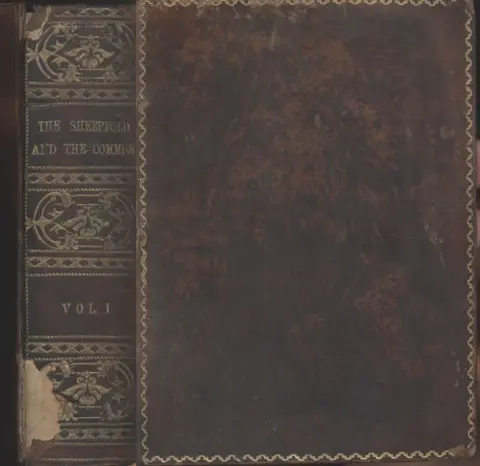
The Sheepfold and the Common; Or, Within and Without. Vol. 1 (of 2)
Timothy East
THE CLASSIC COLLECTION · 1859
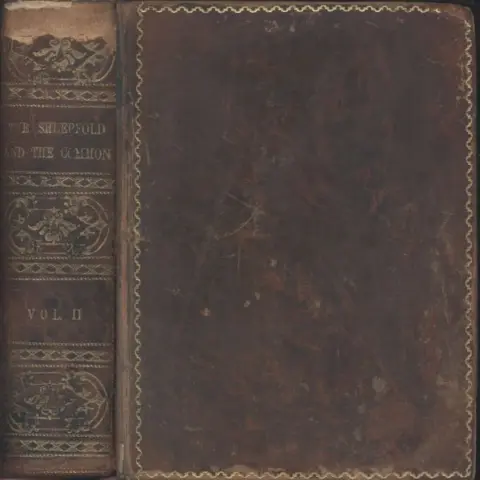
"The Sheepfold and the Common; Or, Within and Without. Vol. 2 (of 2)" by Timothy East is a work of fiction likely written in the mid-19th century. This volume appears to delve into themes of faith, community, and personal reflection, with a focus on characters interacting in a pastoral setting, revealing their life lessons and spiritual journeys. Central to the narrative is Old Rachel, a blind woman whose profound spiritual insight despite her physical limitations sparks discussions about faith, compassion, and the afterlife among the characters. The opening of the narrative introduces us to the conversations surrounding Old Rachel's life and death, emphasizing her profound connection to faith and the impact of her experiences on those around her. As members of the community reflect on her passing, the dialogue reveals their contrasting beliefs and experiences regarding spirituality and mortality. The Rector, Mr. Ingleby, recounts his attempts to reach Rachel mentally even as she appeared physically unresponsive, ultimately underscoring the enduring power of faith in the face of life's challenges. This opening establishes a contemplative tone, inviting readers to explore the complexities of belief and the connections that bind individuals within a community.
Introduction adapted from the source catalogue; source summaries may be automatically generated.
Free to read · English · 217,991 words · No account needed
MAKE TIME FOR A GOOD BOOK
On by default. Untick to stop anonymous reading totals. Each page counts after 10 seconds in view. How this works.
Anonymous counting is on unless you have switched it off.
Miss Holmes read this letter, shed a few tears, and then presented it to Emma, saying, "When the crisis is over, acknowledge for me receipt of it; and tell Mrs. Loader what pleasure it gave me."
The tide of life was now rapidly ebbing; and on her father entering her room, a few days after receiving Mrs. Loader's letter, she stretched forth her hand, and said, "I hope you are prepared to resign me, for I have not long to be with you."
"I have had," he replied, "a hard struggle to do it; but the Lord has at length enabled me to say, 'Even so, for so it seemeth good in thy sight.'"
"I am glad to hear it; and I hope you will all be enabled to feel the same resignation to the Divine will. I wish you would now pray with me, that I may be strengthened in my soul to endure the last struggle." When this hallowed and deeply affecting exercise was ended, she reclined her head on the pillow, and slept for two hours. When she awoke, she rose up in her bed, and casting a smile on all around her, said, "My sleep has refreshed me." After giving a few directions respecting her funeral, she delivered the keys of her desk, &c., to her mother, with a request that she would distribute the few trifling presents she had marked for her friends, and then added, "Now I have done with earth. Come, Lord Jesus, come quickly!" As she gave utterance to this prayer, her countenance beamed with an indescribable glow of rapture, and with a gentle bending of the neck, she bid all farewell, her lips distinctly articulating, "Precious Saviour! thou art come," as they were closing in perpetual silence.
The sketch which I have exhibited of Miss Holmes' character and religious experience, has been taken from real life; and though on some points her experience may differ from that of the pious reader, yet that circumstance will not diminish the degree of interest which may be felt on examining it. We see what human nature is, even with all the advantages of a pious education, before the great spiritual change takes place; we see the process which is observed in the production of this change--the evidences by which it is attested--the various and the numerous conflicts which the subject of it has to encounter, while passing through this vale of tears--and the influence which a pure faith in the efficacy of the atonement has in sustaining the mind in affliction, and in the prospect of death. And who can turn away from such a scene, without wishing to be made a partaker of the like precious faith? and without exclaiming, "Let me die the death of the righteous?" Compare Miss Holmes' character with that of the devotee of fashion; compare the uniform tranquillity of her mind, after she had obtained peace with God through our Lord Jesus Christ, with the restless uneasiness which agitates the gay; compare her death with the death of the thoughtless and the trifling, and what will be the result? What! a firm conviction must be produced, that the religion of the Scriptures, when it is brought to operate on the human mind, does more to elevate and refine it, and prepare it for its final destiny, than all the discoveries of science, all the speculations of philosophy, or all the boasted triumphs of reason. This is a fact, which is not merely supported by opinion, but also by the evidence of experience and testimony; and though it may not excite that degree of attention which its importance demands, yet the period may not be far distant when the reader will feel the force of it. Yes, the hour may not be far distant, when you may be called away from that circle in which you are now moving, and from those scenes of pleasure which now captivate and hold you in subjection; to bid farewell to lover and to friend, and let go your hold of life. Yes, the hour may not be far distant, when you will feel yourself entering an eternal world, when the solemnities of the final judgment will open upon you in all their awful grandeur, and when conscience, roused from her long repose of guilty quietude, will speak to condemn. Yes, the hour may not be far distant, when the raptures of bliss, or the agonies of despair, will be yours, and yours for ever. And will you remain in a state of indifference, while such solemn events are at hand? Will you pass on to meet them, as though they were cunningly devised fables? Can no argument produce a conviction of your danger, and can no motive induce you to avoid it? Will you resolutely withstand all the efforts which are made to save you from going down to death unprepared to meet your God? and as resolutely devote yourselves to the follies and the amusements of the world, as though you were to live for ever? God forbid!
Your reading position is saved on this browser. Take it to another device with a library code. Reading pages adapt to text, rather than matching a printed edition.
BEHIND THE BOOK
This eBook is for the use of anyone anywhere in the United States and most other parts of the world at no cost and with almost no restrictions whatsoever. You may copy it, give it away or re-use it under the terms of the Project Gutenberg License included with this eBook or online at www.gutenberg.org. If you are not located in the United States, you will have to check the laws of the country where you are located before using this eBook. Read the source licence.
The original source file, including credits and licence, is retained by this library. Request an original-format copy at no charge. Please include the book title and Project Gutenberg identifier #44769.
KEEP YOUR CURIOSITY GOING

David Patterson (Spirit) Hatch

David Patterson (Spirit) Hatch

David Patterson (Spirit) Hatch
Coulson Kernahan

Maurice Baring
Frances Wright