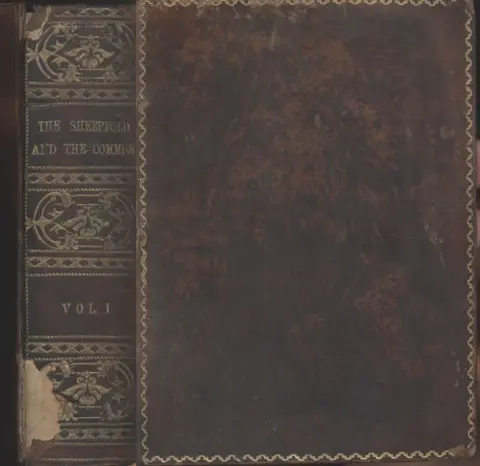
The Sheepfold and the Common; Or, Within and Without. Vol. 1 (of 2)
Timothy East
THE CLASSIC COLLECTION · 1859
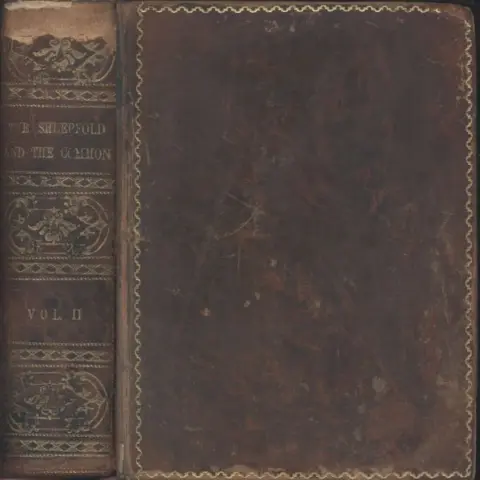
"The Sheepfold and the Common; Or, Within and Without. Vol. 2 (of 2)" by Timothy East is a work of fiction likely written in the mid-19th century. This volume appears to delve into themes of faith, community, and personal reflection, with a focus on characters interacting in a pastoral setting, revealing their life lessons and spiritual journeys. Central to the narrative is Old Rachel, a blind woman whose profound spiritual insight despite her physical limitations sparks discussions about faith, compassion, and the afterlife among the characters. The opening of the narrative introduces us to the conversations surrounding Old Rachel's life and death, emphasizing her profound connection to faith and the impact of her experiences on those around her. As members of the community reflect on her passing, the dialogue reveals their contrasting beliefs and experiences regarding spirituality and mortality. The Rector, Mr. Ingleby, recounts his attempts to reach Rachel mentally even as she appeared physically unresponsive, ultimately underscoring the enduring power of faith in the face of life's challenges. This opening establishes a contemplative tone, inviting readers to explore the complexities of belief and the connections that bind individuals within a community.
Introduction adapted from the source catalogue; source summaries may be automatically generated.
Free to read · English · 217,991 words · No account needed
MAKE TIME FOR A GOOD BOOK
On by default. Untick to stop anonymous reading totals. Each page counts after 10 seconds in view. How this works.
Anonymous counting is on unless you have switched it off.
"And so I hear," said Mrs. Stevens to the Rector, when we were spending an evening at his house, "that poor Old Rachel is dead. I really thought she had died long since, as I have not heard anything about her for a long time."
"Yes, Madam," replied Mr. Ingleby, "she is dead, and was buried yesterday; she lies very near some of the finest of my flock."
"She must have lived to a great age, for she was an old woman when I
was but a little girl."
"She was, I believe, upwards of ninety, and for several years she lived with some relatives in a state of almost entire seclusion. I had quite lost sight of her, and it was owing to a very casual circumstance that my acquaintance with her was renewed."
"How did you happen again to meet with her?"
"It was in this way. I required some one to weed my garden; and hearing that there was an active clever woman residing at Street, about two miles from the rectory, who was a good hand at such work, I took a walk to find her. On reaching her house I knocked at the door, but received no answer; and just as I was going away, rather disappointed at having made a fruitless journey, a neighbour stepped out of the adjoining cottage, and said, 'If, Sir, you want Mrs. Jones, she has just gone out, but I will go and look for her, if you will perhaps come in here, and rest yourself for a few minutes.' I thanked her, and followed her into the house, where she placed a chair for me, saying, as she left to go in search of Mrs. Jones--'It's no use, Sir, to say nothing to my mother there; she is quite blind, and so deaf, that she can't hear a word which nobody says to her.' The person to whom she pointed sat in an arm-chair, on the opposite side of the fire, wrapped up in flannel, her face nearly concealed by her cap and bonnet, and as motionless as a statue. I sat for a few moments in silence, and then, yielding to a feeling of curiosity, and I would also hope to a better motive, to endeavour to ascertain whether I could impart the soothing influences of religious consolation to the seemingly inanimate object that sat opposite to me, I arose, and placing my lips as near her ear as possible, without touching her, said, audibly and distinctly, 'You are very old.' No reply. This was followed by several common-place questions--such as, 'What is your name?' 'Do you want anything?' 'Are you in any pain?' These and other questions I continued to repeat; but they produced no more effect on her than they would have done on a log. 'Poor thing,' I exclaimed, 'it's no use to try, as she is living out of my reach. The door of access is locked, and the key lost.' I resumed my seat. My anxiety to gain access to her mind increased in proportion to the apparent impossibility of succeeding, and I made another effort. 'Do you ever think about dying?' There was a slight convulsive movement of the hand, but this was no satisfactory proof that she heard my question; however, it showed that the inner spirit was awake, and might possibly be bringing itself to a listening attitude. I then put the all-important question--'Do you know anything about Jesus Christ?' Never shall I forget the effect of this question. Her hands were suddenly raised, her arms extended, and her face glowed with more than human radiance, and, in a tone of transport, she exclaimed, 'What! is that my beloved pastor? It was under your ministry I was brought to know Christ, and feel the preciousness of his love.' This unanticipated exclamation astonished and delighted me, especially when I recognized, by the sound of her voice, Old Rachel. To all my questions relating to her secular condition and wants, she was as insensible as though actually dead. I stood and looked on her with joyous wonder, never having previously known a similar case. I repeated question after question, but had no response, till I asked, 'Is Christ precious to you?' Her reply was prompt and audible: He is precious to my soul--my transport and my trust.' The reply had an electrical effect on my spirit. Marvellous! I never witnessed such a scene as this. I varied my questions again and again; but there was no sign of hearing, or even perceptible motion, though I took hold of her hand. It was as though some angelic spirit kept watch, to prevent any thought relating to earth or time from obtruding itself on her attention, now she was waiting on the verge of the celestial world. One question more, and all intercourse was over. 'Do you long to see Christ?' She instantly replied, 'My soul is in haste to be gone.' Again she relapsed into her statue-like appearance, and in that state continued till the return of her daughter with Mrs. Jones, after transacting my business with whom, I took leave, and walked home, musing on the history of Old Rachel, and resolving that I would soon again pay her a visit."
Your reading position is saved on this browser. Take it to another device with a library code. Reading pages adapt to text, rather than matching a printed edition.
BEHIND THE BOOK
This eBook is for the use of anyone anywhere in the United States and most other parts of the world at no cost and with almost no restrictions whatsoever. You may copy it, give it away or re-use it under the terms of the Project Gutenberg License included with this eBook or online at www.gutenberg.org. If you are not located in the United States, you will have to check the laws of the country where you are located before using this eBook. Read the source licence.
The original source file, including credits and licence, is retained by this library. Request an original-format copy at no charge. Please include the book title and Project Gutenberg identifier #44769.
KEEP YOUR CURIOSITY GOING

David Patterson (Spirit) Hatch

David Patterson (Spirit) Hatch

David Patterson (Spirit) Hatch
Coulson Kernahan

Maurice Baring
Frances Wright