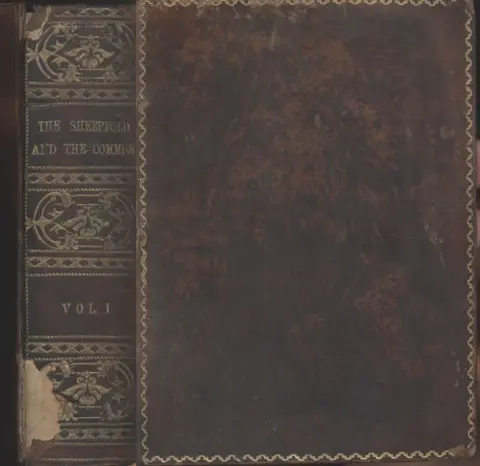
The Sheepfold and the Common; Or, Within and Without. Vol. 1 (of 2)
Timothy East
THE CLASSIC COLLECTION · 1859
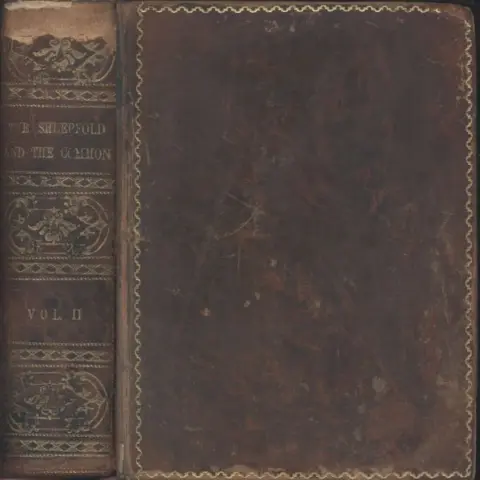
"The Sheepfold and the Common; Or, Within and Without. Vol. 2 (of 2)" by Timothy East is a work of fiction likely written in the mid-19th century. This volume appears to delve into themes of faith, community, and personal reflection, with a focus on characters interacting in a pastoral setting, revealing their life lessons and spiritual journeys. Central to the narrative is Old Rachel, a blind woman whose profound spiritual insight despite her physical limitations sparks discussions about faith, compassion, and the afterlife among the characters. The opening of the narrative introduces us to the conversations surrounding Old Rachel's life and death, emphasizing her profound connection to faith and the impact of her experiences on those around her. As members of the community reflect on her passing, the dialogue reveals their contrasting beliefs and experiences regarding spirituality and mortality. The Rector, Mr. Ingleby, recounts his attempts to reach Rachel mentally even as she appeared physically unresponsive, ultimately underscoring the enduring power of faith in the face of life's challenges. This opening establishes a contemplative tone, inviting readers to explore the complexities of belief and the connections that bind individuals within a community.
Introduction adapted from the source catalogue; source summaries may be automatically generated.
Free to read · English · 217,991 words · No account needed
MAKE TIME FOR A GOOD BOOK
On by default. Untick to stop anonymous reading totals. Each page counts after 10 seconds in view. How this works.
Anonymous counting is on unless you have switched it off.
"I presume, Sir, he is a religious man?"
"Yes, he is a religious man, and so am I; but he has the art of
deriving consolation from his religion, while I can derive none from
mine."
"But how is that? Is he a more learned or a more virtuous man than
you are?"
"No, Sir; he is virtuous, and he is intelligent for a person in his rank of life; but he says he does not derive any consolation from his virtue."
"I presume, Sir, he is a man of prayer?"
"Yes, and so am I, though I use a form, and he prays extempore--so I
have heard."
"I presume he attends a place of worship?"
"Yes; he now goes to the chapel which has lately been built in the village. This is the only thing in his conduct I disapprove of. I think we ought to keep to the Church, and not sanction this new religion, which is overrunning the country."
"But now, suppose this new religion, as you term it, should be the very religion from which your gardener derives all his consolation against the fear of death, would it not be an act of cruelty and of injustice if you were to attempt to deprive him of it?"
"But why can't he derive his consolations from the religion of the
Church of England?"
"Then, Sir," I replied, "why don't you? You say that you have attended your parish church regularly for the last fifteen years, and yet you are as much in dread of death as you were when you first entered within its doors."
"Very true; there's a mystery about it which I can't unravel."
"Shall I explain it, Sir?"
"I wish you would; and as it is a question which perplexes Mrs. Bradley no less than myself, I will fetch her, if you will excuse me for a few minutes."
The Squire soon returned, accompanied by his lady, who welcomed us to the Hall, with the greatest cordiality and politeness.
"Now, Sir," said the Squire, "if you will explain to us how it is our gardener derives that consolation against the fear of death from this new religion, which we cannot derive from the good old religion of our forefathers, you will confer a great favour, and we shall esteem your visit the most agreeable one we have ever received."
"In the first place," I observed, "you have fallen into a mistake. The religion of the chapel is not a new religion, but the religion of the Bible, exhibited in a simple and popular form, and does not differ from the doctrinal articles of the Established church."
Your reading position is saved on this browser. Take it to another device with a library code. Reading pages adapt to text, rather than matching a printed edition.
BEHIND THE BOOK
This eBook is for the use of anyone anywhere in the United States and most other parts of the world at no cost and with almost no restrictions whatsoever. You may copy it, give it away or re-use it under the terms of the Project Gutenberg License included with this eBook or online at www.gutenberg.org. If you are not located in the United States, you will have to check the laws of the country where you are located before using this eBook. Read the source licence.
The original source file, including credits and licence, is retained by this library. Request an original-format copy at no charge. Please include the book title and Project Gutenberg identifier #44769.
KEEP YOUR CURIOSITY GOING

David Patterson (Spirit) Hatch

David Patterson (Spirit) Hatch

David Patterson (Spirit) Hatch
Coulson Kernahan

Maurice Baring
Frances Wright