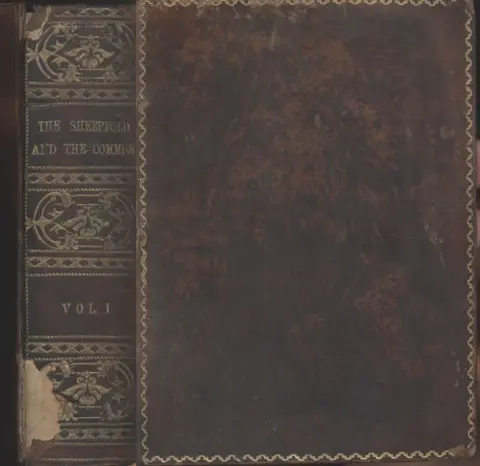
The Sheepfold and the Common; Or, Within and Without. Vol. 1 (of 2)
Timothy East
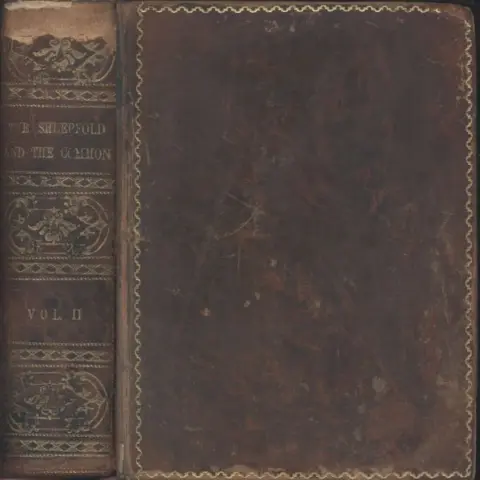
THE CLASSIC COLLECTION · 1859
"The Sheepfold and the Common; Or, Within and Without. Vol. 2 (of 2)" by Timothy East is a work of fiction likely written in the mid-19th century. This volume appears to delve into themes of faith, community, and personal reflection, with a focus on characters interacting in a pastoral setting, revealing their life lessons and spiritual journeys. Central to the narrative is Old Rachel, a blind woman whose profound spiritual insight despite her physical limitations sparks discussions about faith, compassion, and the afterlife among the characters. The opening of the narrative introduces us to the conversations surrounding Old Rachel's life and death, emphasizing her profound connection to faith and the impact of her experiences on those around her. As members of the community reflect on her passing, the dialogue reveals their contrasting beliefs and experiences regarding spirituality and mortality. The Rector, Mr. Ingleby, recounts his attempts to reach Rachel mentally even as she appeared physically unresponsive, ultimately underscoring the enduring power of faith in the face of life's challenges. This opening establishes a contemplative tone, inviting readers to explore the complexities of belief and the connections that bind individuals within a community.
Introduction adapted from the source catalogue; source summaries may be automatically generated.
Free to read · English · 217,991 words · No account needed
MAKE TIME FOR A GOOD BOOK
On by default. Untick to stop anonymous reading totals. Each page counts after 10 seconds in view. How this works.
Anonymous counting is on unless you have switched it off.
When speaking under the second division of his sermon, on the design of our Lord's mission, he delivered the following passage, which made a deep impression on the audience:--
"Had one of the highest orders of angels assumed a human form, and announced to us some scheme of redemption from evil and from ruin, it would have been on our part an act of folly and ingratitude to have treated the message of mercy with indifference. But, brethren, no angel, however exalted, could redeem man from the curse of a violated law, or conduct him to the repossession of that purity and honour, from which, by transgression, he has fallen. Therefore God gave his only begotten Son, who united in his own person every attribute of Deity, and every perfection of humanity; displaying a majesty, combined with a tenderness of character, which alternately excite our awe and confidence. With what ease did he rule the elements of nature--heal the maladies and disorders produced by sin--recal the souls of the departed from the invisible world; while, with all the familiarity and compassion of a near and beloved friend, he mingles his tears of sympathy with the suffering mourner, and diffuses the peace of heaven over the heart oppressed with sorrow.
"Suppose, my brethren, one of the elders of Israel, after having been present at the giving of the law at Sinai, and after having seen and heard the mysterious sights and sounds on that mount of awful majesty and terror, had then fallen into a trance, and continued in that state till the night before the vision of the shepherds on the plains of Bethlehem. Suppose he had then awoke and been told, that the law, which had been given with so many awful accompaniments, had been broken, and that the Lawgiver was on the eve of sending his only begotten Son into the world--would he not have concluded that his mission must be one of vengeance? But no! 'God sent not his Son into the world to condemn the world; but that the world through him might be saved.' He gave his only begotten Son that we might not perish, but have everlasting life. What is it for man to perish? I cannot tell--I have never seen the judgment-seat of Christ!--I have never beheld the awful glory of that scene of terror!--I have never heard the final sentence, Depart!--I have never been banished far and for ever away from bliss!--I have not endured the agonies of the worm that never dies!--the fire that is never quenched! Indeed, my brethren, I cannot tell what it is to perish! It is a state of misery which no imagery can represent--which no language can describe--which no imagination can conceive.--'But have everlasting life!' It is life which gives to every other possession its determinate value. For what is beauty without life but a fading ornament? what is wealth without life but a useless substance? what is honour without life but a bursting bubble? Skin for skin, all that a man hath will he give for his life. So much do we prize this invaluable possession, that rather than lose it, we will consent to part with one limb, and one sense after another, till all are gone. But, brethren, the period is not far distant, when, like our forefathers, we must resign it, and be numbered with the dead; yet Jesus Christ says, that he that believeth in him shall never die. This promise must be taken in a restricted sense, as his disciples are no less liable to the visitations of death than his enemies. Their faith in him does not operate as a charm to repeal the law of mortality; neither does it exempt them from the diseases and pains which usually precede its infliction. But though they die a natural death, yet they immediately enter on the full enjoyment of eternal life--when they dissolve their connection with the inhabitants of this world, they become fellow-citizens with the saints in light--when they close their eyes on this earthly scene, they open them on the visions of celestial glory--and when their bodies are committed to the tomb, their immortal spirits are enjoying that endless life, over which death has no power. This life will be a life of perfect purity--of perfect knowledge--and of perfect felicity; and will continue unimpaired by sickness, and undisturbed by care, for ever and for ever.
Your reading position is saved on this browser. Take it to another device with a library code. Reading pages adapt to text, rather than matching a printed edition.
BEHIND THE BOOK
This eBook is for the use of anyone anywhere in the United States and most other parts of the world at no cost and with almost no restrictions whatsoever. You may copy it, give it away or re-use it under the terms of the Project Gutenberg License included with this eBook or online at www.gutenberg.org. If you are not located in the United States, you will have to check the laws of the country where you are located before using this eBook. Read the source licence.
The original source file, including credits and licence, is retained by this library. Request an original-format copy at no charge. Please include the book title and Project Gutenberg identifier #44769.
KEEP YOUR CURIOSITY GOING

David Patterson (Spirit) Hatch

David Patterson (Spirit) Hatch

David Patterson (Spirit) Hatch
Coulson Kernahan

Maurice Baring
Frances Wright