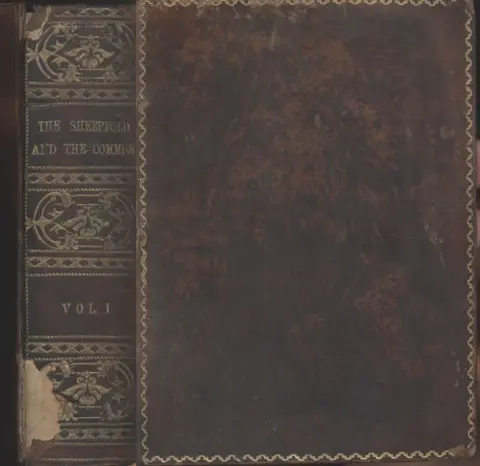
The Sheepfold and the Common; Or, Within and Without. Vol. 1 (of 2)
Timothy East
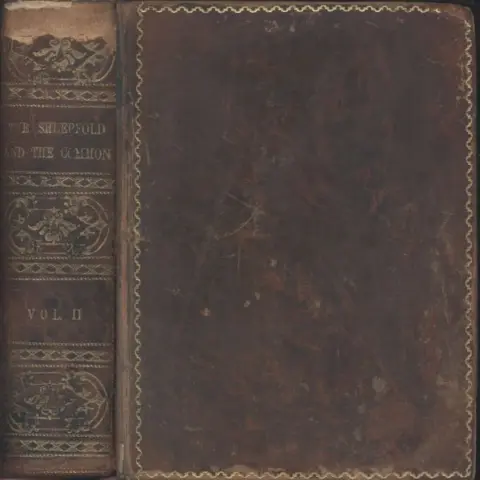
THE CLASSIC COLLECTION · 1859
"The Sheepfold and the Common; Or, Within and Without. Vol. 2 (of 2)" by Timothy East is a work of fiction likely written in the mid-19th century. This volume appears to delve into themes of faith, community, and personal reflection, with a focus on characters interacting in a pastoral setting, revealing their life lessons and spiritual journeys. Central to the narrative is Old Rachel, a blind woman whose profound spiritual insight despite her physical limitations sparks discussions about faith, compassion, and the afterlife among the characters. The opening of the narrative introduces us to the conversations surrounding Old Rachel's life and death, emphasizing her profound connection to faith and the impact of her experiences on those around her. As members of the community reflect on her passing, the dialogue reveals their contrasting beliefs and experiences regarding spirituality and mortality. The Rector, Mr. Ingleby, recounts his attempts to reach Rachel mentally even as she appeared physically unresponsive, ultimately underscoring the enduring power of faith in the face of life's challenges. This opening establishes a contemplative tone, inviting readers to explore the complexities of belief and the connections that bind individuals within a community.
Introduction adapted from the source catalogue; source summaries may be automatically generated.
Free to read · English · 217,991 words · No account needed
MAKE TIME FOR A GOOD BOOK
On by default. Untick to stop anonymous reading totals. Each page counts after 10 seconds in view. How this works.
Anonymous counting is on unless you have switched it off.
And is it not to be regretted that the period of courtship, which is intended to give to the parties an opportunity of judging of their fitness for each other, is usually the period in which the greatest degree of duplicity prevails? It may be justly denominated the intermediate state between the two conditions in human life, over which the evil spirit of deception presides--investing the character with imaginary charms--softening down rugged and uncouth tempers into the smoothness of the most subduing tenderness--curbing restless and ungovernable passions with the restraints of a crafty policy--and giving such a fascination to external graces, that they are received as substitutes for the most solid and substantial virtues. This is the fatal period, when suspicion is usually asleep; when a slowness of heart to believe the rumours of report becomes proverbial; and it is not till the parties emerge from this delusion, to the realities of married life, and resume their real character, that they discover the deception they have been practising on each other. Then the work of mutual recrimination and reproach commences. Then it is their eyes are opened to see their folly and their danger, but their repentance, like that of Esau's, comes too late to repair the evil which they have brought upon themselves.
As the period of courtship is the most dangerous in the history of life, because the most deceptive, those who wish to enjoy a state of permanent domestic happiness, cannot, at this period, be too observant of each other's tempers and dispositions, or too inquisitive respecting each other's connections and manners. If they now discover a dissonance in any of these particulars, they would act a wiser part to separate by mutual consent, than to form a union which will inevitably become a fruitful source of misery, and may terminate in disgrace, if not in ruin. Some severe moralists contend, that when an offer of marriage has been given and accepted, no circumstances will justify either party in withdrawing from their pledge, but that it ought to be held as sacred and as obligatory as the marriage vow. Though the writer would not hazard an opinion which would tend to sanction a wanton inconstancy, yet he claims the privilege of differing from such casuists. For what purpose has the unanimous consent of mankind required some period of time to elapse, after the offer has been made, before it is formally, and for life decided? Is it not that the contracting parties may have an opportunity of judging of their relative fitness for each other? If not, they may pass at once to the nuptial altar, after mutually consenting to their union; but if it be, they are invested with a moral right to revise their decision, when fresh discoveries of character are made, which change their opinions, and diminish, if not alienate their affections. Suppose a gentleman makes a lady an offer, and she accepts it, under a firm conviction that he is a man of honour, of integrity, of virtue, and of prudence, whose disposition is amiable, whose circumstances are respectable, and who is capable of maintaining her in the rank in which she has been accustomed to move. Suppose that on a subsequent inquiry, she finds out that these sterling qualities do not adorn his character--that he is violent in his passions--and that his means to support a family are not adequate to its demands. If she is now convinced that by consummating the union, her happiness for life will be sacrificed, ought she to be compelled to do so? She may be censured for giving her consent too hastily; but is a consent given under false impressions, and while in a state of total or partial ignorance, to be binding, when she discovers the delusion which has been practised on her, and sees nothing but misery and wretchedness before her? I think it is not. If Emma Holmes, when she returned the letters and presents to Captain Orme, had never more consented to see him, would any wise or prudent person have passed a sentence of condemnation on her conduct? No! Why not? Because she had given her consent under false impressions of his character; but after her marriage, though that took place under the same false impressions, she was bound by the laws of God and man to remain his wife.
Your reading position is saved on this browser. Take it to another device with a library code. Reading pages adapt to text, rather than matching a printed edition.
BEHIND THE BOOK
This eBook is for the use of anyone anywhere in the United States and most other parts of the world at no cost and with almost no restrictions whatsoever. You may copy it, give it away or re-use it under the terms of the Project Gutenberg License included with this eBook or online at www.gutenberg.org. If you are not located in the United States, you will have to check the laws of the country where you are located before using this eBook. Read the source licence.
The original source file, including credits and licence, is retained by this library. Request an original-format copy at no charge. Please include the book title and Project Gutenberg identifier #44769.
KEEP YOUR CURIOSITY GOING

David Patterson (Spirit) Hatch

David Patterson (Spirit) Hatch

David Patterson (Spirit) Hatch
Coulson Kernahan

Maurice Baring
Frances Wright