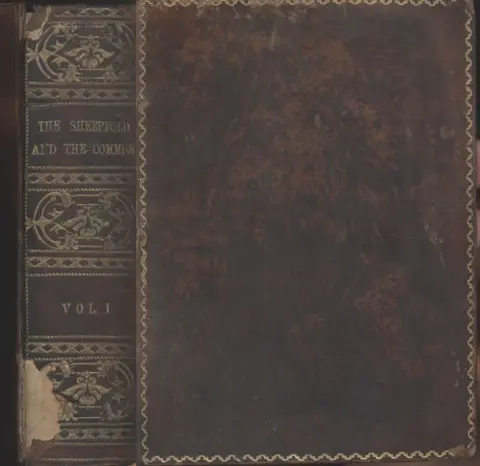
The Sheepfold and the Common; Or, Within and Without. Vol. 1 (of 2)
Timothy East

THE CLASSIC COLLECTION · 1859
"The Sheepfold and the Common; Or, Within and Without. Vol. 2 (of 2)" by Timothy East is a work of fiction likely written in the mid-19th century. This volume appears to delve into themes of faith, community, and personal reflection, with a focus on characters interacting in a pastoral setting, revealing their life lessons and spiritual journeys. Central to the narrative is Old Rachel, a blind woman whose profound spiritual insight despite her physical limitations sparks discussions about faith, compassion, and the afterlife among the characters. The opening of the narrative introduces us to the conversations surrounding Old Rachel's life and death, emphasizing her profound connection to faith and the impact of her experiences on those around her. As members of the community reflect on her passing, the dialogue reveals their contrasting beliefs and experiences regarding spirituality and mortality. The Rector, Mr. Ingleby, recounts his attempts to reach Rachel mentally even as she appeared physically unresponsive, ultimately underscoring the enduring power of faith in the face of life's challenges. This opening establishes a contemplative tone, inviting readers to explore the complexities of belief and the connections that bind individuals within a community.
Introduction adapted from the source catalogue; source summaries may be automatically generated.
Free to read · English · 217,991 words · No account needed
MAKE TIME FOR A GOOD BOOK
On by default. Untick to stop anonymous reading totals. Each page counts after 10 seconds in view. How this works.
Anonymous counting is on unless you have switched it off.
"Why, Colonel," said his wife, "I am surprised to hear you talk so irrationally! Do you think he would hesitate breaking off that engagement a single moment? Why, he said to me just before he left home, 'I am apprehensive, from what I heard at the mess, that Collingwood is not the man of wealth I thought he was when my intimacy with his family commenced, and I must make more particular inquiries.'"
"Perhaps he won't object," said the Colonel, "though you know it is a point of honour which every man can't pass; but as he has passed it once, he may again."
In the evening, just before they sat down to cards, the Colonel opened the campaign, by saying, "It is natural for every man to give a decided preference to his own profession; but for my part, if I were to begin life again, and had my choice, I would enter the army. There it is a man acquires glory."
"And there it is," said Emma, "he is exposed to danger."
"Why, very true, Miss Holmes, but you know that the field of danger is where the crown of honour is won!"
"Yes, but what sacrifice of feeling does it require?"
"Why, very true, but you know feeling is rather sentimental!"
"Sentimental, Sir!" said the lively young lady, "and did you think so when you received your wound in the head? It was then, I suspect, felt to be real."
"Why, yes," said the Colonel, somewhat embarrassed, "very true; but we don't pay much regard to feeling when engaged in the conflict."
"So I suppose; nor much regard to feeling in prospect of the conflict, and still less when it is over."
"There you are mistaken; for before the battle begins, a death-like horror comes over the most courageous spirit; but when it is over, the shout of victory gives an ecstasy of delight."
"But how is it changed when you look round on the mangled bodies of the slain--on your friends and comrades weltering in their blood--or think of the wives and children whom the sword makes widows and orphans!"
"Ah, true, that's the worst of it: but you know that wars and fightings have been from the beginning, and will be to the end; and some must engage in them."
"I presume," said Emma, addressing herself to Mrs. Orme, "you must have felt intense agony of mind, every time the Colonel left you for actual service!"
"At first I did, but after I got used to it, I did not regard it, for use, you know, my dear, is second nature; and then there was so much pleasure on his return."
Your reading position is saved on this browser. Take it to another device with a library code. Reading pages adapt to text, rather than matching a printed edition.
BEHIND THE BOOK
This eBook is for the use of anyone anywhere in the United States and most other parts of the world at no cost and with almost no restrictions whatsoever. You may copy it, give it away or re-use it under the terms of the Project Gutenberg License included with this eBook or online at www.gutenberg.org. If you are not located in the United States, you will have to check the laws of the country where you are located before using this eBook. Read the source licence.
The original source file, including credits and licence, is retained by this library. Request an original-format copy at no charge. Please include the book title and Project Gutenberg identifier #44769.
KEEP YOUR CURIOSITY GOING

David Patterson (Spirit) Hatch

David Patterson (Spirit) Hatch

David Patterson (Spirit) Hatch
Coulson Kernahan

Maurice Baring
Frances Wright