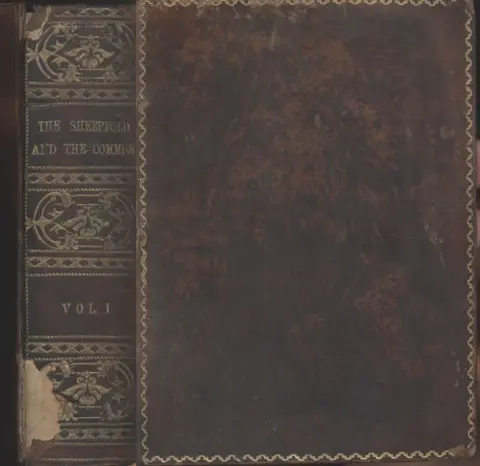
The Sheepfold and the Common; Or, Within and Without. Vol. 1 (of 2)
Timothy East
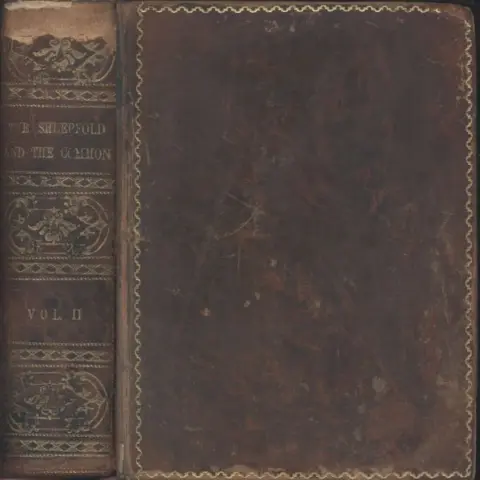
THE CLASSIC COLLECTION · 1859
"The Sheepfold and the Common; Or, Within and Without. Vol. 2 (of 2)" by Timothy East is a work of fiction likely written in the mid-19th century. This volume appears to delve into themes of faith, community, and personal reflection, with a focus on characters interacting in a pastoral setting, revealing their life lessons and spiritual journeys. Central to the narrative is Old Rachel, a blind woman whose profound spiritual insight despite her physical limitations sparks discussions about faith, compassion, and the afterlife among the characters. The opening of the narrative introduces us to the conversations surrounding Old Rachel's life and death, emphasizing her profound connection to faith and the impact of her experiences on those around her. As members of the community reflect on her passing, the dialogue reveals their contrasting beliefs and experiences regarding spirituality and mortality. The Rector, Mr. Ingleby, recounts his attempts to reach Rachel mentally even as she appeared physically unresponsive, ultimately underscoring the enduring power of faith in the face of life's challenges. This opening establishes a contemplative tone, inviting readers to explore the complexities of belief and the connections that bind individuals within a community.
Introduction adapted from the source catalogue; source summaries may be automatically generated.
Free to read · English · 217,991 words · No account needed
MAKE TIME FOR A GOOD BOOK
On by default. Untick to stop anonymous reading totals. Each page counts after 10 seconds in view. How this works.
Anonymous counting is on unless you have switched it off.
'So sinks the day-star in the ocean bed,
And yet anon uprears his drooping head,
And tricks his beams, and with new spangled ore,
Flames in the forehead of the morning sky--
He hears the unexpressive nuptial song
In the blest kingdoms meek of joy and love.
There entertain him all the saints above,
In solemn troops and sweet societies;
That sing, and singing in their glory move,
And wipe the tears for ever from his eyes.'"--MILTON.
The institution of marriage is a provision made by Divine Providence to promote human happiness; but owing to the imprudence and haste with which it is sometimes contracted, it not unfrequently becomes a source of extreme wretchedness. This union should never be formed, except by those who have a strong affection for each other; and even then, the utmost degree of prudence should regulate their conduct, both in the appointment of the time when it should take place, and the adjustment of the various interests which it involves. When persons marry mainly for the purpose of adding to their worldly estate, or obtaining a higher position in society, it rarely happens that an alliance entered into from such motives can be productive of domestic happiness. And even when the purest feelings of affection and love influence the youthful pair, inspiring them with the determination to sacrifice the esteem of friends, and the attractions of this world's wealth, rather than break the solemn vow and separate for life, they should beware of rashness and headlong impetuosity, pondering well the desirableness of the connection they are about to form, and feeling well assured that it is really a step which must conduce to their welfare.
When persons, who have no parents or judicious friends whom they can consult, are making arrangements for marriage, they should exercise more than ordinary discretion, lest they plunge themselves into difficulties from which no one can rescue them. But when parents are living, not to consult them, and pay some degree of deference to their opinion, is an offence against the law of propriety, and generally productive of the most fatal evils. Parents are more deeply interested in the marriage of their children than any other persons, and no pledges ought to be given between the contracting parties till they have been spoken to on the subject. This is a mark of respect to which they are justly entitled. And are they not, from their age, and experience, and affection, qualified to give advice? How far it is binding on a young person to obey his or her parents, who may disapprove of a proposed marriage, is a question which I shall not presume to decide; but that no young person ought to give or receive any inviolable pledge, till they have been solicited to give their opinion and sanction, is a point too obvious to the dictates of good sense and filial attachment, to need any lengthened discussion. But how very rarely is this the case! An affection is formed and cherished--it grows up into ardent and romantic attachment--interviews take place--letters and presents are exchanged--and after the imagination has been captivated with bright visions of future happiness, the parents are requested to give their permission, not their advice. If, now, they object, either from caprice, or from a full conviction that the proposed union is improper or unsuitable, what direful consequences often result! Their objections, in some cases, are treated with scorn, and the marriage takes place in defiance of their authority; and, in some instances, when their objections are admitted to be valid, they are still doomed to see the fairest flower of their family fade and die under the slow, yet fatal influence of a passion, which is too strong to be quenched, and too baneful to be cherished. These evils, which are so often springing up within the domestic circle--destroying the peace and the happiness of parents and of children, and setting at variance the members of the same household--might be avoided, if, before adopting any decisive measures, the parents--who have a right to expect such a mark of respect, who have so much of their own respectability and happiness at issue, and who are, in general, so well qualified to give judicious counsel--were consulted.
Your reading position is saved on this browser. Take it to another device with a library code. Reading pages adapt to text, rather than matching a printed edition.
BEHIND THE BOOK
This eBook is for the use of anyone anywhere in the United States and most other parts of the world at no cost and with almost no restrictions whatsoever. You may copy it, give it away or re-use it under the terms of the Project Gutenberg License included with this eBook or online at www.gutenberg.org. If you are not located in the United States, you will have to check the laws of the country where you are located before using this eBook. Read the source licence.
The original source file, including credits and licence, is retained by this library. Request an original-format copy at no charge. Please include the book title and Project Gutenberg identifier #44769.
KEEP YOUR CURIOSITY GOING

David Patterson (Spirit) Hatch

David Patterson (Spirit) Hatch

David Patterson (Spirit) Hatch
Coulson Kernahan

Maurice Baring
Frances Wright