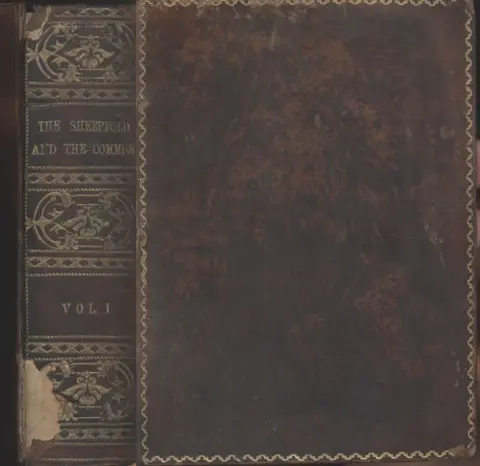
The Sheepfold and the Common; Or, Within and Without. Vol. 1 (of 2)
Timothy East
THE CLASSIC COLLECTION · 1859
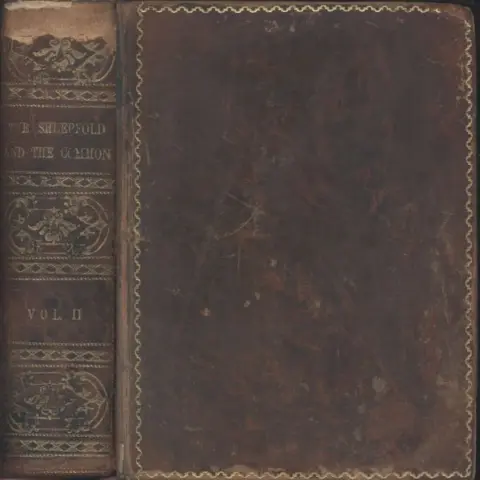
"The Sheepfold and the Common; Or, Within and Without. Vol. 2 (of 2)" by Timothy East is a work of fiction likely written in the mid-19th century. This volume appears to delve into themes of faith, community, and personal reflection, with a focus on characters interacting in a pastoral setting, revealing their life lessons and spiritual journeys. Central to the narrative is Old Rachel, a blind woman whose profound spiritual insight despite her physical limitations sparks discussions about faith, compassion, and the afterlife among the characters. The opening of the narrative introduces us to the conversations surrounding Old Rachel's life and death, emphasizing her profound connection to faith and the impact of her experiences on those around her. As members of the community reflect on her passing, the dialogue reveals their contrasting beliefs and experiences regarding spirituality and mortality. The Rector, Mr. Ingleby, recounts his attempts to reach Rachel mentally even as she appeared physically unresponsive, ultimately underscoring the enduring power of faith in the face of life's challenges. This opening establishes a contemplative tone, inviting readers to explore the complexities of belief and the connections that bind individuals within a community.
Introduction adapted from the source catalogue; source summaries may be automatically generated.
Free to read · English · 217,991 words · No account needed
MAKE TIME FOR A GOOD BOOK
On by default. Untick to stop anonymous reading totals. Each page counts after 10 seconds in view. How this works.
Anonymous counting is on unless you have switched it off.
Mr. Falkland.--"No, Sir, it is not a libel. The allusions, the language, and some of the actions of that play, are more becoming a house of ill-fame than the school of virtue, as you wish me to believe the play-house is; and I am conscious that no decent persons, in any rank of life, would tolerate such allusions or actions in their families. Allow me to ask one question, What opinion would you form of a female who would consent to read that comedy in the presence of an indiscriminate assemblage of young people?"
Mr. Talbot.--"Of course, Sir, I should not solicit her to do it."
Mr. Falkland.--"But suppose she was solicited to do it, and suppose she did it without faltering and without blushing, what opinion would you form of her modesty, or of the tone of her mind? Would you like that female to be either your mother, your wife, your sister, or your daughter?"
Mr. Talbot.--"Perhaps not."
Mr. Falkland.--"So I presume; for, as the poet says--
'Immodest words admit of no defence,
For want of decency is want of sense.'
If, then, you would not like to hear a female read that play in a private party, especially if that female was your own daughter, how can you attempt to justify your conduct in wishing her to go and see it performed?"
Mr. Talbot.--"Why, there is a little difference between the two
cases."
Mr. Falkland.--"Yes, I grant there is a little difference between the circumstances of the two cases; but, Sir, I appeal to your candour and to your judgment, whether that comedy, when acted on the stage, can promote the growth of virtue, which would have a demoralizing effect if read in a private circle?"
Mr. Talbot.--"In a theatre, each one is lost in the mass of the audience, and hence no immediate effect is produced."
Mr. Falkland.--"Then, Sir, how can the stage, when it exists in its purity, promote the growth of virtue, and how, when it is abused, does it become the school of vice, if no immediate effect is produced by the sentiments and actions which are there delivered and performed?"
Mr. Talbot.--"I mean, Sir, that a female does not sustain that injury in the opinion of others, who goes to see this comedy performed, which she would, if she read it to a promiscuous assembly."
Your reading position is saved on this browser. Take it to another device with a library code. Reading pages adapt to text, rather than matching a printed edition.
BEHIND THE BOOK
This eBook is for the use of anyone anywhere in the United States and most other parts of the world at no cost and with almost no restrictions whatsoever. You may copy it, give it away or re-use it under the terms of the Project Gutenberg License included with this eBook or online at www.gutenberg.org. If you are not located in the United States, you will have to check the laws of the country where you are located before using this eBook. Read the source licence.
The original source file, including credits and licence, is retained by this library. Request an original-format copy at no charge. Please include the book title and Project Gutenberg identifier #44769.
KEEP YOUR CURIOSITY GOING

David Patterson (Spirit) Hatch

David Patterson (Spirit) Hatch

David Patterson (Spirit) Hatch
Coulson Kernahan

Maurice Baring
Frances Wright