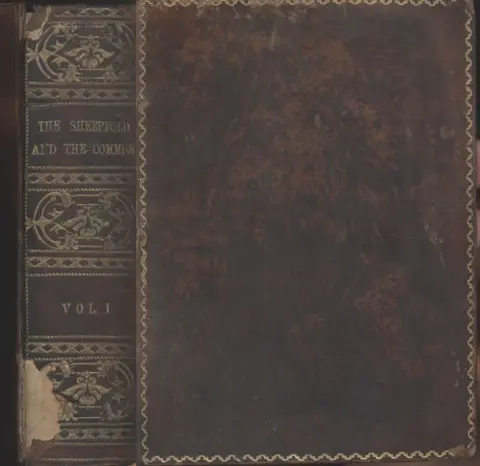
The Sheepfold and the Common; Or, Within and Without. Vol. 1 (of 2)
Timothy East
THE CLASSIC COLLECTION · 1859
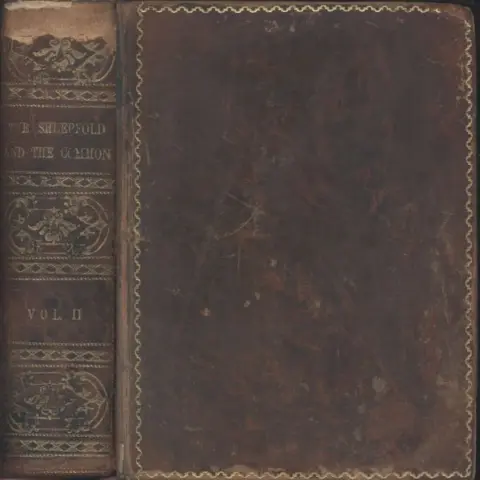
"The Sheepfold and the Common; Or, Within and Without. Vol. 2 (of 2)" by Timothy East is a work of fiction likely written in the mid-19th century. This volume appears to delve into themes of faith, community, and personal reflection, with a focus on characters interacting in a pastoral setting, revealing their life lessons and spiritual journeys. Central to the narrative is Old Rachel, a blind woman whose profound spiritual insight despite her physical limitations sparks discussions about faith, compassion, and the afterlife among the characters. The opening of the narrative introduces us to the conversations surrounding Old Rachel's life and death, emphasizing her profound connection to faith and the impact of her experiences on those around her. As members of the community reflect on her passing, the dialogue reveals their contrasting beliefs and experiences regarding spirituality and mortality. The Rector, Mr. Ingleby, recounts his attempts to reach Rachel mentally even as she appeared physically unresponsive, ultimately underscoring the enduring power of faith in the face of life's challenges. This opening establishes a contemplative tone, inviting readers to explore the complexities of belief and the connections that bind individuals within a community.
Introduction adapted from the source catalogue; source summaries may be automatically generated.
Free to read · English · 217,991 words · No account needed
MAKE TIME FOR A GOOD BOOK
On by default. Untick to stop anonymous reading totals. Each page counts after 10 seconds in view. How this works.
Anonymous counting is on unless you have switched it off.
When God has any special design to accomplish, we may often trace the harmonious conjunction of the various agents and agencies which he employs in effecting it. The Ethiopian eunuch was sitting in his chariot, reading the prophet Esaias, when Philip, under a Divine impulse, went and seated himself by his side. The passage he was reading was veiled in darkness, and he asked for an explanation, which was immediately given, understood, and felt; the moral transformation took place by the concurring action of Divine power; he avowed his newly originated faith; was baptized, and went on his way rejoicing--the visible agent of the great transaction disappearing, that the tribute of adoring gratitude might be offered up exclusively to the God of all grace. We pass from this wondrous scene to another, stamped with the same moral insignia, though not quite so obviously conspicuous. Here is a person of superior intelligence, who has long been labouring, by her own unaided reason, to decipher the hidden mysteries of the truth as it is in Jesus, and labouring in vain. She leaves her own home on a Sabbath morning in quest of a living expositor, yet not knowing where to find one. An unseen hand guides her to a chapel, which she would have disdained to enter had she known its denominational character. Her latent prejudices spring up into powerful action when she observes a slight deviation in the order of the service from that with which her eye was once familiar; and yet they are overcome by a devotional exercise, which surprised her by its novelty, while it strongly interested her by its appropriateness. The question she left home to have solved is a simple, yet a very important one; and on its solution her happiness is dependent. The second hymn is sung. The minister rises in his pulpit; his Bible is open before him, and, after a short pause, he announces his text, "And I, if I be lifted up from the earth, will draw all men unto me. This he said, signifying what death he should die" (John xii. 32, 33). The sketch he gives of the crucifixion is thrilling; and many weep while he presents to their view the chief actors who performed their parts on this tragical occasion. Mrs. Hastings also weeps. The preacher now passes from description to explanation; from a detailed statement of facts, to an elucidation of the design for which the Son of God groaned, and bled, and died. She listens with breathless attention, as he unravels the thread of mystery which ran through all the passages of the Bible which she had arranged and studied, without perceiving their import. "I felt," she said, "intuitively assured, when he entered on this part of his subject, that the light of explanation was coming; and I was intensely eager to catch every utterance. I now perceived that the death of Jesus Christ was a voluntary ransom, to redeem and to save the lost and the guilty. The first part of his sermon awakened my sympathy; the latter part touched another chord of my heart. I wept again; but from a different cause. My sins made me weep; and the love of Christ in dying to expiate them, made me weep--and I now wept as I had never wept before. It was with some difficulty I could refrain weeping, even when the clergyman had finished his sermon, which lasted rather more than an hour. I could have listened to him much longer. I never knew time go so rapidly. I left the hallowed place with reluctance, thinking, as I paced back to my home, that I was now entering as into a new world of existence, abounding with mystic, yet intelligible wonders. I was in a tumult of emotion, yet it was a calm ecstasy of feeling. I clasped my Bible, and pressed it to my bosom. I thought of your words, which I never forgot, though, when I first heard them, they sounded in my ear as the mockery of grief:--'That book has healed wounds as deep as yours; and if you examine it, you will find it a well-spring of life to your withered happiness.' I now can attest the truth of your declaration. I have tasted its sweet waters; they are indeed the waters of life. None other so sweet or powerful. I can now respond to the truthfulness of the following paraphrase of Dr. Watts, whom I now prefer to Byron or Wordsworth--he is the poet of the heart weighed down by sorrow and anxiety:--
Your reading position is saved on this browser. Take it to another device with a library code. Reading pages adapt to text, rather than matching a printed edition.
BEHIND THE BOOK
This eBook is for the use of anyone anywhere in the United States and most other parts of the world at no cost and with almost no restrictions whatsoever. You may copy it, give it away or re-use it under the terms of the Project Gutenberg License included with this eBook or online at www.gutenberg.org. If you are not located in the United States, you will have to check the laws of the country where you are located before using this eBook. Read the source licence.
The original source file, including credits and licence, is retained by this library. Request an original-format copy at no charge. Please include the book title and Project Gutenberg identifier #44769.
KEEP YOUR CURIOSITY GOING

David Patterson (Spirit) Hatch

David Patterson (Spirit) Hatch

David Patterson (Spirit) Hatch
Coulson Kernahan

Maurice Baring
Frances Wright