
Last letters from the living dead man
David Patterson (Spirit) Hatch
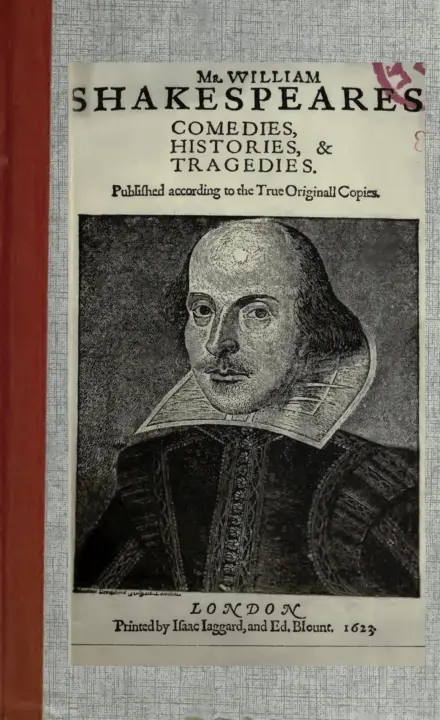
THE CLASSIC COLLECTION · 1679
"The Shakespeare Myth" by Sir Edwin Durning-Lawrence is a critical examination of the traditional narrative surrounding William Shakespeare, written in the early 20th century. This book challenges the widely accepted authorship of Shakespeare's works, suggesting that they were actually penned by Francis Bacon, and delves into the historical and biographical inconsistencies pertaining to Shakespeare's life. It reflects the early 1900s cultural skepticism towards established literary canon and examines the implications of the authorship debate on the understanding of English literature. In this book, Durning-Lawrence meticulously dissects the evidence associated with Shakespeare, including his supposed signature, the publication of his plays, and the historical context of his life. He points out various discrepancies, such as the fact that only a handful of plays can be firmly attributed to Shakespeare during his lifetime, while many others emerged posthumously with significant alterations. Through an exploration of historical documents, scripts, and Bacon's own writings, he presents the argument that Shakespeare was not the prolific playwright and poet but rather a pseudonym used by Bacon to shield the true author from political and social scrutiny. The book is a unique contribution to literary criticism and raises profound questions about authorship, legacy, and the nature of literary genius.
Introduction adapted from the source catalogue; source summaries may be automatically generated.
Free to read · English · 11,396 words · No account needed
MAKE TIME FOR A GOOD BOOK
On by default. Untick to stop anonymous reading totals. Each page counts after 10 seconds in view. How this works.
Anonymous counting is on unless you have switched it off.
Facing the title page of the 1623 first Folio of the plays, on which the stuffed and masked dummy appears, is the following description (of which I give a photo-facsimile), which, as it is signed B. I., is usually ascribed to Ben Jonson:--=
`````To the Reader.
```This Figure, that thou here seest pur,
````It was for gentle Shackspeare cut;
```Wherein the Grauer had a strife
````with Nature, to out-doo the life:
```O, could he but haue drawne his wit
````As well in brasse, as he hath hit
```His face, the Print would then surpasse
````All, that was cuer writ in brasse.
```But, since he cannot, Reader, lookc
````Not on his Picture, but his Booke.
If my readers will count all the letters in the above, including the four v's, which are used instead of the two w's, they will find that there are 287 letters, a masonic number often repeated throughout the Folio. My book, "Bacon is Shakespeare," was published in 1910 (i.e., 287 years after 1623), and tells for the first time the true meaning of these lines.
B. I. never calls the ridiculous dummy a portrait, but describes it as "the Figure," "put for" (i.e., instead of), and as "the Print," and as "his Picture," and he distinctly tells us to look not at his (ridiculous) Picture, but (only) at his Booke.
It has always been a puzzle to students who read these verses why B. I. lavished such extravagant praise upon what looks so stiff and wooden a figure, about which Gainsborough, writing in 1768, says: "Damn the original picture of him... for I think a stupider face I never beheld except D... k's... it is impossible that such a mind and ray of heaven, could shine with such a face and pair of eyes."
To those capable of properly reading the lines, B. I. clearly tells the whole story. He says, "The Graver had a strife with Nature to out-doo the life." In the New English Dictionary, edited by Sir James Murray, we find more than six hundred words beginning with "out." Every one of these, with scarcely an exception, must, in order to be fully understood, be read reversed; outfit is fit out, outfall is fall out, outburst is burst out, etc. Outlaw does not mean outside the law, but lawed out by some legal process. "Out-doo" therefore must here mean "do out," and was continually used for hundreds of years in that sense. Thus in the "Cursor Mundi," written in the Thirteenth Century, we read that Adam was "out-done" [of Paradise]. In 1603 Drayton published his "Barons' Wars," and in Book V. s. li. we read,
````For he his foe not able to withstand,
Your reading position is saved on this browser. Take it to another device with a library code. Reading pages adapt to text, rather than matching a printed edition.
BEHIND THE BOOK
This eBook is for the use of anyone anywhere in the United States and most other parts of the world at no cost and with almost no restrictions whatsoever. You may copy it, give it away or re-use it under the terms of the Project Gutenberg License included with this eBook or online at www.gutenberg.org. If you are not located in the United States, you will have to check the laws of the country where you are located before using this eBook. Read the source licence.
The original source file, including credits and licence, is retained by this library. Request an original-format copy at no charge. Please include the book title and Project Gutenberg identifier #47425.
KEEP YOUR CURIOSITY GOING
David Patterson (Spirit) Hatch

David Patterson (Spirit) Hatch

David Patterson (Spirit) Hatch

Ralph Waldo Emerson

Maurice Baring

Oscar Wilde & James McNeill Whistler