
Last letters from the living dead man
David Patterson (Spirit) Hatch
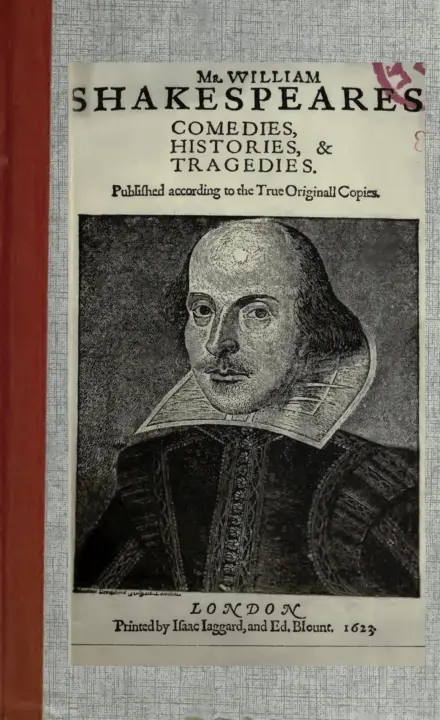
THE CLASSIC COLLECTION · 1679
"The Shakespeare Myth" by Sir Edwin Durning-Lawrence is a critical examination of the traditional narrative surrounding William Shakespeare, written in the early 20th century. This book challenges the widely accepted authorship of Shakespeare's works, suggesting that they were actually penned by Francis Bacon, and delves into the historical and biographical inconsistencies pertaining to Shakespeare's life. It reflects the early 1900s cultural skepticism towards established literary canon and examines the implications of the authorship debate on the understanding of English literature. In this book, Durning-Lawrence meticulously dissects the evidence associated with Shakespeare, including his supposed signature, the publication of his plays, and the historical context of his life. He points out various discrepancies, such as the fact that only a handful of plays can be firmly attributed to Shakespeare during his lifetime, while many others emerged posthumously with significant alterations. Through an exploration of historical documents, scripts, and Bacon's own writings, he presents the argument that Shakespeare was not the prolific playwright and poet but rather a pseudonym used by Bacon to shield the true author from political and social scrutiny. The book is a unique contribution to literary criticism and raises profound questions about authorship, legacy, and the nature of literary genius.
Introduction adapted from the source catalogue; source summaries may be automatically generated.
Free to read · English · 11,396 words · No account needed
MAKE TIME FOR A GOOD BOOK
On by default. Untick to stop anonymous reading totals. Each page counts after 10 seconds in view. How this works.
Anonymous counting is on unless you have switched it off.
Here, reading the initial letters of each line upwards from "Hang," we get quite clearly S. O. W., and we perceive that "Hang sow" is just as much Bacon as is Hang hog. Thus, we get a triplet of No. 43, as we had a triplet of page 53, but we should also realise that we get a third triplet, because we find=
```Hang HOG (Example 1.)=
on page one in the Comedies, the first portion of the plays, and we
find=
```Hang SOW (Example 2.)=
which is practically the same thing as Hang hog, upon page 43 in the Comedies, the first portion of the plays, and we find that=
```Hang-hog is latten for Bacon (Example 3.)=
is on page 53 in the Comedies, the first portion of the plays, and "Hang-hog is Bacon," gives the Shibboleth, and affords the explanation of the two previous examples. Thus we have a revelation of Bacon's authorship in "three times three" forms, and the revelation is, therefore, "absolutely perfect."=
`````The Number 36.=
There are thirty-six plays in the First Folio. This is not accidental. Thirty-six is a cabalistic number, and is used in several of Bacon's works when he refers to the Stage or to Plays.=
`````The 36th Essay,=
in the Italian edition of Bacon's "Essays," published in London, in 1618, is entitled "Fattioni" (Stage Plays).=
````The 36 th Antitheta.=
In the Latin edition of Bacon's "Advancement of Learning," published in 1623, the same year in which the Folio of the Plays appeared, the XXXVI. Antitheta commences "Amorum multa debet scena (stage plays)," and when the English edition was brought out in 1640, the XXXVI. Antitheta commences with the word "The Stage."=
````The 36th Apophthegm.=
In the collection of Bacon's "Apophthegms," printed in 1671, Apophthegm 36 reads as follows, and fully explains the meaning of "Hang-hog is latten for Bacon, I warrant you."
"Sir Nicholas Bacon, being appointed a Judge for the Northern Circuit, and having brought his Trials that came before him to such a pass, as the passing of Sentence on Malefactors, he was by one of the Malefactors mightily importuned for to save his life, which when nothing that he had said did avail, he at length desired his mercy on the account of kindred: Prethee said my Lord Judge, how came that in? Why, if it please you my Lord, your name is Bacon and mine is Hog, and in all Ages Hog and Bacon have been so near kindred, that they are not to be separated. I [Aye], but, replyed Judge Bacon, you and I cannot be kindred except you be hanged; for Hog is not Bacon until it be well hanged."=
````Page 53.=
Your reading position is saved on this browser. Take it to another device with a library code. Reading pages adapt to text, rather than matching a printed edition.
BEHIND THE BOOK
This eBook is for the use of anyone anywhere in the United States and most other parts of the world at no cost and with almost no restrictions whatsoever. You may copy it, give it away or re-use it under the terms of the Project Gutenberg License included with this eBook or online at www.gutenberg.org. If you are not located in the United States, you will have to check the laws of the country where you are located before using this eBook. Read the source licence.
The original source file, including credits and licence, is retained by this library. Request an original-format copy at no charge. Please include the book title and Project Gutenberg identifier #47425.
KEEP YOUR CURIOSITY GOING
David Patterson (Spirit) Hatch

David Patterson (Spirit) Hatch

David Patterson (Spirit) Hatch

Ralph Waldo Emerson

Maurice Baring

Oscar Wilde & James McNeill Whistler