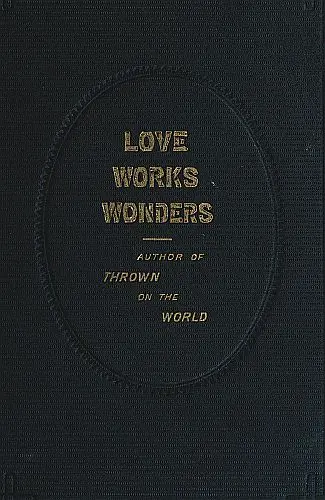
Love Works Wonders: A Novel
Charlotte M. Brame
THE CLASSIC COLLECTION · 1880
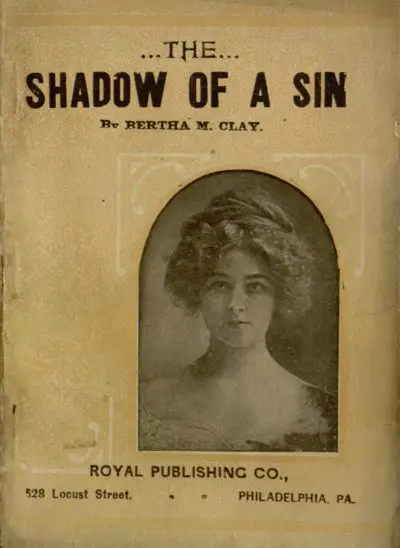
"The Shadow of a Sin" by Charlotte M. Brame is a novel written in the late 19th century. The story centers around Hyacinth Vaughan, a young woman suffocated by the oppressive atmosphere of her wealthy but stifling home life, controlled by her strict and dull guardians, Lady Vaughan and Sir Arthur. As she dreams of a more vibrant and fulfilling existence, she becomes entangled in a romantic relationship with Claude Lennox, who proposes the excitement of elopement, ultimately leading Hyacinth to confront the darker side of desire and societal expectations. The opening of the novel introduces us to Claude as he impatiently waits for Hyacinth in a picturesque natural setting, revealing his infatuation with her. The dialogue between them quickly establishes Hyacinth's dissatisfaction with her constrained life, filled with monotonous routines imposed by her guardians. As the two share their dreams, Hyacinth expresses longings for joy and freedom, while Claude speaks of love and romance. However, their budding relationship is complicated by the pressures of expectation and societal norms, with Hyacinth reluctantly considering a future marriage arranged by Lady Vaughan to a man she does not know. As the opening unfolds, readers are left to ponder the theme of romantic idealism versus the harsh realities of life, especially as Hyacinth's struggle for agency in her life becomes increasingly profound.
Introduction adapted from the source catalogue; source summaries may be automatically generated.
Free to read · English · 63,920 words · No account needed
MAKE TIME FOR A GOOD BOOK
On by default. Untick to stop anonymous reading totals. Each page counts after 10 seconds in view. How this works.
Anonymous counting is on unless you have switched it off.
Hyacinth Vaughan was soon to learn more of Mr. Darcy's sentiments. He was dining with them one day, when the conversation turned upon some English guests who had arrived at the hotel the evening before--Lord and Lady Wallace.
"She looks quite young," said Lady Vaughan. "She would be a nice
companion for Hyacinth."
Mr. Darcy, to whom she was speaking, made no reply. Lady Vaughan noticed how grave his face had grown.
"Do you not think so, Adrian?" she asked.
"Since you wish me to speak, my answer is, no; I do not think so."
"Do you mind telling me why?" pursued Lady Vaughan "I have been so long out of the world I am ignorant of its proceedings."
"I would rather you would not ask me, Lady Vaughan," he said.
"And I would rather hear what you have to tell," she persisted, with a smiling air of command that he was too courteous not to obey.
"I do not think Lady Wallace would be a good companion for Hyacinth, because she is what people of the period call 'fast.' She created a great sensation three years ago by eloping with Lord Wallace. She was only seventeen at the time."
Lady Vaughan looked slightly disgusted; but Hyacinth, who perhaps felt
in some measure that she was on her trial, said: "Perhaps she loved
him."
Adrian turned to her eagerly. "That is what I was trying to explain to you the other day--false romance--how the truest, the purest, the brightest romance would have been, not eloping--which is the commonplace instinct of commonplace minds--but waiting in patience. Think of the untruths, the deceit, the false words, the underhand dealings that are necessary for an elopement!"
"But surely," said Lady Vaughan, "there are exceptions?"
"There may be. I do not know. I am only saying what I think. A girl who deceives all her friends, who leaves home in such a fashion, must be devoid of refinement and delicacy--not to mention truth and honesty."
"You are very hard," murmured Hyacinth.
"Nay," he rejoined, turning to her with infinite tenderness of manner; "there are some things in which one cannot be too hard. Anything that touches the fair and pure name of a woman should be held sacred."
"You think highly of women," she said.
"I do--so highly that I cannot bear even a cloud to shadow the fairness and brightness that belong to them. A woman's fair name is her inheritance--her dower. I could not bear, had I a sister, to hear her name lightly spoken by light lips. What the moss is to the rose, what green leaves are to the lily, spotless repute is to a woman."
Your reading position is saved on this browser. Take it to another device with a library code. Reading pages adapt to text, rather than matching a printed edition.
Charlotte M. Brame
BEHIND THE BOOK
This eBook is for the use of anyone anywhere in the United States and most other parts of the world at no cost and with almost no restrictions whatsoever. You may copy it, give it away or re-use it under the terms of the Project Gutenberg License included with this eBook or online at www.gutenberg.org. If you are not located in the United States, you will have to check the laws of the country where you are located before using this eBook. Read the source licence.
The original source file, including credits and licence, is retained by this library. Request an original-format copy at no charge. Please include the book title and Project Gutenberg identifier #42320.
KEEP YOUR CURIOSITY GOING
Coulson Kernahan

Maurice Baring
Frances Wright
Cécile Tormay

Frederic Jesup Stimson

W. H. P. (William Henry Pope) Jarvis