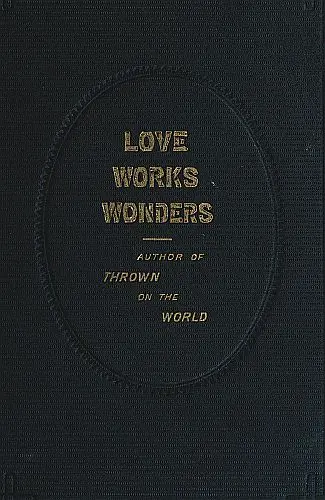
Love Works Wonders: A Novel
Charlotte M. Brame
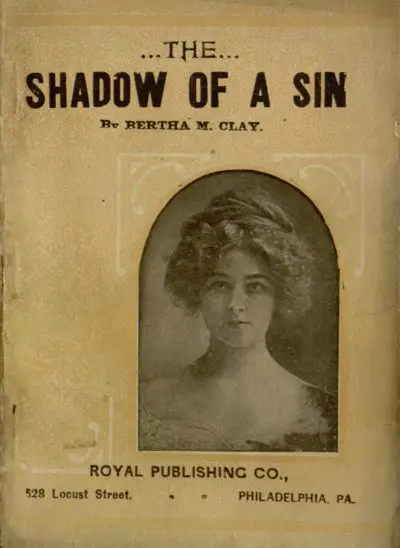
THE CLASSIC COLLECTION · 1880
"The Shadow of a Sin" by Charlotte M. Brame is a novel written in the late 19th century. The story centers around Hyacinth Vaughan, a young woman suffocated by the oppressive atmosphere of her wealthy but stifling home life, controlled by her strict and dull guardians, Lady Vaughan and Sir Arthur. As she dreams of a more vibrant and fulfilling existence, she becomes entangled in a romantic relationship with Claude Lennox, who proposes the excitement of elopement, ultimately leading Hyacinth to confront the darker side of desire and societal expectations. The opening of the novel introduces us to Claude as he impatiently waits for Hyacinth in a picturesque natural setting, revealing his infatuation with her. The dialogue between them quickly establishes Hyacinth's dissatisfaction with her constrained life, filled with monotonous routines imposed by her guardians. As the two share their dreams, Hyacinth expresses longings for joy and freedom, while Claude speaks of love and romance. However, their budding relationship is complicated by the pressures of expectation and societal norms, with Hyacinth reluctantly considering a future marriage arranged by Lady Vaughan to a man she does not know. As the opening unfolds, readers are left to ponder the theme of romantic idealism versus the harsh realities of life, especially as Hyacinth's struggle for agency in her life becomes increasingly profound.
Introduction adapted from the source catalogue; source summaries may be automatically generated.
Free to read · English · 63,920 words · No account needed
MAKE TIME FOR A GOOD BOOK
On by default. Untick to stop anonymous reading totals. Each page counts after 10 seconds in view. How this works.
Anonymous counting is on unless you have switched it off.
He saw the sudden, startled flush of joy in the young face. Hyacinth raised her head and looked eagerly at her grandmamma; but Lady Vaughan excused herself.
"The journey has been delightful," she said, "but fatiguing. To-morrow I will go out, but not to-day. Hyacinth will go, though, Adrian, if you will be so kind as to give the child the pleasure."
The "child" rose, her cheeks aflame, her heart beating as it had never beat before. To go out into those sunlit gardens and to listen to music with him--well, she had not even guessed before what a beautiful, happy world it was. She put on the prettiest of her hats--one with a white plume--and a lace mantilla, and then stood, half smiling, but wholly happy, waiting for him. He came up to her smiling.
"Hyacinth," he said, "we are--to use an old-fashioned term--of the same kin; so I am not going to call you Miss Vaughan. And I want you not to look so shy, but to feel quite at home with me."
At home with him, this hero, this king amongst men, whose presence filled her whole soul with light! It could never be.
"I had no idea," he continued, "that I had such a fair young kinswoman. Lady Vaughan had always written as though you were a child."
Her heart sank. Was this how he thought of her--was this what made him so kind and gracious to her?
"I am not a child," she said, with some little attempt at dignity, "I am
more than eighteen."
"Quite a philosophic age," was the smiling reply. "Now, Hyacinth, tell me, what do you like to look at best--flowers, trees, or water?"
"I like all three," she said truthfully.
"Do you? Then I will find you a seat where you can see all. Here is one
not too near the music."
He had found a quaint, pretty garden seat, under the shade of a tall spreading tree. In front of them were beds of lilies and roses, and the blue waters of the lake. The band began to play the sad, passionate music of Verdi's "Miserere;" and to Hyacinth Vaughan it seemed as though the earth had changed into heaven.
"Do you like music?" he said watching the changes on the beautiful young
face.
"Yes," she replied, "but I have heard so little."
"You have had a very quiet life at Queen's Chase, I should imagine," he
said.
"Yes, as quiet as life could well be."
"You should not regret it. I am quite of the old régime. I think young girls should be so reared."
"For what reason?" she asked.
Your reading position is saved on this browser. Take it to another device with a library code. Reading pages adapt to text, rather than matching a printed edition.
Charlotte M. Brame
BEHIND THE BOOK
This eBook is for the use of anyone anywhere in the United States and most other parts of the world at no cost and with almost no restrictions whatsoever. You may copy it, give it away or re-use it under the terms of the Project Gutenberg License included with this eBook or online at www.gutenberg.org. If you are not located in the United States, you will have to check the laws of the country where you are located before using this eBook. Read the source licence.
The original source file, including credits and licence, is retained by this library. Request an original-format copy at no charge. Please include the book title and Project Gutenberg identifier #42320.
KEEP YOUR CURIOSITY GOING
Coulson Kernahan

Maurice Baring
Frances Wright
Cécile Tormay

Frederic Jesup Stimson

W. H. P. (William Henry Pope) Jarvis