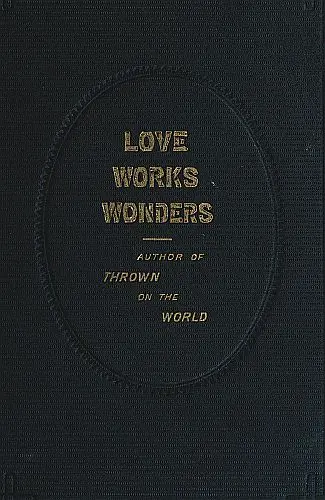
Love Works Wonders: A Novel
Charlotte M. Brame
THE CLASSIC COLLECTION · 1880
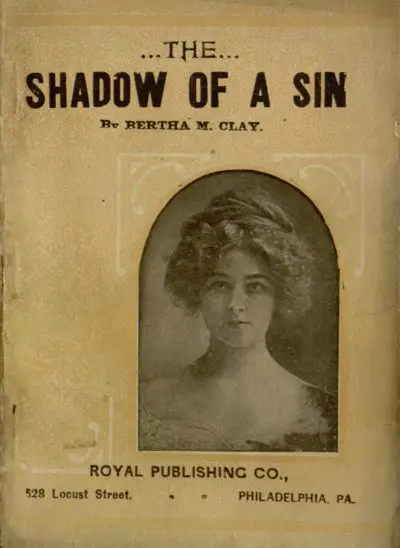
"The Shadow of a Sin" by Charlotte M. Brame is a novel written in the late 19th century. The story centers around Hyacinth Vaughan, a young woman suffocated by the oppressive atmosphere of her wealthy but stifling home life, controlled by her strict and dull guardians, Lady Vaughan and Sir Arthur. As she dreams of a more vibrant and fulfilling existence, she becomes entangled in a romantic relationship with Claude Lennox, who proposes the excitement of elopement, ultimately leading Hyacinth to confront the darker side of desire and societal expectations. The opening of the novel introduces us to Claude as he impatiently waits for Hyacinth in a picturesque natural setting, revealing his infatuation with her. The dialogue between them quickly establishes Hyacinth's dissatisfaction with her constrained life, filled with monotonous routines imposed by her guardians. As the two share their dreams, Hyacinth expresses longings for joy and freedom, while Claude speaks of love and romance. However, their budding relationship is complicated by the pressures of expectation and societal norms, with Hyacinth reluctantly considering a future marriage arranged by Lady Vaughan to a man she does not know. As the opening unfolds, readers are left to ponder the theme of romantic idealism versus the harsh realities of life, especially as Hyacinth's struggle for agency in her life becomes increasingly profound.
Introduction adapted from the source catalogue; source summaries may be automatically generated.
Free to read · English · 63,920 words · No account needed
MAKE TIME FOR A GOOD BOOK
On by default. Untick to stop anonymous reading totals. Each page counts after 10 seconds in view. How this works.
Anonymous counting is on unless you have switched it off.
"Of what use will that be?" inquired Lord Chandon. "Her face haunts you now, you say; the chances are that if you see her again it will trouble you still more. You cannot marry her; why fall in love with her?"
"I have not fallen in love with her yet," said Sir Aubrey; "but I shall if I see much more of her. As for marrying her, I do not see why I should not. She is fair, graceful, and lovely."
"Still, perhaps, she is not the kind of lady you should marry. Let the little child's governess remain in peace, Aubrey. Straight ways are the best ways."
"You are a good fellow," returned the young baronet, easily touched by good advice. "I should like to see you happier, Adrian."
"I shall live my life," said Lord Chandon--and his voice was full of pathos--"do my duty, and die like a Christian, I hope; but my earthly happiness died when I lost my love."
"That was a sad affair," remarked Sir Aubrey.
"Yes; we will not discuss it. I only mention it to warn you as to admitting the love of any woman into your heart, for you can never drive it away again."
That day, after the gentlemen had entered the drawing-room, Sir Aubrey went up to Lady Dartelle. She was both proud and fond of her handsome son, who as a rule could do pretty much as he liked with her.
"Mother," he said, "why does not little Clara come down sometimes?"
"She can come, my dear Aubrey, whenever you wish," was the smiling
reply.
"And her governess--what has she done that she is never asked to play
and sing?"
At the mention of the word "governess" Lady Dartelle became suspicious. "He has seen her," she thought, "and has found out how pretty she is."
"One of our arrangements," she said aloud, "was that Clara's governess was not to be asked into the drawing-room when we had visitors."
"Why not?" inquired the baronet, carelessly.
"My dear boy, it would not be prudent; and it would displease your sisters very much, and perhaps interfere with their plans and wishes."
"Being a very pretty--nay, a most lovely girl, she is to be punished for her beauty, then, by being shut out of all society?"
"How do you know she is beautiful?" asked Lady Dartelle. "Do not speak too loudly, my dear; your sisters may hear you."
"I saw her the other morning on the shore, and I tell you honestly, mother, I think her the most beautiful girl I have ever seen; and she is as good as she is beautiful."
Your reading position is saved on this browser. Take it to another device with a library code. Reading pages adapt to text, rather than matching a printed edition.
Charlotte M. Brame
BEHIND THE BOOK
This eBook is for the use of anyone anywhere in the United States and most other parts of the world at no cost and with almost no restrictions whatsoever. You may copy it, give it away or re-use it under the terms of the Project Gutenberg License included with this eBook or online at www.gutenberg.org. If you are not located in the United States, you will have to check the laws of the country where you are located before using this eBook. Read the source licence.
The original source file, including credits and licence, is retained by this library. Request an original-format copy at no charge. Please include the book title and Project Gutenberg identifier #42320.
KEEP YOUR CURIOSITY GOING
Coulson Kernahan

Maurice Baring
Frances Wright
Cécile Tormay

Frederic Jesup Stimson

W. H. P. (William Henry Pope) Jarvis