THE CLASSIC COLLECTION✦Stirring scenes in savage landsCLASSIC FREE BOOKS
Stirring scenes in savage lands
James Greenwood
THE CLASSIC COLLECTION · 1869
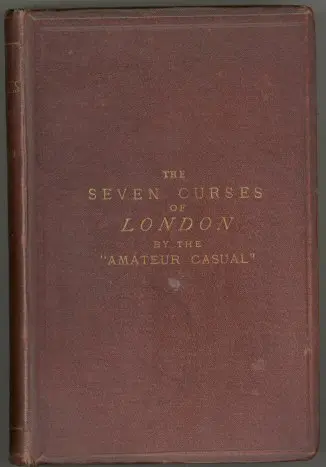
"The Seven Curses of London" by James Greenwood is a social commentary written in the late 19th century. This thought-provoking work delves into the dire conditions faced by the impoverished and neglected in London, particularly focusing on the plight of pauper children, criminals, and beggars. Through vivid descriptions and poignant narratives, the book aims to shed light on the systemic issues contributing to these societal curses, making it a significant historical account of urban poverty. The beginning of this work introduces the overwhelming issue of neglected children in London, highlighting startling statistics about the number of children living in destitution. Greenwood paints a grim picture of these vulnerable kids, often left to wander the streets without guardians, food, or care, setting the stage for a broader investigation of societal neglect and its consequences. He discusses the structural failures of society in managing and protecting these children, suggesting that the root causes of their plight stem from systemic poverty and moral decay, foreshadowing a critical exploration of London's darker underbelly as the text unfolds.
Introduction adapted from the source catalogue; source summaries may be automatically generated.
Free to read · English · 124,120 words · No account needed
MAKE TIME FOR A GOOD BOOK
On by default. Untick to stop anonymous reading totals. Each page counts after 10 seconds in view. How this works.
Anonymous counting is on unless you have switched it off.
The lad came out, looming like a small and ragged patch of twilight in utter blackness until he gradually appeared before us. He was not a big lad, not more than thirteen years old, I should say, with a short-cropped bullet-head, and with an old hard face with twice thirteen years of vice in it.
The prison dress consisted of a sort of blouse and trousers, both of a stout woollen material of slate colour. It was evening, and evidently, the captive, hopeless of release that night, had, previously to our disturbing him, composed himself for slumber. His method, doubtless derived from frequent experience of so disposing his attire as to get as much warmth out of it as possible, was somewhat curious: he had released his trousers of their braces, so that they descended below his feet, and the collar of his blouse was pulled up high over his ears. Owing to his embarrassed habiliments, he shambled out of the pitchy blackness at a snail’s pace, his white cotton braces trailing behind like a tail, and completing his goblin-like appearance.
“This is a very bad lad, sir,” remarked the governor sternly; “he only came in yesterday, and to-day while out for exercise with the others, he must misconduct himself, and when the warder reproved him, he must swear some horrible oath against him. It is for that he is here. How many times have you been here, lad?”
Lad (gulping desperately). “Three times, sir!”
Governor (sternly). “What! speak the truth, lad.”
Lad (with a determined effort to gouge tears out of his eyes with his knuckles). “Four times, sir.”
Governor. “Four times! and so you’ll go on till you are sent away, I’m afraid. Can you read, lad?”
Lad (with a penitential wriggle). “Yes, sir; I wish as I couldn’t,
sir.”
Governor. “Ah! why so?”
Lad (with a doleful wag of his bullet-head). “Cos then I shouldn’t have read none of them highwaymen’s books, sir; it was them as was the beginning of it.”
Governor. “Ah!” (a pause) “Have you a mother, my lad?”
Lad. “Boo-oh!”
Governor. “Answer me, my lad, have you a mother?”
Lad (convulsively clasping the corners of his collars, and hiding his eyes in them). “Ye-ye-ess, sir!”
Governor. “Ah, I thought so! where does she live?”
Lad. “Man-manchester, please, sir!” (a tremulous sniff, indicative of the impending explosion).
Governor. “And what do you think would be her feelings could she see
you as you now are?”
Your reading position is saved on this browser. Take it to another device with a library code. Reading pages adapt to text, rather than matching a printed edition.
BEHIND THE BOOK
This eBook is for the use of anyone anywhere in the United States and most other parts of the world at no cost and with almost no restrictions whatsoever. You may copy it, give it away or re-use it under the terms of the Project Gutenberg License included with this eBook or online at www.gutenberg.org. If you are not located in the United States, you will have to check the laws of the country where you are located before using this eBook. Read the source licence.
The original source file, including credits and licence, is retained by this library. Request an original-format copy at no charge. Please include the book title and Project Gutenberg identifier #45585.
KEEP YOUR CURIOSITY GOING
Cécile Tormay

Moritz Busch
John L. Ransom
Frances Wright
Cécile Tormay

Mabel Potter Daggett