READ · DISCOVER · ENJOYClassic literature · Always free
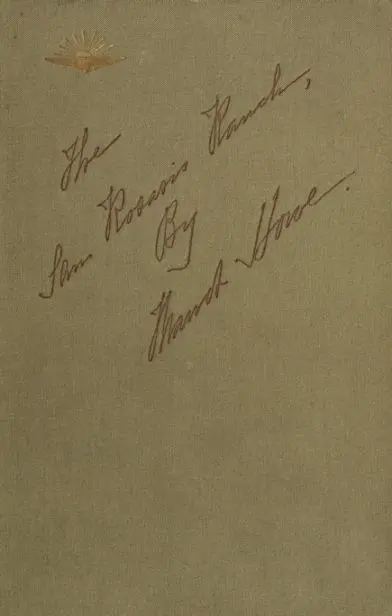
The San Rosario Ranch — digital edition cover

THE CLASSIC COLLECTION · 1884

The San Rosario Ranch

"The San Rosario Ranch" by Maud Howe Elliott is a novel written in the late 19th century. The story unfolds in California and centers around Millicent Almsford, a young woman who has recently traveled from Italy to visit her newly-found relatives at the San Rosario Ranch. The book explores themes of family, cultural clash, and the struggles of adjusting to a new environment. At the start of the novel, we are introduced to the idyllic San Rosario Ranch, where preparations are underway for the arrival of Millicent. The opening chapters reveal her arrival and initial impressions of the family: Barbara Deering, who warmly welcomes her, as well as Barbara's brother and mother. As Millicent grapples with her homesickness and the overwhelming differences between her previous life in Venice and her new surroundings, she begins to bond with the family and navigate her place among them. The narrative sets the stage for exploring Millicent's character and her evolving relationships, particularly with the enigmatic John Graham, a local artist, hinting at both friendship and potential romance.

Introduction adapted from the source catalogue; source summaries may be automatically generated.

Start reading ↓

Free to read · English · 85,886 words · No account needed

MAKE TIME FOR A GOOD BOOK

The San Rosario Ranch

On by default. Untick to stop anonymous reading totals. Each page counts after 10 seconds in view. How this works.

Anonymous counting is on unless you have switched it off.

The San Rosario Ranch

For a moment longer they paused on the bank, little thinking how that scene would be graven on their memories in after days; and then Hal brandished his whip, and Sphinx started off at a brisk trot, the strong mules following at the top of their speed, while Graham led the way on his fleet mustang. It was not far from high noon when the party arrived at the place of destination, recognized by a flag floating above the low underbrush at the foot of a hill. In reply to Hal's lusty hallooing, a young man emerged from the other side of the hill, and waving his hat in greeting, hurried to help Mrs. Deering descend from the wagon.

"How late you are, good people!" he cried in a pleasant voice. "The fellows thought you were going to disappoint us; but I had too much faith in your word, Mrs. Deering, to doubt you. Miss Deering, you were too quick for me; your agility is only excelled by your grace. Well, Graham, glad to see you; for once you are better than your word."

The young men shook hands with that punctilious politeness which gentlemen who do not quite like each other are apt to show in the presence of mutual lady friends. Deering presented their host to Miss Almsford, and at that moment the other two woodmen made their appearance,--Michael O'Neil, a jolly-looking young Irishman, and Dick Hartley, a dark-browed Englishman. The three men were intimates at the Ranch, and Millicent already knew O'Neil and Hartley; the latter was an old friend and travelling-companion of Graham. Leaving Deering and O'Neil to take care of the horses, Galbraith led the way to the camp, a sheltered spot on the south side of the protecting hill. Three small sleeping-tents here stood close together. Galbraith's was the central one; it was wonderfully luxurious, Millicent thought, with its comfortable rug and little iron bedstead, two chairs, and a writing-table. A small looking-glass had been brought from town "on purpose for the visit of the ladies," Hartley assured them; at which statement there was a general laugh at the young Englishman's expense, his personal vanity being well known. But it was of the greenwood drawing-room that the ladies expressed the highest approval. A square space of ground had been cleared of the dense undergrowth, its smooth surface being thickly carpeted by soft piles of fresh, sweet ferns. Close-growing shrubs and bushes served as walls, while the thick branches of the great trees made a roof close enough to keep out the heat of the sun. The flowers of the manzanita and the buckeye perfumed the air of this sylvan boudoir, wherein were ranged comfortable stools and camp-chairs. A wide hammock fitted with a red blanket swung between two straight tree stems. Here they sat for a while, resting from the long drive; and here it was that Millicent had time to observe more particularly the appearance of Mr. Maurice Galbraith, of whom she had heard so much. Galbraith was not, strictly speaking, a handsome man, though he had a good deal of beauty. He was tall and slender, with a finely shaped head, well set upon the shoulders. His bright, intelligent face was too thin for beauty; while the fine, brilliant eyes, with their heavy lashes, were hollow from over-work. His delicate chin and mouth were exquisitely modelled; while the nose seemed a trifle over-large through the extreme thinness of the face. The features in repose were almost stern in their look of concentrated thought; but when he laughed it was with the sudden merriment of a child, the mouth parting over the small white teeth, and the large, dark, hollow eyes flashing cheerily. Barely over thirty, he might have passed for some years older, an unflagging attention to his arduous profession having told somewhat upon his strength. Among the lawyers on the Pacific coast, Galbraith was considered a rising man, his late appointment to a district attorneyship proving the confidence which he enjoyed. Millicent thought him decidedly the most attractive of their hosts; but her quick intuition had already told her that Graham felt little cordiality towards him, and she spoke chiefly to Hartley, the rather insignificant "beauty man" of the camp. From him she learned that for several years the trio of friends had passed the summer months in camping out at some spot not far distant from the railroad, which carried them every morning to San Francisco, and which brought them back as early in the afternoon as might be. Their one henchman (of course a Chinaman) was left in charge of the camp during the day, and performed the household work necessary to so primitive a menage. Not far distant from the camp, the stream whose course they had followed spread out into a wide, deep pool, affording an opportunity for a refreshing plunge, with which the three friends were wont to begin the proceedings of the day. A breakfast eaten at the tent door was followed by a walk to the station, half a mile distant, when they bade good-by to their sylvan home. Four o'clock, or at latest five, saw them on their way from the city; and an hour or two of angling in the cool stream, wherein swam delicious trout, or a tramp through the woods with a gun, brought them to the dinner hour. Just at this point in Hartley's chronicle of their daily life, Ah Lam, who had been brought to assist the one servant of the camp in his preparations, announced that dinner was served. Millicent never learned how the evenings were passed in camp, for there was a general move towards the dining-room, another triumph of sylvan architecture. A few paces distant from the green parlor, but hidden from it by the thick intervening bushes, was a great fig-tree with wide-spreading branches laden with delicious purple fruit. At the foot of the tree stood a table laid with plates, knives and forks, and other appurtenances of civilized life. Millicent gave a little cry of delight at the prettily decorated board, which was wreathed with a garland of green leaves and covered with bright flowers. Barbara, who had been reading Dumas with that intense delight to which the first acquaintance with French romance gives rise, said that the banquet surpassed the one spread by Joseph Bassano for the Dauphine of France in the old Chateau. Millicent found herself at the table between Graham and the good-natured Irishman, O'Neil. Her lover seemed to her handsomer to-day among this band of his contemporaries than ever before; and she looked at him with her whole soul in her eyes, forgetting all in the world beside or beyond him. O'Neil, who was the wit of the camp, told funny stories at which every one laughed; but when Graham spoke, the men all listened, like soldiers waiting the words of their superior. Before they had come to the table, the artist had twined a girdle for Millicent's slender waist of some feathery green creeper, a spray of which she had wreathed about her head. When the red wine was poured, Graham spilled from his glass, as if by accident, a few drops upon the earth, then, touching his goblet to hers, he said in an undertone,--

Your reading position is saved on this browser. Take it to another device with a library code. Reading pages adapt to text, rather than matching a printed edition.

More from this author

BEHIND THE WORDS

About Maud Howe Elliott

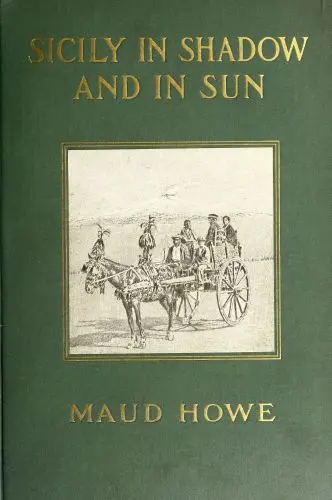
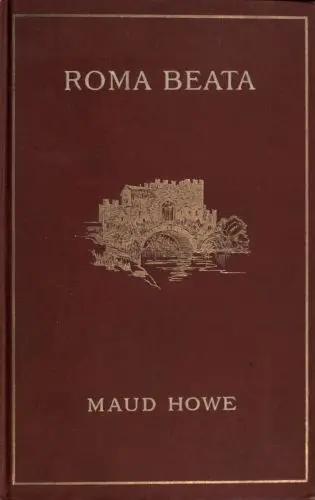
Maud Howe Elliott (1854–1948). Explore Roma beata; letters from the Eternal city, Three generations, Sun and Shadow in Spain and other works in this collection. These books span essays & ideas, travel & exploration, literature & collections.

Explore this author’s books →

THE READERS’ VERDICT

How did this story stay with you?

Not rated yet
Your rating for The San Rosario Ranch

Be the first to share your verdict.

One rating per browser, which you can change or remove. A necessary browser identifier remembers your vote. How ratings work

A GOOD STORY DESERVES COMPANY

Pass this book along.

A great read is even better when it’s shared.

SEND A LITTLE INSPIRATION

Share this book

BEHIND THE BOOK

Edition & source details.

Title
The San Rosario Ranch
Author
Maud Howe Elliott
First publication (Open Library catalogue match)
1884
Digital edition publisher
Project Gutenberg
Gutenberg release date
2013-03-09
Language
English
Source edition imprint
Not stated in source catalogue
Source identifier
Project Gutenberg #42283
Contributors
No additional named contributors in source metadata

Public-domain source & licence

This eBook is for the use of anyone anywhere in the United States and most other parts of the world at no cost and with almost no restrictions whatsoever. You may copy it, give it away or re-use it under the terms of the Project Gutenberg License included with this eBook or online at www.gutenberg.org. If you are not located in the United States, you will have to check the laws of the country where you are located before using this eBook. Read the source licence.

Full source licence and obtaining an original copy

The original source file, including credits and licence, is retained by this library. Request an original-format copy at no charge. Please include the book title and Project Gutenberg identifier #42283.

the full Project Gutenberg License must appear
prominently whenever any copy of a Project Gutenberg work (any work
on which the phrase “Project Gutenberg” appears, or with which the
phrase “Project Gutenberg” is associated) is accessed, displayed,
performed, viewed, copied or distributed:

This eBook is for the use of anyone anywhere in the United States and most
other parts of the world at no cost and with almost no restrictions
whatsoever. You may copy it, give it away or re-use it under the terms
of the Project Gutenberg™ License included with this eBook or online
at www.gutenberg.org. If you
are not located in the United States, you will have to check the laws
of the country where you are located before using this eBook.

1.E.2. If an individual Project Gutenberg electronic work is
derived from texts not protected by U.S. copyright law (does not
contain a notice indicating that it is posted with permission of the
copyright holder), the work can be copied and distributed to anyone in
the United States without paying any fees or charges. If you are
redistributing or providing access to a work with the phrase “Project
Gutenberg” associated with or appearing on the work, you must comply
either with the requirements of paragraphs 1.E.1 through 1.E.7 or
obtain permission for the use of the work and the Project Gutenberg
trademark as set forth in paragraphs 1.E.8 or 1.E.9.

1.E.3. If an individual Project Gutenberg electronic work is posted
with the permission of the copyright holder, your use and distribution
must comply with both paragraphs 1.E.1 through 1.E.7 and any
additional terms imposed by the copyright holder. Additional terms
will be linked to the Project Gutenberg License for all works
posted with the permission of the copyright holder found at the
beginning of this work.

1.E.4. Do not unlink or detach or remove the full Project Gutenberg
License terms from this work, or any files containing a part of this
work or any other work associated with Project Gutenberg.

1.E.5. Do not copy, display, perform, distribute or redistribute this
electronic work, or any part of this electronic work, without
prominently displaying the sentence set forth in paragraph 1.E.1 with
active links or immediate access to the full terms of the Project
Gutenberg License.

1.E.6. You may convert to and distribute this work in any binary,
compressed, marked up, nonproprietary or proprietary form, including
any word processing or hypertext form. However, if you provide access
to or distribute copies of a Project Gutenberg work in a format
other than “Plain Vanilla ASCII” or other format used in the official
version posted on the official Project Gutenberg website
(www.gutenberg.org), you must, at no additional cost, fee or expense
to the user, provide a copy, a means of exporting a copy, or a means
of obtaining a copy upon request, of the work in its original “Plain
Vanilla ASCII” or other form. Any alternate format must include the
full Project Gutenberg License as specified in paragraph 1.E.1.

1.E.7. Do not charge a fee for access to, viewing, displaying,
performing, copying or distributing any Project Gutenberg works
unless you comply with paragraph 1.E.8 or 1.E.9.

1.E.8. You may charge a reasonable fee for copies of or providing
access to or distributing Project Gutenberg electronic works
provided that:

• You pay a royalty fee of 20% of the gross profits you derive from
the use of Project Gutenberg works calculated using the method
you already use to calculate your applicable taxes. The fee is owed
to the owner of the Project Gutenberg trademark, but he has
agreed to donate royalties under this paragraph to the Project
Gutenberg Literary Archive Foundation. Royalty payments must be paid
within 60 days following each date on which you prepare (or are
legally required to prepare) your periodic tax returns. Royalty
payments should be clearly marked as such and sent to the Project
Gutenberg Literary Archive Foundation at the address specified in
Section 4, “Information about donations to the Project Gutenberg
Literary Archive Foundation.”

• You provide a full refund of any money paid by a user who notifies
you in writing (or by e-mail) within 30 days of receipt that s/he
does not agree to the terms of the full Project Gutenberg™
License. You must require such a user to return or destroy all
copies of the works possessed in a physical medium and discontinue
all use of and all access to other copies of Project Gutenberg™
works.

• You provide, in accordance with paragraph 1.F.3, a full refund of
any money paid for a work or a replacement copy, if a defect in the
electronic work is discovered and reported to you within 90 days of
receipt of the work.

• You comply with all other terms of this agreement for free
distribution of Project Gutenberg™ works.


1.E.9. If you wish to charge a fee or distribute a Project
Gutenberg™ electronic work or group of works on different terms than
are set forth in this agreement, you must obtain permission in writing
from the Project Gutenberg Literary Archive Foundation, the manager of
the Project Gutenberg™ trademark. Contact the Foundation as set
forth in Section 3 below.

1.F.

1.F.1. Project Gutenberg volunteers and employees expend considerable
effort to identify, do copyright research on, transcribe and proofread
works not protected by U.S. copyright law in creating the Project
Gutenberg™ collection. Despite these efforts, Project Gutenberg™
electronic works, and the medium on which they may be stored, may
contain “Defects,” such as, but not limited to, incomplete, inaccurate
or corrupt data, transcription errors, a copyright or other
intellectual property infringement, a defective or damaged disk or
other medium, a computer virus, or computer codes that damage or
cannot be read by your equipment.

1.F.2. LIMITED WARRANTY, DISCLAIMER OF DAMAGES - Except for the “Right
of Replacement or Refund” described in paragraph 1.F.3, the Project
Gutenberg Literary Archive Foundation, the owner of the Project
Gutenberg™ trademark, and any other party distributing a Project
Gutenberg™ electronic work under this agreement, disclaim all
liability to you for damages, costs and expenses, including legal
fees. YOU AGREE THAT YOU HAVE NO REMEDIES FOR NEGLIGENCE, STRICT
LIABILITY, BREACH OF WARRANTY OR BREACH OF CONTRACT EXCEPT THOSE
PROVIDED IN PARAGRAPH 1.F.3. YOU AGREE THAT THE FOUNDATION, THE
TRADEMARK OWNER, AND ANY DISTRIBUTOR UNDER THIS AGREEMENT WILL NOT BE
LIABLE TO YOU FOR ACTUAL, DIRECT, INDIRECT, CONSEQUENTIAL, PUNITIVE OR
INCIDENTAL DAMAGES EVEN IF YOU GIVE NOTICE OF THE POSSIBILITY OF SUCH
DAMAGE.

1.F.3. LIMITED RIGHT OF REPLACEMENT OR REFUND - If you discover a
defect in this electronic work within 90 days of receiving it, you can
receive a refund of the money (if any) you paid for it by sending a
written explanation to the person you received the work from. If you
received the work on a physical medium, you must return the medium
with your written explanation. The person or entity that provided you
with the defective work may elect to provide a replacement copy in
lieu of a refund. If you received the work electronically, the person
or entity providing it to you may choose to give you a second
opportunity to receive the work electronically in lieu of a refund. If
the second copy is also defective, you may demand a refund in writing
without further opportunities to fix the problem.

1.F.4. Except for the limited right of replacement or refund set forth
in paragraph 1.F.3, this work is provided to you ‘AS-IS’, WITH NO
OTHER WARRANTIES OF ANY KIND, EXPRESS OR IMPLIED, INCLUDING BUT NOT
LIMITED TO WARRANTIES OF MERCHANTABILITY OR FITNESS FOR ANY PURPOSE.

1.F.5. Some states do not allow disclaimers of certain implied
warranties or the exclusion or limitation of certain types of
damages. If any disclaimer or limitation set forth in this agreement
violates the law of the state applicable to this agreement, the
agreement shall be interpreted to make the maximum disclaimer or
limitation permitted by the applicable state law. The invalidity or
unenforceability of any provision of this agreement shall not void the
remaining provisions.

1.F.6. INDEMNITY - You agree to indemnify and hold the Foundation, the
trademark owner, any agent or employee of the Foundation, anyone
providing copies of Project Gutenberg™ electronic works in
accordance with this agreement, and any volunteers associated with the
production, promotion and distribution of Project Gutenberg™
electronic works, harmless from all liability, costs and expenses,
including legal fees, that arise directly or indirectly from any of
the following which you do or cause to occur: (a) distribution of this
or any Project Gutenberg work, (b) alteration, modification, or
additions or deletions to any Project Gutenberg work, and (c) any
Defect you cause.

Section 2. Information about the Mission of Project Gutenberg

Project Gutenberg is synonymous with the free distribution of
electronic works in formats readable by the widest variety of
computers including obsolete, old, middle-aged and new computers. It
exists because of the efforts of hundreds of volunteers and donations
from people in all walks of life.

Volunteers and financial support to provide volunteers with the
assistance they need are critical to reaching Project Gutenberg’s
goals and ensuring that the Project Gutenberg collection will
remain freely available for generations to come. In 2001, the Project
Gutenberg Literary Archive Foundation was created to provide a secure
and permanent future for Project Gutenberg and future
generations. To learn more about the Project Gutenberg Literary
Archive Foundation and how your efforts and donations can help, see
Sections 3 and 4 and the Foundation information page at www.gutenberg.org.

Section 3. Information about the Project Gutenberg Literary Archive Foundation

The Project Gutenberg Literary Archive Foundation is a non-profit
501(c)(3) educational corporation organized under the laws of the
state of Mississippi and granted tax exempt status by the Internal
Revenue Service. The Foundation’s EIN or federal tax identification
number is 64-6221541. Contributions to the Project Gutenberg Literary
Archive Foundation are tax deductible to the full extent permitted by
U.S. federal laws and your state’s laws.

The Foundation’s business office is located at 41 Watchung Plaza #516,
Montclair NJ 07042, USA, +1 (862) 621-9288. Email contact links and up
to date contact information can be found at the Foundation’s website
and official page at www.gutenberg.org/contact

Section 4. Information about Donations to the Project Gutenberg
Literary Archive Foundation

Project Gutenberg™ depends upon and cannot survive without widespread
public support and donations to carry out its mission of
increasing the number of public domain and licensed works that can be
freely distributed in machine-readable form accessible by the widest
array of equipment including outdated equipment. Many small donations
($1 to $5,000) are particularly important to maintaining tax exempt
status with the IRS.

The Foundation is committed to complying with the laws regulating
charities and charitable donations in all 50 states of the United
States. Compliance requirements are not uniform and it takes a
considerable effort, much paperwork and many fees to meet and keep up
with these requirements. We do not solicit donations in locations
where we have not received written confirmation of compliance. To SEND
DONATIONS or determine the status of compliance for any particular state
visit www.gutenberg.org/donate.

While we cannot and do not solicit contributions from states where we
have not met the solicitation requirements, we know of no prohibition
against accepting unsolicited donations from donors in such states who
approach us with offers to donate.

International donations are gratefully accepted, but we cannot make
any statements concerning tax treatment of donations received from
outside the United States. U.S. laws alone swamp our small staff.

Please check the Project Gutenberg web pages for current donation
methods and addresses. Donations are accepted in a number of other
ways including checks, online payments and credit card donations. To
donate, please visit: www.gutenberg.org/donate.

Section 5. General Information About Project Gutenberg electronic works

Professor Michael S. Hart was the originator of the Project
Gutenberg concept of a library of electronic works that could be
freely shared with anyone. For forty years, he produced and
distributed Project Gutenberg eBooks with only a loose network of
volunteer support.

Project Gutenberg eBooks are often created from several printed
editions, all of which are confirmed as not protected by copyright in
the U.S. unless a copyright notice is included. Thus, we do not
necessarily keep eBooks in compliance with any particular paper
edition.

Most people start at our website which has the main PG search
facility: www.gutenberg.org.

This website includes information about Project Gutenberg,
including how to make donations to the Project Gutenberg Literary
Archive Foundation, how to help produce our new eBooks, and how to
subscribe to our email newsletter to hear about new eBooks.


KEEP YOUR CURIOSITY GOING

Your next chapter awaits.