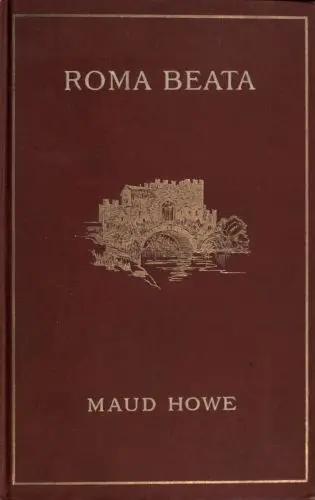
Roma beata; letters from the Eternal city
Maud Howe Elliott
THE CLASSIC COLLECTION · 1884
"The San Rosario Ranch" by Maud Howe Elliott is a novel written in the late 19th century. The story unfolds in California and centers around Millicent Almsford, a young woman who has recently traveled from Italy to visit her newly-found relatives at the San Rosario Ranch. The book explores themes of family, cultural clash, and the struggles of adjusting to a new environment. At the start of the novel, we are introduced to the idyllic San Rosario Ranch, where preparations are underway for the arrival of Millicent. The opening chapters reveal her arrival and initial impressions of the family: Barbara Deering, who warmly welcomes her, as well as Barbara's brother and mother. As Millicent grapples with her homesickness and the overwhelming differences between her previous life in Venice and her new surroundings, she begins to bond with the family and navigate her place among them. The narrative sets the stage for exploring Millicent's character and her evolving relationships, particularly with the enigmatic John Graham, a local artist, hinting at both friendship and potential romance.
Introduction adapted from the source catalogue; source summaries may be automatically generated.
Free to read · English · 85,886 words · No account needed
MAKE TIME FOR A GOOD BOOK
On by default. Untick to stop anonymous reading totals. Each page counts after 10 seconds in view. How this works.
Anonymous counting is on unless you have switched it off.
As they made the steep descent together Graham talked, in his strong, sweet voice, of his life in the old tower, of his work, of the pictures he had painted, and those which he dreamed of making some day. The self-dependent and contained young man was much attracted by the girl with the strange ideas and exquisite manners. On the night when they had first met, he had been drawn towards her by an attraction which seemed irresistible. It was not her beauty nor her intelligence which so much affected him, as a nameless charm like the warmth of a bright fire on a cool day, which seemed to wrap him about with a sense of comfort. When he left her this glow was still about him, but as hours passed it seemed to fade away and leave him strangely cold. He felt for the first time how desolate was his life; and he remembered her in his lonely tower as a traveller in the African desert recalls the green oasis where his last draught of water has been drained. Yet sometimes, when they talked together, came a strange antagonism between them like an impalpable mist, chilling the warmth which at meeting always kindled in her eyes and in his own bosom. That the discordance came from himself he often felt, and yet he was helpless in the face of it. The conversation of that afternoon was a type of their interviews, which were often marred by discussions not far removed from disputes. Whose fault was it? Wherein lay the incompatibility? Did it arise from either of their characters, or from the circumstances and surroundings in which they met? He asked himself the question a score of times and left it always unanswered. Graham had not been without experience of women. In his early youth he had had the misfortune to fall deeply in love with a frivolous and heartless girl. His nature was of a complex character, passionate to an unusual degree, yet guided by an intelligence stronger than passion. He had been deceived and outraged in every feeling by the heartless coquette, whose worst characteristic was her entire incapacity for affection. After breaking her faith with him, she had tried to win him back again, and had sued for the love which she had so lightly won and refused. But though he still loved her with the full force of his being, he had repulsed the woman whom he could no longer respect. Then came the long death-agony of deceived love, leaving its unmistakable traces on heart and brain and body. It was graven on the white brow; it was painted in the deep eyes, with their unfathomable look of doubt; it strengthened the fibres of the strong brain with the greater power which great suffering brings to intelligence of a high order; and alas! saddest of all, it chilled the hot heart-blood and left it cooler and more sluggish in its flow. Sorrowful was the man for the sorrow in the world, but pity for the grief of those about him was not so strong in him as it had been before. The bitterness which follows the spoiling of the rose-sweetness of love was happily modified by the broad humanitarian character of the man. It failed to make him bitter towards the world for its treatment of himself. He accepted manfully the knockdown blow which fate had dealt him; and if he mourned it was in secret,--he burdened no other soul with his misery. But as it was a woman who had darkened his life and drawn the veil of grief about his young soul, the whole rage of grief and bitterness which wore his heart went out toward her sex. As he had loved all women for her sweet sake, so now did he distrust them all because she had proved false. Evil to him appeared abstractly as a feminine element in the world; and the great qualities of nobility, abnegation, and heroism in his eyes were masculine attributes only. Too chivalrous by nature to think of himself as in opposition to the gentler sex, his position was in point of fact antagonistic to them. He was courteous in their company, but he always avoided it. In deed, as in word, he treated them with reverence, speaking no lightlier of them behind their backs than to their faces. The bitterness never broke the barriers of his vexed heart in noxious word or jest, but it lay there always embittering his life. He had finally ceased to remember his crushed hopes and spoiled youth; and then had succeeded a long time wherein he seemed to feel not at all. There was left him always his pious devotion to his mother, touching in its pathetic constancy, as to the one creature given him to love. For the gentle Mrs. Deering, whose face recalled that of his only living parent, he felt a real sentiment of friendship. Barbara, with her sweet, wholesome nature, he esteemed more highly than other young women; but since his intimacy with the family he had always emphasized his regard for the son and mother of the house; and Barbara had felt the difference in his voice when he addressed her. It grew colder, and his manner became formal, if by chance they were thrown together alone.
Your reading position is saved on this browser. Take it to another device with a library code. Reading pages adapt to text, rather than matching a printed edition.
Maud Howe Elliott
Maud Howe Elliott
Maud Howe Elliott
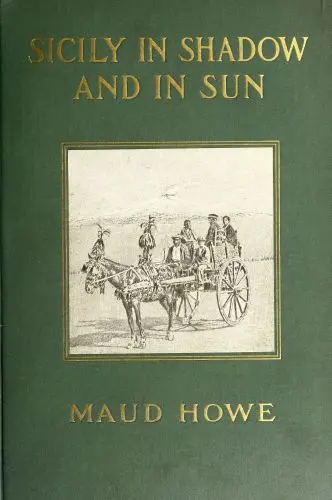
Maud Howe Elliott
BEHIND THE BOOK
This eBook is for the use of anyone anywhere in the United States and most other parts of the world at no cost and with almost no restrictions whatsoever. You may copy it, give it away or re-use it under the terms of the Project Gutenberg License included with this eBook or online at www.gutenberg.org. If you are not located in the United States, you will have to check the laws of the country where you are located before using this eBook. Read the source licence.
The original source file, including credits and licence, is retained by this library. Request an original-format copy at no charge. Please include the book title and Project Gutenberg identifier #42283.
KEEP YOUR CURIOSITY GOING
Coulson Kernahan

Maurice Baring
Frances Wright
Cécile Tormay

Frederic Jesup Stimson

W. H. P. (William Henry Pope) Jarvis