
Roma beata; letters from the Eternal city
Maud Howe Elliott
THE CLASSIC COLLECTION · 1884
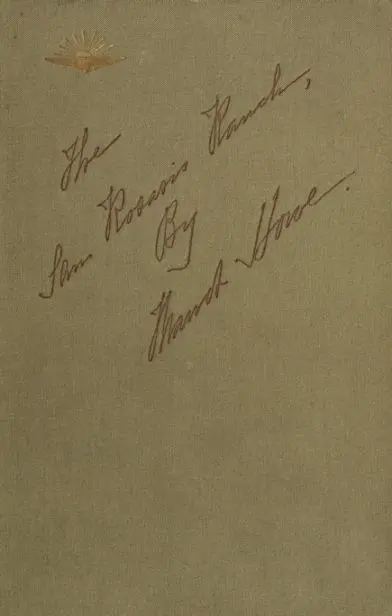
"The San Rosario Ranch" by Maud Howe Elliott is a novel written in the late 19th century. The story unfolds in California and centers around Millicent Almsford, a young woman who has recently traveled from Italy to visit her newly-found relatives at the San Rosario Ranch. The book explores themes of family, cultural clash, and the struggles of adjusting to a new environment. At the start of the novel, we are introduced to the idyllic San Rosario Ranch, where preparations are underway for the arrival of Millicent. The opening chapters reveal her arrival and initial impressions of the family: Barbara Deering, who warmly welcomes her, as well as Barbara's brother and mother. As Millicent grapples with her homesickness and the overwhelming differences between her previous life in Venice and her new surroundings, she begins to bond with the family and navigate her place among them. The narrative sets the stage for exploring Millicent's character and her evolving relationships, particularly with the enigmatic John Graham, a local artist, hinting at both friendship and potential romance.
Introduction adapted from the source catalogue; source summaries may be automatically generated.
Free to read · English · 85,886 words · No account needed
MAKE TIME FOR A GOOD BOOK
On by default. Untick to stop anonymous reading totals. Each page counts after 10 seconds in view. How this works.
Anonymous counting is on unless you have switched it off.
"New and beautiful were the thoughts which now possessed the mind of the Indian girl. She learned that to forgive was nobler than to avenge,--strangest of all doctrines taught by the priests to the red men. She learned that the stars, pale and fiery, were great worlds like the one in which she lived, and not the hearts of the brave chiefs placed in the heavens after death as she had always been taught. Only the simplest of the great truths which lie like jewels in the tawdry setting of the Mother Church, did Fra Antonio instil into her childish mind, which with an unquestioning faith accepted all the young priest taught. Few among the tribe--perhaps, indeed, no one of the Indians beside the Smile of the Morning--understood or believed the new doctrines taught by the priests. These were satisfied that the rites of baptism and of extreme unction were administered, and that the daily services were attended, quite conscious that their most potent weapon of conversion was the ration of atole, or prepared corn, which they served out to the lazy braves. As soon as he became a member of the church, every redskin was cared for, and a gentle slavery was the result, in which the priests exacted a certain amount of labor from the Indian, in turn feeding him and caring for his wants. The art of weaving was taught, together with civilized agriculture; and the fruit of the vines was fermented into strong, rough wine, this being reserved for the service of the altar and the table of the priests. In the eyes of the zealous missionaries the Indian was the rightful owner of the soil; and there was no thought of disputing his claim to it. It was that he might better and more wisely enjoy the fruits of his own land, and in the next life enter the happier home prepared for all true followers of the Church of Rome, that the Father Junipero and his band of soldiers and priests lived and died in the wilderness of California. How their treatment of the original inhabitants of the soil differed from that adopted by the enlightened race which now claims the country, you have seen enough, or at any rate heard enough, of our Indian policy to appreciate. Instead of improving the land for its owners, as did the brave missionary priests, we have wrested it from them, driving the children of those who for centuries have owned the Pacific coast away from the choicest spots to rocky, desolate lands which have again been taken from them by the greedy gold-hunters. But all this has happened since the time when the Smile-of the Morning lived upon this pretty island, and decked her glossy hair with a coronet of blue-jays' feathers, that she might be fair in the eyes of one whom she loved. But a year had passed since the arrival of Fra Antonio, when the old chieftain noticed that his daughter's step had grown heavy and slow; that her great eyes danced no more; that her countenance no longer merited the name of the morning's smile. He was a wise old man for an Indian; and after thinking the matter over for a week, during which time he smoked an unusual number of pipes of tobacco, he came to the conclusion that the girl had been bewitched by one of the strange priests. Calling her to him, he questioned her as to the cause of her altered behavior; and from her downcast face and embarrassed replies he quickly surmised her secret. The Smile of the Morning loved the fair young priest, and it was for his sake that her tears flowed. The old chief at first scoffed at her infatuation, and bade her take up with one of her dusky suitors. But the girl was obstinate; and finally yielding to her whim, the old chief himself offered his daughter's hand to Fra Antonio. The young priest, in holy horror, took counsel with his superiors; and it was explained to the chieftain that though the white soldiers were free to mate with the maidens of the tribe, the priests were vowed to celibacy. If the pious young priest had unwittingly mingled an unwise fervor in his exhortations to the Indian girl, he bitterly regretted his fault. As day by day he saw her elastic figure grow more feeble, and marked her hollow cheeks and her sad eyes fixed reproachfully on him whilst he served the mass or taught the new converts, a tenderness for her, which her savage health and perfections had failed to arouse, awoke in his breast. When he saw the young braves, each with his dusky partner, and the sisters of the Smile of the Morning with their children in their arms, he sometimes cursed the priestly habit which proclaimed him a thing apart from all other of God's creatures, doomed to live unmated and alone. Long vigils and heavy penances failed to ease the grief in his heart, or to set at rest its yearning toward the child who had been redeemed from barbarism, through his teaching, to live a Christian life and die in the hope of his faith.
Your reading position is saved on this browser. Take it to another device with a library code. Reading pages adapt to text, rather than matching a printed edition.
Maud Howe Elliott

Maud Howe Elliott
Maud Howe Elliott

Maud Howe Elliott
BEHIND THE BOOK
This eBook is for the use of anyone anywhere in the United States and most other parts of the world at no cost and with almost no restrictions whatsoever. You may copy it, give it away or re-use it under the terms of the Project Gutenberg License included with this eBook or online at www.gutenberg.org. If you are not located in the United States, you will have to check the laws of the country where you are located before using this eBook. Read the source licence.
The original source file, including credits and licence, is retained by this library. Request an original-format copy at no charge. Please include the book title and Project Gutenberg identifier #42283.
KEEP YOUR CURIOSITY GOING
Coulson Kernahan

Maurice Baring
Frances Wright
Cécile Tormay

Frederic Jesup Stimson

W. H. P. (William Henry Pope) Jarvis