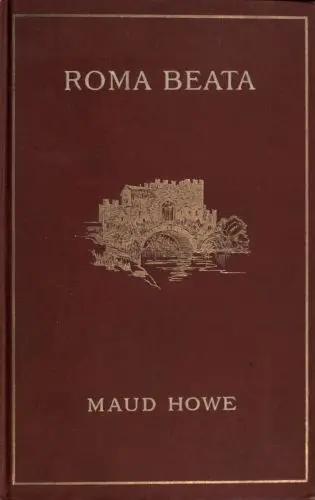
Roma beata; letters from the Eternal city
Maud Howe Elliott
THE CLASSIC COLLECTION · 1884
"The San Rosario Ranch" by Maud Howe Elliott is a novel written in the late 19th century. The story unfolds in California and centers around Millicent Almsford, a young woman who has recently traveled from Italy to visit her newly-found relatives at the San Rosario Ranch. The book explores themes of family, cultural clash, and the struggles of adjusting to a new environment. At the start of the novel, we are introduced to the idyllic San Rosario Ranch, where preparations are underway for the arrival of Millicent. The opening chapters reveal her arrival and initial impressions of the family: Barbara Deering, who warmly welcomes her, as well as Barbara's brother and mother. As Millicent grapples with her homesickness and the overwhelming differences between her previous life in Venice and her new surroundings, she begins to bond with the family and navigate her place among them. The narrative sets the stage for exploring Millicent's character and her evolving relationships, particularly with the enigmatic John Graham, a local artist, hinting at both friendship and potential romance.
Introduction adapted from the source catalogue; source summaries may be automatically generated.
Free to read · English · 85,886 words · No account needed
MAKE TIME FOR A GOOD BOOK
On by default. Untick to stop anonymous reading totals. Each page counts after 10 seconds in view. How this works.
Anonymous counting is on unless you have switched it off.
"Gentlemen are requested to put out the fire and latch the door before leaving this shanty. Water to be found three rods beyond this spot to the north."
Graham found the candles, which he finally succeeded in lighting; and after making a meal of hard-tack and roasted quail, he filled his pipe and sat down on one of the bunks, tired out by his long day's ride. The painful thoughts which he had banished during the hours of daylight now took possession of him; and the brow, which had been calm all day, showed the three deep dints which trouble more than time had furrowed upon its noble expanse. He was alone again!--no more friendly sounds and sights to divert his mind and fill his eyes with beauty. Only his sad thoughts and the one great problem which was set before him to solve. His changeful, melancholy eyes were fixed vacantly on the floor. They saw nothing but the shadowy vision of the night,--the figure of a woman amidst the broken altars of the old Mission church. The words which he had read in the little journal came thronging back to him in riotous haste,--those pitiful words of passionate grief traced by the slender white fingers, which so lately had lingered tremblingly in his own strong brown hands. Could he forgive her? Poor child, poor child! What was he, that he had a right to withhold his forgiveness for an instant? Let their lives be laid side by side, with every act and every thought bared to his view, and how did his life's record compare with hers?
Ah, if she had but told him the story, and not left it to accident to reveal the secret! She had deceived him! And the angry blood surged from his heart to his brow and settled there dully red. The stern lines of his face grew harder than the mask of a stone statue, and the expression of the chiselled mouth was terribly relentless. He would never see her again, never, never! What he had felt for her was not that highest passion which melts heart and soul and body in one pure flame; for, without a perfect faith, such love is not. So he reasoned, pity and anger sweeping across his soul; and then, forgetting both in a great pain, he cried, stretching out his arms, "Millicent, Millicent, come to me!" At last the wearied muscles and tired brain and heart slowly, half-consciously yielded to a warm, close-folding influence which straightened out the lines on the brow, loosened the tight-drawn muscles, stole the fire from the deep eyes and the anger from the curved mouth. The grand head, with its thousand schemes and theories, fell back upon the couch; the skilful hand, with its nervous, delicate fingers, relaxed; a long, shivering sigh shook the body; and, with the fire-light shining upon his stern beauty, Graham slept. The fire burned low upon the hearth and finally flickered out, leaving a bed of glowing ashes. The quiet of the night was broken by the long shrill wail of the coyote, but Graham stirred not. A light footstep sounded near the cabin, and a scratching noise might have been heard as the head of a great bear was raised to the level of the window. The sleeper's breath never quickened; and Bruin, after a long look and a vain attempt to push the door open, gave a growl and trotted off through the underbrush toward his own cosey cave under the rocky hillside near by. A young owlet, flying aimlessly through the night, flapped itself through an opening in the roof intended to let out the smoke; and finding it difficult to escape by the place where it had entered, settled itself comfortably near the sleeper, standing on one foot, and meditatively regarding the strange creature on the bed. To all these noises Graham was deaf; but when the clatter of a horse's hoofs broke the silence, that strange half-consciousness which gives warning of an unaccustomed sound called his slumbering senses to awaken. In a moment he was perfectly conscious, and, after feeling for his pistol, lay quietly down again upon the hard couch. The rider might not pause at the shanty, and as he was in no mood for company, he would give no sign of his presence there until it was necessary. The hope was a vain one; he heard the rider call to his horse with an oath to stop. After a slight pause, the door, which he had secured with a wooden bar, was roughly shaken. The new-comer, finding the portal fast, now showed himself at the little window and peered into the room. Seeing a recumbent figure, he cried out,--
Your reading position is saved on this browser. Take it to another device with a library code. Reading pages adapt to text, rather than matching a printed edition.
Maud Howe Elliott
Maud Howe Elliott
Maud Howe Elliott
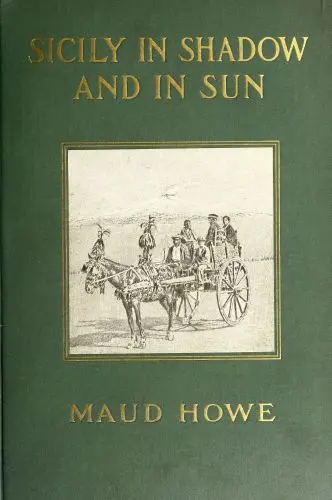
Maud Howe Elliott
BEHIND THE BOOK
This eBook is for the use of anyone anywhere in the United States and most other parts of the world at no cost and with almost no restrictions whatsoever. You may copy it, give it away or re-use it under the terms of the Project Gutenberg License included with this eBook or online at www.gutenberg.org. If you are not located in the United States, you will have to check the laws of the country where you are located before using this eBook. Read the source licence.
The original source file, including credits and licence, is retained by this library. Request an original-format copy at no charge. Please include the book title and Project Gutenberg identifier #42283.
KEEP YOUR CURIOSITY GOING
Coulson Kernahan

Maurice Baring
Frances Wright
Cécile Tormay

Frederic Jesup Stimson

W. H. P. (William Henry Pope) Jarvis