
The Wasted Generation
Owen Johnson
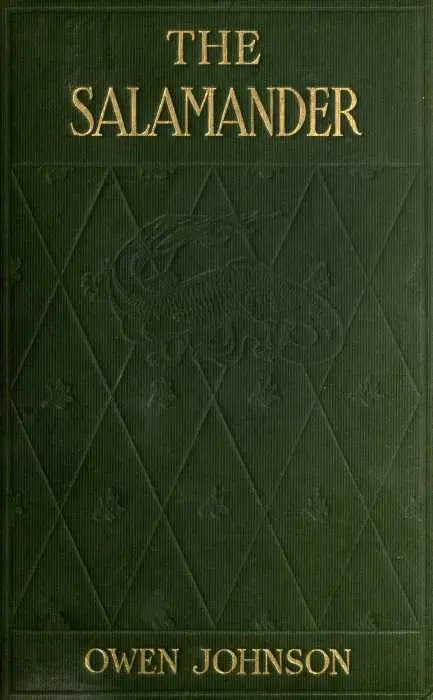
THE CLASSIC COLLECTION · 1914
"The Salamander" by Owen Johnson is a novel written in the early 20th century. The novel explores the lives of young women in New York City against the backdrop of social change and economic independence. The main character, Doré Baxter, embodies the archetype of the "Salamander," a spirited young woman navigating the complexities of a modern society that both attracts and repulses her. The opening of the book introduces us to the vibrant, chaotic world inhabited by Doré and her peers, who live in a boarding house and seek excitement amidst the trials of their ambition. The narrative reveals their playful conversations and their aspirations, interspersed with hints of the underlying seriousness of their lives as they balance the thrill of exploration with the harsh realities of their social circumstances. Doré is portrayed as a charismatic figure, eager for adventure and autonomy, embodying the spirit of the new generation of women challenging societal norms. The reader is drawn into her world of curiosity, where the thrill of living is painted vividly against the darker undertones of societal expectations.
Introduction adapted from the source catalogue; source summaries may be automatically generated.
Free to read · English · 127,148 words · No account needed
MAKE TIME FOR A GOOD BOOK
On by default. Untick to stop anonymous reading totals. Each page counts after 10 seconds in view. How this works.
Anonymous counting is on unless you have switched it off.
They took their supper in a near-by oyster house, invaded by a chattering throng, drummed over by an indefatigable orchestra. She had looked forward keenly to the tete-a-tete. She was terribly disillusioned. It was not at all exciting. Conversation was impossible, and what they said was meaningless. She became irritable and restless, for she had a feeling that she was being defrauded--that this man was not like the rest, that he was one worth knowing, drawing out, an adversary who would compel her to utilize all the light volatile artillery of her audacious imagination.
"Listen," she broke out suddenly, "this is a horrible failure. I really want to talk to you! Have you seen enough of the rehearsal?"
"Plenty!"
"Let's cut it, then!"
"Madame Quichy would never forgive me!"
She was silent a moment, rebuffed.
"I'm out of sorts. You can at least take me home!"
"Certainly!"
Arrived at the house, she said reluctantly:
"Well, come in for just a moment!"
And the parlor being occupied, they went to her room.
"Is Your Honor really going to spare me ten minutes from the fascinating Sada Quichy?" she said, pouting, once arrived.
"Ten hours, if you like!" he said, taking off his coat with a gesture of
finality.
She was so delighted at this unhoped-for treason that she clapped her hands like a child, not perceiving how he had made her ask each time for what he really wanted.
"You're really going to stay?"
"Yes, indeed!"
"How exciting!"
She let her coat slip into his hands, and going to the mirror, raised her hat slowly from her rebellious golden curls with one of those indescribable, intimate, feminine gestures that have such allurement to the gaze of men. If, with Blainey, she had resorted to abrupt and dashing ways, with Massingale she felt herself wholly feminine, sure that each turn of her head, line of her body, or caressing movement of her arms would find appreciation.
She looked at him a moment over her shoulder, arching her eyebrows with eyes that seemed brimming with caprice.
"You know, I was quite determined you should come!" she said, laughing, and with a sudden swift passage of the room, she darted on the sofa, curling her legs under her, hugging her knees, and resting her little chin on them in elfish amusement. "Honor bright! Made up my mind there in the theater!"
"So did I!" he said frankly.
"Really? And Sada Quichy?"
"She is a known quantity! It's much more amusing gambling with
possibilities!"
Since taking her coat he had remained standing, examining the room with a keen instinct for significant details.
"Two beds?"
Your reading position is saved on this browser. Take it to another device with a library code. Reading pages adapt to text, rather than matching a printed edition.
BEHIND THE BOOK
This eBook is for the use of anyone anywhere in the United States and most other parts of the world at no cost and with almost no restrictions whatsoever. You may copy it, give it away or re-use it under the terms of the Project Gutenberg License included with this eBook or online at www.gutenberg.org. If you are not located in the United States, you will have to check the laws of the country where you are located before using this eBook. Read the source licence.
The original source file, including credits and licence, is retained by this library. Request an original-format copy at no charge. Please include the book title and Project Gutenberg identifier #36355.
KEEP YOUR CURIOSITY GOING
Coulson Kernahan

Maurice Baring
Frances Wright
Cécile Tormay

Frederic Jesup Stimson

W. H. P. (William Henry Pope) Jarvis

