
The Wasted Generation
Owen Johnson
THE CLASSIC COLLECTION · 1914
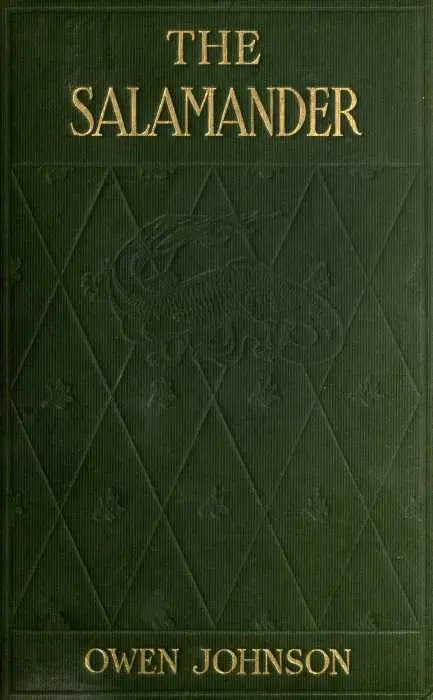
"The Salamander" by Owen Johnson is a novel written in the early 20th century. The novel explores the lives of young women in New York City against the backdrop of social change and economic independence. The main character, Doré Baxter, embodies the archetype of the "Salamander," a spirited young woman navigating the complexities of a modern society that both attracts and repulses her. The opening of the book introduces us to the vibrant, chaotic world inhabited by Doré and her peers, who live in a boarding house and seek excitement amidst the trials of their ambition. The narrative reveals their playful conversations and their aspirations, interspersed with hints of the underlying seriousness of their lives as they balance the thrill of exploration with the harsh realities of their social circumstances. Doré is portrayed as a charismatic figure, eager for adventure and autonomy, embodying the spirit of the new generation of women challenging societal norms. The reader is drawn into her world of curiosity, where the thrill of living is painted vividly against the darker undertones of societal expectations.
Introduction adapted from the source catalogue; source summaries may be automatically generated.
Free to read · English · 127,148 words · No account needed
MAKE TIME FOR A GOOD BOOK
On by default. Untick to stop anonymous reading totals. Each page counts after 10 seconds in view. How this works.
Anonymous counting is on unless you have switched it off.
But Dore's incursion into this curious society brought her small amusement. She grew tired quickly of these too easily read admirers. Then after what she had known, they were all second-chop. The company of Estelle Monks interested her more. Since the morning she had surprised her in the office of the Free Press, her curiosity had been stirred to further investigation. Estelle Monks herself forestalled her. She came into her rooms suddenly one morning, and plumping down, abruptly inquired:
"Do me a favor, Dodo?"
"Any!"
"Don't mention to Mr. Harrigan Blood that I inhabit these quarters!"
Dore, puzzled, a little embarrassed too, moved away, saying:
"What do you mean? Why not?"
"No offense to you, bless you!" said Estelle Monks, with a curious smile. "You see, I'm on the paper. He--well, he wouldn't quite relish the idea of tripping over me when he turns up with a bunch of flowers."
"You exaggerate," said Dore nervously. "Harrigan Blood's not really
interested."
"H. B.'s a damned fascinating man," said Estelle Monks directly, "but he doesn't like reporters about, whether he's serious or not--particularly his own reporters."
"He's not serious!" said Dore.
Estelle Monks smiled.
"That is, he only thinks he is."
"I guess you understand him, don't you?" said Estelle Monks, still
smiling.
"Yes!" She looked at her friend, interested. "What are you doing on the paper? You never told any one."
"Raise your hand and cross your heart!" said Estelle solemnly. "I'm
Ferdie Amsterdam."
"You?" said Dore in amazement. For under that pseudonym was conducted the famous society column of the Free Press.
"Expert on the Four Hundred--social dictionary."
"Honest?"
"Since two months!"
"But how do you manage?"
She told her story. She had come from San Francisco, where she had done some clever work on the papers. She had a few letters of introduction, and she knew a few men of the journalist emigration. She had gone to the Free Press office with an article in hand, Impressions of a Western Girl.
"What, it was you?" said Dore, suddenly enlightened.
"Don't wonder you didn't recognize the photo. Belonged to some one on the coast. Wrote my article in Chicago--fake, of course, but highly seasoned. I handed it over as if I owned a Middle West chain of papers; told them I'd go out and work up the names. But the feeling was all right, so it was! The stuff went big; I was fixed!"
Dore was on the point of divulging her own experience, and how she had been outstripped; but she held her tongue with a new caution, asking:
"But the society game, Estelle--how do you know about that?"
Your reading position is saved on this browser. Take it to another device with a library code. Reading pages adapt to text, rather than matching a printed edition.
BEHIND THE BOOK
This eBook is for the use of anyone anywhere in the United States and most other parts of the world at no cost and with almost no restrictions whatsoever. You may copy it, give it away or re-use it under the terms of the Project Gutenberg License included with this eBook or online at www.gutenberg.org. If you are not located in the United States, you will have to check the laws of the country where you are located before using this eBook. Read the source licence.
The original source file, including credits and licence, is retained by this library. Request an original-format copy at no charge. Please include the book title and Project Gutenberg identifier #36355.
KEEP YOUR CURIOSITY GOING
Coulson Kernahan

Maurice Baring
Frances Wright
Cécile Tormay

Frederic Jesup Stimson

W. H. P. (William Henry Pope) Jarvis

