
The Wasted Generation
Owen Johnson
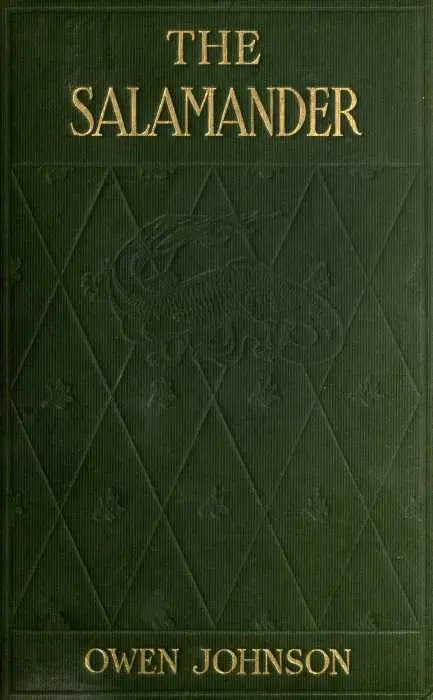
THE CLASSIC COLLECTION · 1914
"The Salamander" by Owen Johnson is a novel written in the early 20th century. The novel explores the lives of young women in New York City against the backdrop of social change and economic independence. The main character, Doré Baxter, embodies the archetype of the "Salamander," a spirited young woman navigating the complexities of a modern society that both attracts and repulses her. The opening of the book introduces us to the vibrant, chaotic world inhabited by Doré and her peers, who live in a boarding house and seek excitement amidst the trials of their ambition. The narrative reveals their playful conversations and their aspirations, interspersed with hints of the underlying seriousness of their lives as they balance the thrill of exploration with the harsh realities of their social circumstances. Doré is portrayed as a charismatic figure, eager for adventure and autonomy, embodying the spirit of the new generation of women challenging societal norms. The reader is drawn into her world of curiosity, where the thrill of living is painted vividly against the darker undertones of societal expectations.
Introduction adapted from the source catalogue; source summaries may be automatically generated.
Free to read · English · 127,148 words · No account needed
MAKE TIME FOR A GOOD BOOK
On by default. Untick to stop anonymous reading totals. Each page counts after 10 seconds in view. How this works.
Anonymous counting is on unless you have switched it off.
She had elected to call herself, according to the custom of the Salamanders, Dore Baxter. The two names, incongruously opposed, were like the past and the present of her wandering history: the first, brilliant, daring, alive with the imperious zest and surprise of youth; the second baldly realistic, bleak, like a distant threatening uprise of mountains.
On the couch, languidly lost among the cushions, Winona Horning (likewise a nom de guerre) was abandoned in lazy attention. In the embrasure of one window, camped tailor fashion in a large armchair, a woman was studying a role, beating time with one finger, mumbling occasionally:
"Tum-tum-ti-tumpety-tum-tum-tum!
I breakfast in diamonds, I bathe in cream.
What's the use? What's the use?"
Snyder--she called herself Miss, but passed for being divorced--was not of the fraternity of the Salamanders. Dore Baxter had found her in ill health, out of a position, discouraged and desperate; and in a characteristic impulse, against all remonstrances, had opened her room to her until better days. The other Salamanders did not notice her presence or admit her equality. She seemed not to perceive their hostility, never joining in their conversation, going and coming silently.
The sharp shaft of the sun, bearing down like a spot-light, brought into half relief the mature lines of the body and the agreeable, if serious, features. The brown head, with a defiance of coquetry, was simply dressed, braided about with stiff rapid coils. The dress was black, the waist unrelieved--the costume of the woman who works. What made the effect seem all the more severe was that there was more than a trace of beauty in the face and form--a prettiness evidently disdained and repressed. One shoe, projecting into the light, was noticeably worn at the heel.
All at once, without turning, the girl on the trunk, twisting anxiously before the mirror, exclaimed:
"Winona, what do you really think?"
"It doesn't show from here."
"How can you see from there? Come over nearer!"
Winona Horning, taller, more thoughtful in her movements, rose reluctantly, fixing a strand of jet-black hair which had strayed, and seated herself according to the command of a little finger. Her complexion was very pale against the black of her hair, her eyes were very large, given to violent and sudden contrasts, more intense and more restless than her companion's.
"And now?" said Dore, lifting the glowing skirt the fraction of an inch.
"Still all right."
"Really?"
"Really!"
"And now?"
"Um-m--yes, now it shows!"
On the golden ankle a mischievous streak of white had appeared--a seam
outrageously rent.
"Heavens, what a fix! I've just got to wear them!" said Dore, dropping her skirts with a movement of impatience.
"Estelle has a pair--"
Your reading position is saved on this browser. Take it to another device with a library code. Reading pages adapt to text, rather than matching a printed edition.
BEHIND THE BOOK
This eBook is for the use of anyone anywhere in the United States and most other parts of the world at no cost and with almost no restrictions whatsoever. You may copy it, give it away or re-use it under the terms of the Project Gutenberg License included with this eBook or online at www.gutenberg.org. If you are not located in the United States, you will have to check the laws of the country where you are located before using this eBook. Read the source licence.
The original source file, including credits and licence, is retained by this library. Request an original-format copy at no charge. Please include the book title and Project Gutenberg identifier #36355.
KEEP YOUR CURIOSITY GOING
Coulson Kernahan

Maurice Baring
Frances Wright
Cécile Tormay

Frederic Jesup Stimson

W. H. P. (William Henry Pope) Jarvis

