THE CLASSIC COLLECTION✦A History of Domestic Manners and Sentiments in England During the Middle AgesCLASSIC FREE BOOKS
A History of Domestic Manners and Sentiments in England During the Middle Ages
Thomas Wright
THE CLASSIC COLLECTION · 1868
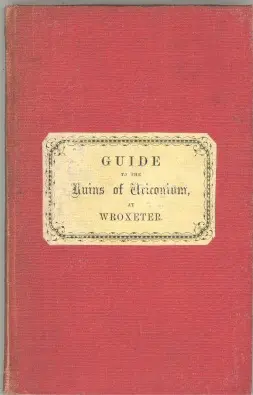
"The Ruins of the Roman City of Uriconium, at Wroxeter, near Shrewsbury" by Thomas Wright is a historical account written in the mid-19th century. The text serves as a guide and detailed examination of the archaeological findings at Wroxeter, particularly focusing on the remains of the ancient Roman city of Uriconium. It aims to provide popular information for visitors interested in understanding the significance of the excavations and the broader implications for Roman history in Britain. The opening of the book presents a preface and introductory context, laying out the author's intentions for the text. Wright discusses the historical significance of Uriconium, highlighting its long-standing presence as a Roman city and the recent excavations that have revealed its structures, including walls, hypocausts, and various artifacts. He emphasizes the importance of these findings in understanding the living conditions and culture of Roman Britain, as well as addressing superstitions that preserved the ruins for centuries after their decline. The beginning sets the stage for a more in-depth exploration of the city's archaeological remains and their relevance to historical research.
Introduction adapted from the source catalogue; source summaries may be automatically generated.
Free to read · English · 23,625 words · No account needed
MAKE TIME FOR A GOOD BOOK
On by default. Untick to stop anonymous reading totals. Each page counts after 10 seconds in view. How this works.
Anonymous counting is on unless you have switched it off.
We thus understand how a ruined city—like that at Wroxeter—was allowed to remain untouched for centuries. Many of these ruined towns became the subject of romantic legends. One of these legends relating to an ancient ruined city in this neighbourhood, is told in the curious history of the Fitz-Warines, composed in the thirteenth century, in Anglo-Norman, no doubt by a border writer. This writer is describing a visit supposed to have been made by William the Conqueror to the Welsh border in order to distribute the land to his followers.
“When King William approached the hills and valleys of Wales he saw a very large town, formerly enclosed with high walls, which was all burnt and ruined, and in a plain below the town he caused his tents to be raised, and there he said he would remain that night. Then the king inquired of a Briton what was the name of the town, and how it came to be so ruined. ‘Sire,’ said the Briton, ‘I will tell you. The Castle was formerly called Castle Bran, but now it is called the Old March. Formerly there came into this country Brutus, a very valiant knight, and Corineus, from whom Cornwall still retains its name, and many others derived from the lineage of Troy, and none inhabited these parts except very foul people, great giants, whose king was called Geomagog. These heard of the arrival of Brutus, and sent out to encounter him, and at last all the giants were killed except Geomagog, who was marvellously great. Corineus, the valiant, said that he would willingly wrestle with Geomagog, to try Geomagog’s strength. The giant, on the first onset, embraced Corineus so tightly, that he broke three of his ribs. Corineus became angry, and struck Geomagog with his foot that he fell from a great rock into the sea, and Geomagog was drowned. And a spirit of the devil now entered into the body of Geomagog, and came into these parts, and held possession of the country long, that never Briton dared to inhabit it. And long afterwards, King Bran the son of Donwal, caused the city to be rebuilt, repaired the walls, and strengthened the great fosses, and he made Burgh and Great March. And the devil came by night and took away every thing that was therein, since which time nobody has ever inhabited there.’ The king marvelled much at this story, and Payn Peverel, the proud and courageous knight, the king’s cousin, heard it all, and declared that that night he would essay the marvel. Payn Peverel armed himself very richly, and took his shield, shining with gold, with a cross of azure indented, and fifteen knights and other attendants, and went into the highest palace, and took up his lodging there. And when it was night the weather became so foul, black, dark, and such a tempest of lightning and thunder, that all those who were there became so terrified that they could not for fear move hand or foot, but lay on the ground like dead men. The proud Payn was very much frightened but he put his trust in God, whose sign of the cross he carried with him, and saw that he could have no help but from God. He lay upon the ground, and with good devotion prayed God and his mother Mary that they would defend him that night from the power of the devil. Hardly had he finished his prayer, when the fiend came in the semblance of Geomagog, and he carried a great club in his hand, and from his mouth cast fire and smoke, with which the whole town was illuminated. Payn had a good hope in God, and signed himself with a cross, and boldly attacked the fiend. The fiend raised his club and would have struck Payn, but he avoided the blow. The devil, by virtue of the cross, was all struck with fear, and lost his strength, for he could not approach the cross. Payn pursued him till he struck him with his sword; then he began to cry out, and fell flat on the ground, and yielded himself vanquished. ‘Knight,’ said he, ‘you have conquered me, not by your own strength, but by virtue of the cross which you carry.’ ‘Tell me,’ said Payn, ‘you foul creature, who you are and what you do in this town, I conjure you, in the name of God and of the Holy Cross.’ The fiend began to relate from word to word as the Briton had said before; and told how, when Geomagog was dead, he immediately rendered his soul to Beelzebub, their prince, and he entered the body of Geomagog, and came in his semblance into these parts, and kept the great treasure which Geomagog had collected and put into a house he had made underground in that town. Payn demanded of him, ‘What kind of creature he was?’ and he said, ‘He was formerly an angel, but now is, by his forfeit, a diabolical spirit.’ ‘What treasure,’ said Payn, ‘had Geomagog?’ ‘Oxen, cows, swans, peacocks, horses, and all other animals, made of fine gold; and there was a golden bull, which, through me, was his prophet, and in him was all his belief; and he told him the events that were to come; and twice a year the giants used to honour their god, the golden bull, whereby so much gold is collected that all this country was called ‘The White Land.’ And I and my companion inclosed the land with a high wall and deep fosse, so that there was no entrance except through this town, which was full of evil spirits.’ ‘Now, you shall tell me,’ said Payn, ‘where is the treasure of which you have spoken?’ ‘Vassal,’ said he, ‘speak no more of that, for it is destined for others; but you shall be lord of all this honour.’”
Your reading position is saved on this browser. Take it to another device with a library code. Reading pages adapt to text, rather than matching a printed edition.
BEHIND THE BOOK
This eBook is for the use of anyone anywhere in the United States and most other parts of the world at no cost and with almost no restrictions whatsoever. You may copy it, give it away or re-use it under the terms of the Project Gutenberg License included with this eBook or online at www.gutenberg.org. If you are not located in the United States, you will have to check the laws of the country where you are located before using this eBook. Read the source licence.
The original source file, including credits and licence, is retained by this library. Request an original-format copy at no charge. Please include the book title and Project Gutenberg identifier #62425.
KEEP YOUR CURIOSITY GOING
Cécile Tormay

Moritz Busch
John L. Ransom
Frances Wright
Cécile Tormay

Mabel Potter Daggett