THE CLASSIC COLLECTION✦A History of Domestic Manners and Sentiments in England During the Middle AgesCLASSIC FREE BOOKS
A History of Domestic Manners and Sentiments in England During the Middle Ages
Thomas Wright
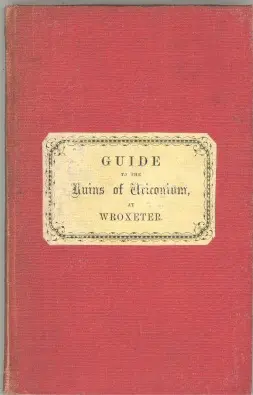
THE CLASSIC COLLECTION · 1868
"The Ruins of the Roman City of Uriconium, at Wroxeter, near Shrewsbury" by Thomas Wright is a historical account written in the mid-19th century. The text serves as a guide and detailed examination of the archaeological findings at Wroxeter, particularly focusing on the remains of the ancient Roman city of Uriconium. It aims to provide popular information for visitors interested in understanding the significance of the excavations and the broader implications for Roman history in Britain. The opening of the book presents a preface and introductory context, laying out the author's intentions for the text. Wright discusses the historical significance of Uriconium, highlighting its long-standing presence as a Roman city and the recent excavations that have revealed its structures, including walls, hypocausts, and various artifacts. He emphasizes the importance of these findings in understanding the living conditions and culture of Roman Britain, as well as addressing superstitions that preserved the ruins for centuries after their decline. The beginning sets the stage for a more in-depth exploration of the city's archaeological remains and their relevance to historical research.
Introduction adapted from the source catalogue; source summaries may be automatically generated.
Free to read · English · 23,625 words · No account needed
MAKE TIME FOR A GOOD BOOK
On by default. Untick to stop anonymous reading totals. Each page counts after 10 seconds in view. How this works.
Anonymous counting is on unless you have switched it off.
J. Hepworth Dixon, Esq., F.S.A.
Joseph Durham, Esq., F.S.A.
The Rev. E. Egremont, Vicar of Wroxeter
F. W. Fairholt, Esq., F.S.A.
Augustus Guest, Esq., L.L.D., F.S.A.
S. Carter Hall, Esq., F.S.A.
J. O. Halliwell, Esq., F.S.A., F.R.S.
The Rev. C. H. Hartshorne
Fredk. Hindmarsh, Esq., F.R.G.S., F.G.S., Hon. Sec.
The Rev. T. Hugo, F.S.A.
Dr. Henry Johnson, Hon. Sec. of the Excavation Committee, Shrewsbury
Joseph Mayer, Esq., F.S.A., Liverpool
Sir Roderick I. Murchison, F.R.S., &c.
Frederick Ouvry, Esq., F.S.A.
The Rev. H. M. Scarth
Charles Roach Smith, Esq., F.S.A.
Vice-Admiral W. H. Smyth, F.R.S., F.S.A.
W. S. W. Vaux, Esq., F.S.A., President of the Numismatic Society
Albert Way, Esq., F.S.A.
Thomas Wright, Esq., F.S.A., Treasurer.
Plate 1: The north side of the Old Wall at Wroxeter
[Picture: Plate 1. The north side of the Old Wall at Wroxeter]
Plate 2: Wroxeter Church, Shropshire (Vignette)
[Picture: Plate 2: Wroxeter Church, Shropshire (Vignette)]
Plate 3: First Roman Hypocaust Discovered at Uriconium 1859
[Picture: First Roman Hypocaust Discovered at Uriconium]
Plate 4: Roman Tile-Roof, Roman Flag-Roof, Section of Roman Hypocaust,
&c.
[Picture: Figures 1, 2, 3, 4: Roman Tile Roof; Figures 5 and 6: Roman Flag Roof; Figure 7: Section of Roman Hypocaust]
Plate 5: Plan of Walls, discovered by the Excavations at Wroxeter, Salop, from February 3rd to September, 1863.
[Picture: Plan of Walls, discovered by the Excavations at Wroxeter, Salop, from February 3rd to September, 1863]
Plate 6: Column in the garden of W. H. Oatley Esq., Wroxeter
[Picture: Column in the garden of W. H. Oatley Esq., Wroxeter]
Plate 7: Ancient Stone Font in Wroxeter Church
[Picture: Plate 7: Ancient Stone Font in Wroxeter Church]
Plate 8: Capitals found at Uriconium
[Picture: Plate 8: Capitals found at Uriconium]
Plate 9: Samian, Upchurch, and Romano-Salopian Pottery
[Picture: Plate 9: Samian, Upchurch, and Romano-Salopian Pottery]
Plate 10: Rings and Combs
[Picture: Rings and Combs (actual size)]
Plate 11: Hair Pins &c.
[Picture: Hair Pins &c. (actual size)]
Plate 12: Skulls from Wroxeter
[Picture: Skulls from Wroxeter]
Plate 13: Roman Remains from Wroxeter
[Picture: Plate 13: Roman Remains from Wroxeter, in the possession of Samuel Wood, Esq., and Mask,. in the Museum, Shrewsbury]
Plate 14: Upchurch Pottery, Adz, Spear Head, and Romano-Salopian (Red)
Ware
[Picture: Plate 14: Upchurch Pottery, Adz, Spear Head, and Romano-Salopian (Red) Ware]
Plate 15: Carved stone fragments from Uriconium, in the Garden of Edward
Stanier, Esq., Wroxeter
[Picture: Carved stone fragments from Uriconium, in the Garden of Edward Stanier, Esq., Wroxeter]
Plate 16: Sepulchral Stone
[Picture: Sepulchral Stone from in the Cemetery, Wroxeter]
Your reading position is saved on this browser. Take it to another device with a library code. Reading pages adapt to text, rather than matching a printed edition.
BEHIND THE BOOK
This eBook is for the use of anyone anywhere in the United States and most other parts of the world at no cost and with almost no restrictions whatsoever. You may copy it, give it away or re-use it under the terms of the Project Gutenberg License included with this eBook or online at www.gutenberg.org. If you are not located in the United States, you will have to check the laws of the country where you are located before using this eBook. Read the source licence.
The original source file, including credits and licence, is retained by this library. Request an original-format copy at no charge. Please include the book title and Project Gutenberg identifier #62425.
KEEP YOUR CURIOSITY GOING
Cécile Tormay

Moritz Busch
John L. Ransom
Frances Wright
Cécile Tormay

Mabel Potter Daggett