THE CLASSIC COLLECTION✦A History of Domestic Manners and Sentiments in England During the Middle AgesCLASSIC FREE BOOKS
A History of Domestic Manners and Sentiments in England During the Middle Ages
Thomas Wright
THE CLASSIC COLLECTION · 1868
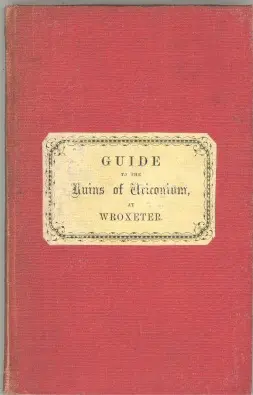
"The Ruins of the Roman City of Uriconium, at Wroxeter, near Shrewsbury" by Thomas Wright is a historical account written in the mid-19th century. The text serves as a guide and detailed examination of the archaeological findings at Wroxeter, particularly focusing on the remains of the ancient Roman city of Uriconium. It aims to provide popular information for visitors interested in understanding the significance of the excavations and the broader implications for Roman history in Britain. The opening of the book presents a preface and introductory context, laying out the author's intentions for the text. Wright discusses the historical significance of Uriconium, highlighting its long-standing presence as a Roman city and the recent excavations that have revealed its structures, including walls, hypocausts, and various artifacts. He emphasizes the importance of these findings in understanding the living conditions and culture of Roman Britain, as well as addressing superstitions that preserved the ruins for centuries after their decline. The beginning sets the stage for a more in-depth exploration of the city's archaeological remains and their relevance to historical research.
Introduction adapted from the source catalogue; source summaries may be automatically generated.
Free to read · English · 23,625 words · No account needed
MAKE TIME FOR A GOOD BOOK
On by default. Untick to stop anonymous reading totals. Each page counts after 10 seconds in view. How this works.
Anonymous counting is on unless you have switched it off.
WROXETER is a little more than five miles from Shrewsbury. Conveyances may be obtained at the Railway Station, Shrewsbury; at any of the above-named Hotels; and at Howells’s Livery Stables, Cross Hill. Parties of any reasonable number may be conveyed by either of the latter, on giving them two days’ notice by letter.
UPTON MAGNA, on the Shrewsbury and Wellington Joint Line of Railway, is the nearest Station to Wroxeter, from whence it is distant about two miles and a half, a pleasant walk for an active person.
THE MUSEUM of the Shropshire and North Wales Natural History and Antiquarian Society, College Hill, where all the moveable articles from Wroxeter are deposited, is open DAILY to visitors, from 10 till 4, on payment of sixpence each, and by an order from a Subscriber GRATUITOUSLY.
DONATIONS to the Wroxeter Fund will be gladly received by the Honorary Secretary, DR. H. JOHNSON, Dogpole, Shrewsbury.
List of Plates.
PLATE The North Side of the Old Wall, at Wroxeter 1 Wroxeter Church, Shropshire (Vignette) 2 First Roman Hypocaust discovered at Uriconium in 1859 3 Roman Tile-Roof, Roman Flag-Roof, Section of Roman 4 Hypocaust, &c. Plan of Walls, discovered by the Excavations at Wroxeter, 5 Salop, from February 3rd to September, 1863 Column in the Garden of W. H. Oatley, Esq., Wroxeter 6 Ancient Stone Font in Wroxeter Church 7 Capitals found at Uriconium 8 Samian, Upchurch, and Romano-Salopian Pottery 9 Rings and Combs (actual size) 10 Hair Pins, &c. (actual size) 11 Skulls from Wroxeter 12 Roman Remains from Wroxeter, in the possession of Samuel 13 Wood, Esq., and Mask, in the Museum, Shrewsbury. Upchurch Pottery, Adz, Spear Head, and Romano-Salopian 14 (Red) Ware Carved Stone Fragments from Uriconium, in the Garden of 15 Edward Stanier, Esq., Wroxeter Sepulchral Stone 16
The Ruins of Uriconium.
IF we leave Shrewsbury by its long eastern suburb, known, from the important monastic house which formerly stood at its commencement, as the Abbey Foregate, passing the more modern monument erected at its extremity, Lord Hill’s Column, our way lies for about two miles along the London road, bounded on each side by rich and fertile fields. At the distance just mentioned, this road approaches close to the river Severn, and continues to run along its banks, to the great improvement of the scenery, until we arrive at the prettily-situated village of Atcham, with Atcham Church in face of us, and the river winding under its stone bridge in the foreground. Atcham is three miles from Shrewsbury. Crossing the bridge, we leave the river, which here takes a long sweep to the southward, and follow the road, which skirts for more than half a mile the extensive park of Attingham. We here approach another river, the Tern, which at this point spreads into a fair expanse of water, and forms, with the mansion of Attingham to the left, and the copses which skirt it, a scene of striking beauty, while to the right it divides into two branches which empty themselves into the Severn, a little lower down. Crossing Tern Bridge, and proceeding a short distance, still skirting the park, we reach a point where, opposite the entrance to Attingham Park, a branch road turns off to the right from the old London road. We must take this branch road, which will lead us to the village of Wroxeter. We soon cross a small stream, which is known by the name of the Bell Brook, and after we have passed this brook, the visitor will hardly fail to remark, wherever his eye rests upon ploughed ground, the extraordinary blackness of the soil in comparison with that of the land over which he has previously passed.
Your reading position is saved on this browser. Take it to another device with a library code. Reading pages adapt to text, rather than matching a printed edition.
BEHIND THE BOOK
This eBook is for the use of anyone anywhere in the United States and most other parts of the world at no cost and with almost no restrictions whatsoever. You may copy it, give it away or re-use it under the terms of the Project Gutenberg License included with this eBook or online at www.gutenberg.org. If you are not located in the United States, you will have to check the laws of the country where you are located before using this eBook. Read the source licence.
The original source file, including credits and licence, is retained by this library. Request an original-format copy at no charge. Please include the book title and Project Gutenberg identifier #62425.
KEEP YOUR CURIOSITY GOING
Cécile Tormay

Moritz Busch
John L. Ransom
Frances Wright
Cécile Tormay

Mabel Potter Daggett