
Last letters from the living dead man
David Patterson (Spirit) Hatch
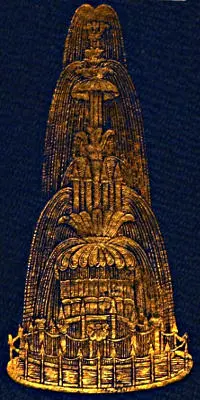
THE CLASSIC COLLECTION · 1851
"The Royal Exchange AND THE PALACE OF INDUSTRY; or, The Possible Future of Europe and the World" by Rev. Thomas Binney is a religious treatise written in the mid-19th century. This work explores the intersection of faith, commerce, and social progress, proposing a vision for a more unified global society centered around divine truths. Binney reflects on the significance of the Royal Exchange and the forthcoming Great Exhibition of All Nations, arguing for the essential unity of all people under the sovereignty of God. The opening of the work vividly recounts the historical event of the Royal Exchange in London being engulfed in flames, prompting a deep reflection on its cultural and spiritual significance. Binney establishes the Royal Exchange as a gathering place for commerce and trade, where people from all nations convene. He connects this to the inscription, "The Earth is the Lord’s, and the fulness thereof," emphasizing God’s ownership of the world and the moral responsibilities that come with it. Binney articulates his intention to link this declaration with an exploration of worship, character, and the prophetic vision of future harmony and cooperation among nations, suggesting that such acknowledgment could lead to social and political advancement across Europe and the world.
Introduction adapted from the source catalogue; source summaries may be automatically generated.
Free to read · English · 32,895 words · No account needed
MAKE TIME FOR A GOOD BOOK
On by default. Untick to stop anonymous reading totals. Each page counts after 10 seconds in view. How this works.
Anonymous counting is on unless you have switched it off.
In the last place: it only remains to be remarked, that this universality of religion and righteousness, in each nation of the earth respectively, would come to have an effect on the relations and intercourse of each with the rest, and on its own internal constitution and action. If all nations were really to believe that “the earth is the Lord’s, and the fulness thereof,” and especially to connect with this the next clause,—“the world, and they that dwell therein;”—and if they were honestly to carry such a creed fairly out, into all its great practical results,—it would be found to be the charter of peace and freedom, order and liberty, in all lands. Let men get the idea that the earth is God’s, not theirs,—and that all the race are alike his,—his, at once, as created by his goodness and redeemed by his mercy;—and especially let it be imagined, that all habitually mingled in his worship, and that all felt inspired by a desire to live in constant, practical harmony with his will;—why, there could be neither war, nor slavery, nor anarchy, nor despotisms;—men could not be brought, on the supposition suggested, to be trained and taught to slaughter one another!—or to steal one another!—or to buy, and sell, and fetter, and lash those who were the exclusive property of God, and who, whatever their colour, were each of them as much a man as themselves! No monarch could be seduced into the belief that a whole people was made for him;—or that power was not a trust;—or that it could be used for any purpose but the good of the nation, and according to the eternal principles of right on which God himself governs his own. Nor would a people imagine that any new institutions would benefit them, or any change or revolution be an improvement, if they were not each of them a king over himself.—We do not mean to say that one form of political government may not be intrinsically better than another;—but we do mean to say that the Future of the world will no more be distinguished by the same form of political government being universal, than by the universal prevalence of one mode of ecclesiastical polity;—and we further mean to say, that the diffusion of an intelligent and instructed Christianity would carry into the bosoms of all men the Scriptural principles, that government is the institution of God;—that God, in this respect, is the God of order;—and that reverence for authority and submission to law are as much Christian duties as anything else.—Authority may be abused, and law may be unjust; but he who acts in the fear of God, will suffer much, and think more, before he will be persuaded that political rebellion and disobedience are virtues. We do not say that there are not occasions when the one may be patriotic and the other right;—but there is a time coming when none in the places of trust and power will so act as for this to be the case,—and when none in those of submission and obedience will feel that a dignified and manly loyalty has become either an impossibility or a burden. Governors, nowhere, will fear discussion; or fetter the press; or refuse reforms; or cripple independence;—and people, nowhere, will abuse their rights; or desire, or demand, the unreasonable or unjust. The aggregate of families, which make up a nation, living in unity, like each of the families that constitute or compose it, the aggregate of nations will dwell together in the same spirit, and with the same results. Commerce will bring, more and more, the whole earth into friendly intercourse;—the sea that would seem to divide the nations, shall be as a chain to bind people to people, and land to land. Instead of meeting for hostile purposes, there will be the interchange of visits to promote science, to perfect literature, to spread art, to cultivate religion—or to honour God in the results of industry, by the circulation round the world of an Exhibition like that which is just at hand. If, in all these ways to which we have adverted, the lessons of our Royal Exchange were to be learned, and we ourselves, and our expected visitors, to carry them out, in the full development of individual, social, and national life,—many of the pictures of the prophets would be realized; the kingdom of heaven would be established on the earth; and the tabernacle of God would be universally with man. Evils might remain, but everything would tend to mitigate or diminish them. The world would be a temple,—the nations a church;—all work would be a daily worship, while daily worship, strictly so called, would hallow and sanctify all work. The day of rest would be welcomed as it came,—but welcomed for its devotion, as well as its repose. From all hearts, from all hands, from palace and cottage—from the mine and the market-place—from the field and the factory—the forge and the loom—the city and the sea, from all nations and from all men,—there would be going up constantly to heaven, that which is required when Christians are exhorted in language like this—“Dearly beloved, I beseech you, by the mercies of God, that ye present your bodies as living sacrifices, holy and acceptable to God, which is your reasonable service.” Were this ever to be universally realized, the final cause of the creation of the world, might, without a figure, be said to be attained. God’s great idea would be seen to be complete; and He himself, if we might so speak, after being grieved by the wickedness of the race, would return again to the unruffled, deep, and ineffable satisfaction with which he was filled before the world was, when, anticipating the results of his creative energy, “he rejoiced in the habitable parts of the earth, AND HIS DELIGHTS WERE WITH THE SONS OF MEN.”
Your reading position is saved on this browser. Take it to another device with a library code. Reading pages adapt to text, rather than matching a printed edition.
BEHIND THE BOOK
This eBook is for the use of anyone anywhere in the United States and most other parts of the world at no cost and with almost no restrictions whatsoever. You may copy it, give it away or re-use it under the terms of the Project Gutenberg License included with this eBook or online at www.gutenberg.org. If you are not located in the United States, you will have to check the laws of the country where you are located before using this eBook. Read the source licence.
The original source file, including credits and licence, is retained by this library. Request an original-format copy at no charge. Please include the book title and Project Gutenberg identifier #58058.
KEEP YOUR CURIOSITY GOING
David Patterson (Spirit) Hatch

David Patterson (Spirit) Hatch

David Patterson (Spirit) Hatch
Cécile Tormay

Moritz Busch
Coulson Kernahan