
Last letters from the living dead man
David Patterson (Spirit) Hatch
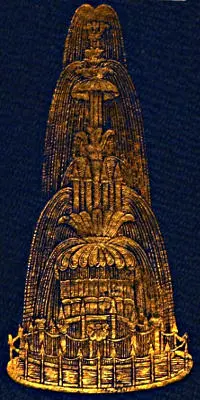
THE CLASSIC COLLECTION · 1851
"The Royal Exchange AND THE PALACE OF INDUSTRY; or, The Possible Future of Europe and the World" by Rev. Thomas Binney is a religious treatise written in the mid-19th century. This work explores the intersection of faith, commerce, and social progress, proposing a vision for a more unified global society centered around divine truths. Binney reflects on the significance of the Royal Exchange and the forthcoming Great Exhibition of All Nations, arguing for the essential unity of all people under the sovereignty of God. The opening of the work vividly recounts the historical event of the Royal Exchange in London being engulfed in flames, prompting a deep reflection on its cultural and spiritual significance. Binney establishes the Royal Exchange as a gathering place for commerce and trade, where people from all nations convene. He connects this to the inscription, "The Earth is the Lord’s, and the fulness thereof," emphasizing God’s ownership of the world and the moral responsibilities that come with it. Binney articulates his intention to link this declaration with an exploration of worship, character, and the prophetic vision of future harmony and cooperation among nations, suggesting that such acknowledgment could lead to social and political advancement across Europe and the world.
Introduction adapted from the source catalogue; source summaries may be automatically generated.
Free to read · English · 32,895 words · No account needed
MAKE TIME FOR A GOOD BOOK
On by default. Untick to stop anonymous reading totals. Each page counts after 10 seconds in view. How this works.
Anonymous counting is on unless you have switched it off.
On this principle it is, then, that we have prophetic psalms;—psalms that are termed Messianic, from their referring to the Messiah, and anticipating his appearance, his sufferings and death, his resurrection and ascension, his kingdom and glory. Some of these refer, in their primary application, to other individuals and to mundane events;—they express the feelings and anticipations of the writers in relation to themselves, and they describe matters of immediate concern or recent occurrence; but they do this in language that admits of a deeper meaning and a larger range;—the import of which they that employed it might not know, and which we only learn from the New Testament expositors of the Hebrew text. When Jesus “opened the understandings of the apostles, that they might understand the Scriptures;” and when he condescended to show them the true meaning of their ancient books, he expounded to them, it is said, “What was written in the law, in the prophets, and in THE PSALMS concerning himself.” The evangelists and the apostles, in their future writings for the instruction and use of the Christian church, used this knowledge, or similar knowledge from the same source; and thus it is, that we find quotations from so many of the psalms,—some in the Gospels, some in the Acts, others in the Epistles of Peter and Paul. From one psalm the apostle takes the expression of man being made “a little lower than the angels,” to express the fact of Christ’s coming in the flesh, with the objects and results of it;—that “he was made a little lower than the angels for the suffering of death, that he might taste death for every man.” From another psalm, he applies language still stronger, to the same purpose. “Sacrifice and offering thou wouldest not, but a body hast thou prepared me: lo! I come to do thy will, O God.” The apostle’s comment upon this is very remarkable. Having quoted the passage, he proceeds to reason upon it after this manner:—When he says, “Sacrifice and offering, which are offered by the law, thou wouldest not, neither hadst pleasure therein, and then says, ‘Lo! I come to do thy will;’ he takes away the first that he may establish the second.” That is, he removes and puts aside the mere symbols of the preparatory dispensation, which were inefficient and typical, and reveals the reality, which they were meant to announce, and which they prophetically foreshadowed. That reality was the Divine “will” in its ultimate object, namely, “The offering of the body of Christ” “once for all,” “through the eternal Spirit,” “without spot;” by the which offering, we are saved and sanctified;—for it can do that for the heart and conscience which the others only showed to be necessary by what they did “for the purifying of the flesh.” From another psalm may be collected the physical circumstances of the crucifixion,—the “cruel mockings,” the “piercing of the hands and the feet,” the “parting of the garments and casting lots;” together with the anticipated mysterious utterances of the great sufferer, in his “bloody sweat,” and his mighty anguish! In another psalm, we find the resurrection;—the soul of Messiah is “not left in Hades,” the place of the dead, nor does “his body” in the grave, “see corruption;” and in other psalms, we find the foreshadowing of subsequent events:—his ascension into heaven; his official position, and mediatorial glories and functions, there; with much that relates to the corresponding effect of all this on earth:—“Thou art my Son, this day have I begotten thee”:—“The Lord said unto my Lord, Sit thou at my right hand until I make thine enemies thy footstool.” “The Lord hath sworn, and will not repent, Thou art a priest for ever, after the order of Melchisedek.” “The kings of the earth set themselves, and the rulers take counsel together, against the Lord, and against his anointed:—Yet have I set my king upon my holy hill of Zion.” “THOU HAST ASCENDED ON HIGH, thou hast led captivity captive: thou hast received gifts for men; yea, for the rebellious also, that the Lord God might dwell among them.” Now, this latter passage is to be particularly observed. It is a passage taken from one of the psalms,—a psalm sung at the removal of the ark, like the twenty-fourth, and which, like it, is taken up in the celebration of battle and war, victory and conquest. It is to be noticed, then, that the passage just quoted, is applied by the apostle Paul, in the Epistle to the Ephesians, to the ascension of Christ, and is connected by him with the work which he came from heaven to accomplish, and the blessings which he returned to heaven to dispense. “Unto every one of us is given grace according to the measure of the gift of Christ. Wherefore he saith, When he ascended up on high, he led captivity captive, and gave gifts unto men. (Now that he ascended, what is it but that he descended first into the lower parts of the earth? He that descended, is the same also as he that ascended up far above all heavens, that he might fill all things). And he gave some, apostles; and some, prophets; and some, evangelists; and some, pastors and teachers; for the perfecting of the saints, for the work of the ministry, for the edifying of the body of Christ: till we all come, in the unity of the faith, and of the knowledge of the Son of God, unto a perfect man, unto the measure of the stature of the fulness of Christ.”
Your reading position is saved on this browser. Take it to another device with a library code. Reading pages adapt to text, rather than matching a printed edition.
BEHIND THE BOOK
This eBook is for the use of anyone anywhere in the United States and most other parts of the world at no cost and with almost no restrictions whatsoever. You may copy it, give it away or re-use it under the terms of the Project Gutenberg License included with this eBook or online at www.gutenberg.org. If you are not located in the United States, you will have to check the laws of the country where you are located before using this eBook. Read the source licence.
The original source file, including credits and licence, is retained by this library. Request an original-format copy at no charge. Please include the book title and Project Gutenberg identifier #58058.
KEEP YOUR CURIOSITY GOING
David Patterson (Spirit) Hatch

David Patterson (Spirit) Hatch

David Patterson (Spirit) Hatch
Cécile Tormay

Moritz Busch
Coulson Kernahan